Four Hands, Two Sonatas web series review
Cast: Song Kang, Lee Jun Young, and Jang Gyu Ri.Director: Park Hyun SeokRating: ★★★.5
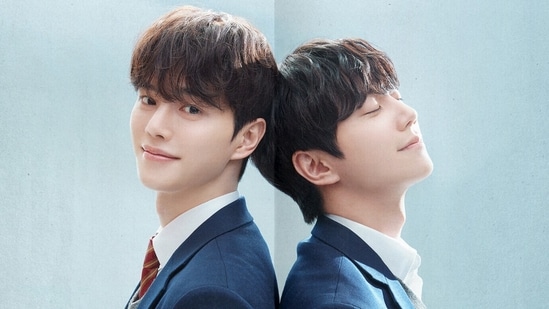
A piano competition should not feel this tense, but the new K-drama Four Hands, Two Sonatas somehow manages to make every performance feel like a high-stakes confrontation. The pressure on these students goes well beyond getting the notes right or beating the person sitting across from them. Music is tied to their families, their insecurities, their pasts and, for some of them, their entire sense of self-worth. Even when nobody is performing, there is a constant feeling that something could go wrong. Six episodes in, the tvN and Netflix drama has settled into an absorbing coming-of-age story, using the demanding world of classical music to explore what happens when young people are expected to grow up before they are ready.
Directed by Park Hyun Seok and written by Shin Yi Won, the drama takes us into an elite arts high school where being talented is only the beginning. Song Kang plays Kang Bi Oh, a piano prodigy who has grown up under the relentless pressure to be perfect. For him, music has never simply been something he loves. It is an expectation he has been carrying for years. Lee Jun Young plays Choi Jeong Yo, a gifted pianist who walked away from music after a painful childhood made it difficult for him to return to the piano. Jang Gyu Ri plays Hong Jae In, a viola student with a history with Jeong Yo, adding another layer to the relationship that develops between the three characters as their lives gradually become intertwined.
The story so far
The drama tells us almost immediately that this is not going to be a conventional high school story. The very first episode opens on a disturbing flash-forward, with a bloodied piano, panic and someone desperately trying to escape. We have no idea yet how the characters end up in that situation, but the sequence instantly gives the story a sense of danger. From there, the narrative goes back to the beginning and slowly starts putting the pieces together.
{{/usCountry}}The drama tells us almost immediately that this is not going to be a conventional high school story. The very first episode opens on a disturbing flash-forward, with a bloodied piano, panic and someone desperately trying to escape. We have no idea yet how the characters end up in that situation, but the sequence instantly gives the story a sense of danger. From there, the narrative goes back to the beginning and slowly starts putting the pieces together.
{{/usCountry}}Bi Oh initially looks like the student who has everything under control. He is a gifted pianist, disciplined and constantly expected to remain at the top. But the more we see of his life, the clearer it becomes that very little of it is actually his choice. His mother and grandfather have tied his success to his value as a person, turning music and perfection into something he must constantly prove himself through. Years of that pressure have left him guarded and increasingly disconnected from his own emotions.
Jeong Yo could not be more different. He has the ability to stand alongside Bi Oh as a pianist, but he has not had the same opportunities or security. A painful experience from his childhood pushed him away from the piano, despite the fact that his talent never disappeared. Coming back to music means more than picking up where he left off. It also means facing memories and emotions that he has spent years trying to keep buried.
So, naturally, Bi Oh and Jeong Yo don't get along at first. Their early meetings are full of competition, irritation and the need to prove who is better. What makes their relationship work, though, is how slowly it changes. Jeong Yo makes Bi Oh question the idea that playing perfectly is enough and pushes him to actually feel the music. At the same time, Bi Oh becomes someone Jeong Yo can lean on as the past he has been avoiding starts catching up with him. Their transition from rivals to friends is gradual, which makes it feel much more believable.
Jae In's history with Jeong Yo gives the trio a connection that goes beyond their time at school, while her own experiences keep the story from becoming only about the two pianists. As the three become closer, the problems surrounding them also begin to grow. Bi Oh's mother becomes increasingly determined to protect her son's position, even if it means going after Jeong Yo, while Jeong Yo's financial problems and the people from his past begin creating a much more serious threat.
By the halfway point, the competitions and performances almost feel like the least important part of what is happening. They are simply the setting for a much bigger struggle. Bi Oh is slowly beginning to ask whether the life he has been given is actually the life he wants, while Jeong Yo is being pulled back towards the painful memories he has spent years trying to outrun. Both are, in their own ways, fighting to take control of their futures before the people and circumstances around them make that choice for them.
What works and direction
The music is an important part of this show. The classical pieces are not there just to give the drama a polished or sophisticated feel. They actually become part of the storytelling. Rachmaninoff, Bach and Beethoven reflect what Bi Oh and Jeong Yo are dealing with at different points, whether it is the pressure they carry, the anger they struggle with, the fear underneath it all or their growing need to step away from the lives their families have planned for them.
The piano performances are another highlight. The show knows how to make them feel tense instead of simply filming someone sitting at a piano and playing a piece from beginning to end. The close-ups, editing and sound work together to keep you focused on what is happening. Even a pause or a slight change in tempo can suddenly feel important. There are moments when you can almost feel the pressure on the characters through the way the performances are shot.
It gets even better when Bi Oh and Jeong Yo share the piano. They may be playing the same piece, but there is a clear difference in how they approach it. Bi Oh has been trained to chase precision and control, while Jeong-yo plays more freely, with an instinctive quality that comes from his complicated relationship with music. Their contrasting styles mirror who they are as people. And as they spend more time around each other, they begin to influence one another.
Performances
The biggest reason to keep coming back to Four Hands, Two Sonatas is Song Kang and Lee Jun Young. Bi Oh and Jeong Yo start off as rivals, and thankfully, the drama does not suddenly make them best friends just because the plot needs them to be. Their relationship takes time to change. It happens through their fights, uncomfortable conversations, small moments and the experiences they slowly end up sharing.
Song Kang plays Bi Oh with a kind of quietness that works really well for the character. He has spent most of his life being told what to do, how to behave and how good he needs to be. Even when he is angry, he rarely lets it show completely. There is always this feeling that he is stopping himself from saying or doing what he actually wants. As the story moves forward, it becomes clearer that Bi Oh has been controlling his emotions for so long that he does not really know what to do when something gets past that control.
Lee Jun Young brings a completely different energy to Jeong Yo. He is rough around the edges, quick to react and often defensive, but there are also moments when that tough exterior suddenly falls away. His vulnerability, particularly when memories of his past return, makes him much more than the troubled, talented pianist he initially appears to be. The difference between the two actors also works because their characters come from such different circumstances. Bi Oh has grown up with people deciding almost everything for him, while Jeong Yo has spent much of his life dealing with situations he had no power to change.
Where the drama stumbles
The casting is perhaps the one aspect that takes a little time to settle into. Song Kang and Lee Jun Young both fit their characters well, but watching actors in their late 20s and early 30s play 17-year-old students in school uniforms can occasionally pull the viewers out of the immersion.
The same cannot always be said for the adult characters around Bi Oh. His mother is fiercely controlling, constantly trying to shape his choices and protect his position, while his grandfather is equally harsh and unforgiving. Both characters bring plenty of drama to the story, but their motivations are not explored with the same depth as the younger characters. At times, their scheming and cruelty feel a little too straightforward and one dimensional, especially when compared with the more layered writing given to the central trio.
The verdict
Four Hands, Two Sonatas is an exhilarating, beautifully crafted drama that uses the classical music world to explore trauma, ambition, and healing. While it occasionally stumbles over predictable K-drama tropes, the breathtaking musical sequences and the complex relationship between its two leads make it an absolute standout. If the second half can deliver on the tension it has carefully built so far, this could become a drama that stays with viewers long after the final note.
Get more updates from Bollywood, Taylor Swift, Hollywood, Music and Web Series along with Latest Entertainment News at Hindustan Times.
Get more updates from Bollywood, Taylor Swift, Hollywood, Music and Web Series along with Latest Entertainment News at Hindustan Times.