
 E-Paper



Cause and Effect | The unjust climate crisis burden on Africa
Africa is reeling from the climate crisis, despite contributing 3.8% of the world’s emissions

 Prefer HTon Google


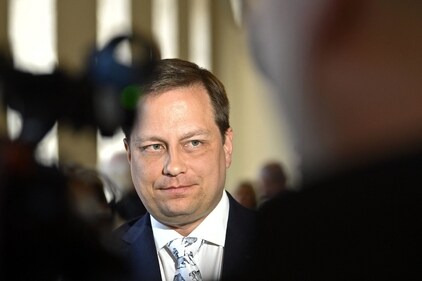
Finland's economy minister Vilhelm Junnila resigned on June 30 over a string of controversial remarks, including one from 2019 when he called on his country to support abortions in Africa as a means to combat the climate crisis.
The resignation followed a furore after a junior member of the government highlighted the 2019 remarks on June 29.
Junnila, in a parliamentary question in 2019, wrote: "It would be justified for Finland to shoulder its responsibility by promoting climate abortion" in what he said was a "great leap forward for humanity”.
In official parliamentary records, his question reads: "In the underdeveloped societies of Africa, the number of children can be huge, and the problem escalates even worse as climate change drives them, due to famine, disease and extreme weather, to seek a better life in areas with an even larger carbon footprint.”
The comments, while obviously racist, also merit one other discourse.
With the climate crisis, a large part of the conversation, as it should be, is about who is to blame. But the crucial question it overlooks is: Whose fault it isn't.
Africa, a continent of 30,365,000 square km land area and 1.4 billion people — around 17% of the global population — is responsible for just 3.8% of the world’s total greenhouse-gas emissions.
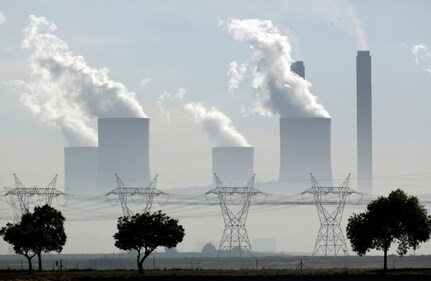
In contrast, China (18.47% of the global population) is responsible for 27.8%, the US (4.25% of the global population) 19%, and the European Union (9.78% of the global population), which Finland is part of, is responsible for 12.7% of the GHG emissions.
The country of 5.5 million people is responsible for 1.5% of the EU’s total GHG emissions in 2019, according to the European Parliament.
Yet, it is Africa’s people that are on the frontlines of climate impact due to socioeconomic differences.
"Africa's climate has warmed more than the global average since pre-industrial times (1850-1900). In parallel, the sea-level rise along African coastlines has also been faster than the global mean, contributing to increases in the frequency and severity of coastal flooding, erosion, and salinity in low-lying areas,” Prof Petteri Taalas, secretary-general, World Meteorological Organization (WMO), said in the foreword of the State of the Climate in Africa 2021 report published on September 8 last year.
According to the report, all six sub-regions of Africa recorded an increase in the temperature trend, with an average decadal increase of +0.3 degrees C between 1991 and 2021. The rate of sea-level rise, particularly along the Red Sea and south-west Indian Ocean, was 4mm/year, higher than the global mean rate. By 2030, 108-116 million people in Africa are expected to be exposed to sea-level rise risk, the report said.
The total surface area of Lake Chad, which is located close to the Sahara Desert and borders Chad, Cameroon, Nigeria, and Niger, shrank from 25,000 sq km in the 1960s to 1,350 sq km in the 2000s.
But, in a silver lining for the 30 million people dependent on the lake, the area has remained stable since then.
In 2021, below-normal rainfall conditions prevailed over much of North Africa which recorded a deficit of nearly 160mm (the lowest 10% of totals during the 1951–2010 climatology period), according to the WMO report.
Across the continent, water shortages are expected to displace nearly 700 million people. The Horn of Africa is experiencing its worst drought in 40 years, with four consecutive rainy seasons failing, which studies have shown would not have happened without human actions bringing about global warming. Other parts of the continent, like South Sudan, experienced three straight years of extreme floods till 2021.
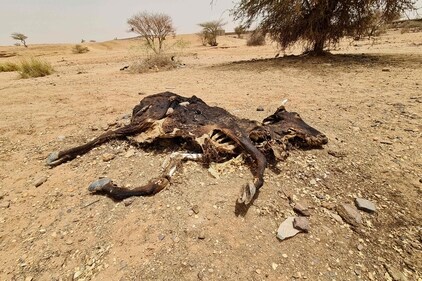
Geographical and meteorological impacts aside, the rise in temperature has contributed to a 34% reduction in agricultural productivity since 1961 — highlighting the risk of food insecurity and malnutrition, the WMO report stated.
If global warming is restricted to the 1.5°C threshold, West Africa’s Maize yield is still projected to decline by 9% and wheat output by 20-60% decline in Southern and North Africa.
The report also highlighted additional water pressure on already scarce water resources, a thing that appeared to gain media attention when the Covid-19 pandemic first struck reminding the world of how the basic necessity of clean water for washing hands is a luxury for most of the Global South.
In Africa, around 418 million people still lack drinking water, and 779 million people lack basic sanitation services, as per a 2022 UNICEF report.
So, not only is Africa’s contribution to the climate reality we face today negligible, its people, like most of the Global South, are hit the hardest.
And, thanks to the tainted legacy of colonisation, they lack the resources to pay for adaptation and mitigation.
Ahead of COP27 in Egypt last year — the summit was monikered the “African COP" — French President Emmanuel Macron; Senegal president and former chair of the African Union Macky Sall and the Dutch Prime Minister Mark Rutte wrote in a piece for the Guardian: “For Africa, climate change is an irreversible reality. It’s too late to turn back the clock. But we have a very narrow window to put coping mechanisms in place.”
But these coping mechanisms are costly: Adaptation, which includes money for practices to deal with consequences of the climate crisis, is projected to require $50bn per year by 2050, and clean energy transition, roughly $190bn per year over the next seven years.
Heading to COP28 in Dubai this year, as discussions on loss and damage funds take centerstage, activists are calling out developed nations for their “empty promises”.
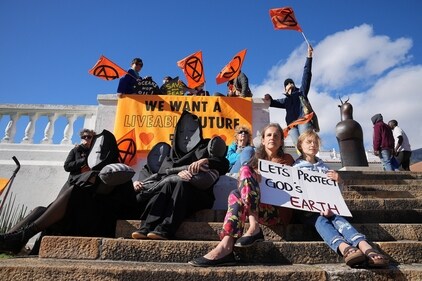
“Development isn’t millions of people dying from breathing toxic air. Development isn’t millions of people being pushed to the brink of starvation after years of drought,” Vanessa Nakate, a Ugandan activist, said at the New Global Financing Pact Summit in Paris on June 30, as she called on countries to curtail investments in fossil fuels.


