
 E-Paper



Global warming may have volcanic consequences
Some predict the glaciers will vanish in two centuries, which could upset the volcanoes below, causing them to erupt more frequently, more violently or both


 Prefer HTon Google


WHY WOULD a meteorologist concern herself with the rocks beneath her feet? For good reason, if she lives in Iceland. That island nation straddles the mid-Atlantic ridge, a boundary between two of Earth’s crustal plates which are drifting apart. That allows hot, liquid rock called magma to well up from the depths. Iceland also sits just below the Arctic circle and enjoys glacier-promoting temperatures. As a consequence of these facts, it is home to 34 active volcanoes, half of which are buried under ice up to 1km thick. And that ice is melting as the climate warms.
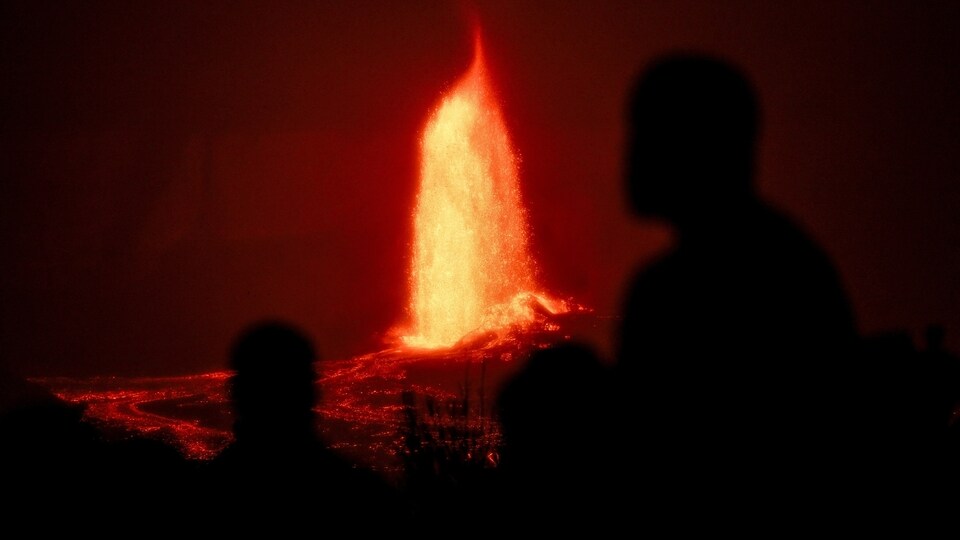
Some predict the glaciers will vanish in two centuries, which could upset the volcanoes below, causing them to erupt more frequently, more violently or both. Michelle Parks of the Icelandic Meteorological Office is therefore leading a three-year project that will try to determine whether, in future, less ice could mean more fire.
Glaciers bear down upon Earth’s crust. The pressure they create squeezes the underlying rock, raising its melting point. Remove the ice and the rock rebounds (the land around some ice-bound volcanoes is rising by as much as 3cm a year), easing the pressure. That means the melting point drops, enhancing the formation of magma, which then erupts from volcanoes as lava.
Early geological data collected by Dr Parks suggest two or three times more magma is being produced beneath Iceland than was the case a century ago. Her colleague Freysteinn Sigmundsson, a geophysicist at the University of Iceland, suggests the newly generated magma might start arriving in the next few decades.
How that plays out will depend on how the magma reservoirs beneath individual volcanoes are reshaped by the rebounding land. Some may erupt more frequently; others, less so but more violently. This may be happening already. Grimsvotn and Bardarbunga, two volcanoes in central Iceland, have been more active than normal in recent decades. By contrast Katla, in the south, once erupted every 50 years or so but has been quiet for over a century.
History certainly supports the idea that melting ice stimulates magma production. There were 30 to 50 times more volcanic eruptions after the retreat, some 10,000 years ago, of an ice sheet thousands of metres thick that smothered Iceland during the last ice age. Admittedly, there was a lot more ice then than the bits-and-pieces now remaining. But the link with more volcanic activity seems clear.
Iceland is not the only place thus affected. Antarctica, Alaska and the Andes are similarly cursed. Altogether, some 250 volcanoes are known to lurk beneath or close to ice sheets. And Antarctica, at least, may host others yet undiscovered.
Antarctica and Alaska (and, indeed, Iceland) are sparsely populated. But the Andes—or, rather, coastal regions to their west—are not. Research published in 2020 suggests that though only 20,000 people dwell within 5km of an affected volcano, 160m people live within 100km of one, and might thus be at risk of disruptions to their water supplies, which often start as mountain ice, and also of mudslides.
And people need not live nearby to be affected. When Eyjafjallajökull, a small volcano by Icelandic standards, erupted 15 years ago it sent into the atmosphere an ash cloud sufficient to trigger six days of aviation chaos. In the late 18th century Laki, another Icelandic volcano, emitted so much sulphur dioxide and ash that some historians suggest crop failures precipitated by the resulting drop in temperatures helped cause the French revolution.
Current fears about climate change’s effect on agriculture revolve around the damage which rising temperatures might do. That it might provoke damaging temperature falls as well is ironic.
Curious about the world? To enjoy our mind-expanding science coverage, sign up to Simply Science, our weekly subscriber-only newsletter.


