
 E-Paper



The Climate Issue newsletter: China, the climate superpower
There will be some to whom the idea of China playing this central role is deeply disturbing, and to be resisted.


 Prefer HTon Google


This is the introduction to The Climate Issue, a fortnightly, subscriber-only newsletter in which a selection of expert writers brings you vital analysis that you won’t read anywhere else.
Sign up for The Climate Issue .
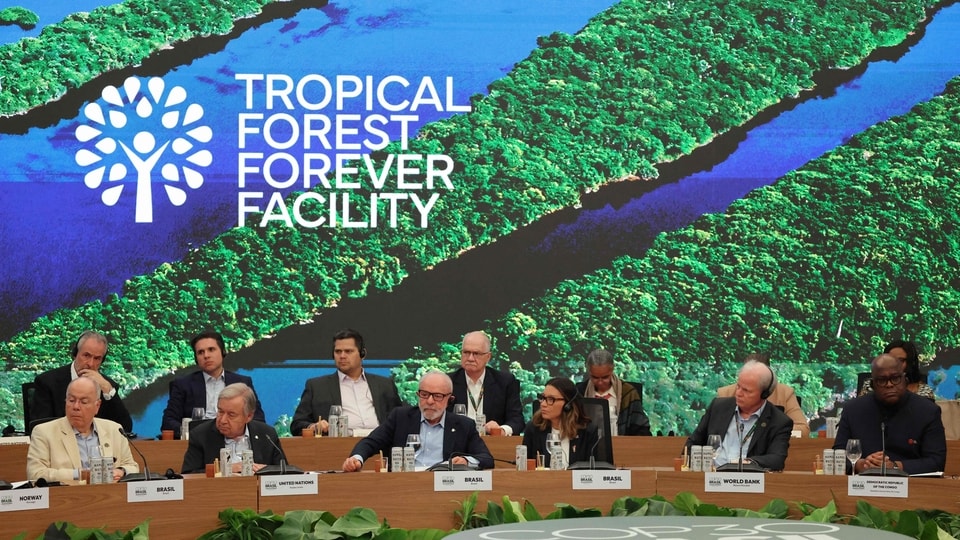
As I write, politicians, negotiators, NGOs, claques, hacks and assorted hangers-on are making their way to Belém, in the Brazilian Amazon (my colleague Rachel Dobbs will soon be joining them). Their destination is the 30th of the UN Framework Convention on Climate Change’s almost-annual COP summits. Ten years ago, the 21st COP produced the Paris agreement, the imperfect mechanism by which the UNFCCC seeks to bring about its goal of “stabilising greenhouse gas concentrations in the atmosphere at a level that would prevent dangerous anthropogenic interference with the climate system…within a time-frame sufficient to allow ecosystems to adapt naturally to climate change, to ensure that food production is not threatened and to enable economic development to proceed in a sustainable manner.”It’s hard to see the Paris agreement’s first decade as a resounding success. The aspiration to keep the temperature rise since the industrial revolution below 1.5C is in the rear view mirror: even the most data-deaf of its adherents have now accepted that an overshoot is inevitable. Emissions are still rising—though not, admittedly, at the rate they did in the first decade of the century. Unfortunately temperatures, for their part, are still rising faster than ever. This year will be the second- or third-hottest year on record, extending the run of exceptional temperatures that kicked off in 2023. China’s “Made in China 2025” programme, which also dates to 2015, has had much more heartening results from its proponents’ perspective. China’s lead in global manufacturing is bigger than ever. And part of that success has been the astonishing growth of China’s renewable-energy industries, bolstered by new applications for electricity such as mass-market electric vehicles. Over the past month I have had the pleasure of editing a special report on this growth by two colleagues on The Economist’s China team, Gabriel Crossley and Jeremy Page. We published it this week, and it is an eye-opening read.You may think you have understood the importance of China’s green growth. Jeremy and Gabriel make it seem, if anything, all the more world-changing. It has driven down the price of solar panels by a factor of 20; it is now capable of adding capacity at a rate of between 500 gigawatts and a terawatt (1TW) a year. There are problems, naturally. The solar industry, in particular, is troubled by the sort of overcapacity, cutthroat competition and profitlessness which increasingly trouble the country’s economy. The possibility of a solar stumble or even a broader downturn is real. But in the medium term, the progress looks set to continue and with it prospects for lowered fossil-fuel demand the world over. To think of China’s production of new capacity reaching 2TW a year in the early 2030s and even 4TW a year by the end of that decade is not absurd. The cumulative effect would be to add something like 30TW of capacity. Even China, which uses a huge amount of energy and has a particular fondness of consuming it in the form of electricity, cannot use all that supply. But it does not have to. By making renewable energy cheap China has made it popular with the people, and in the countries, that matter. Chinese renewable-energy exports to the global south have outstripped those to rich countries and this trend, too, will continue. There is more to decarbonisation, and thus emissions reduction, than cheap renewables; there are questions about electricity markets, about grid infrastructure, about storage and more. When there were no cheap renewables those problems seemed like additional burdens. Now that there are lots of cheap renewables, they can be recast as opportunities: the better you can solve these problems, the more of the cheapest form of energy you can use. And this is where Made in China and the Paris agreement start to synergise. The Paris agreement is based on the idea that as the world gets better at reducing emissions countries will become more ambitious in their attempts. But it is not compelling as to why this should happen. Now China has a manifest interest in making it happen: more ambitious emissions reductions in other countries are in China’s near-term economic interest as well as its long-term climate interest. It has an incentive to encourage the ratcheting-up inherent in the Paris process. Incentives do not always have the effects you would hope. China may not take the most advantageous course, especially if its coal lobby has its way. There will be some to whom the idea of China playing this central role is deeply disturbing, and to be resisted. And no amount of emissions reduction alone can take the planet back below 1.5C; that will take other measures. Nevertheless, at a time when hope is hard to find, the possibility that the second decade of Paris will deliver a lot more than its first is one to hold on to and foster.
What do you make of China’s contribution to the fight against climate change? Share your thoughts and questions with us at climateissue@economist.com.


