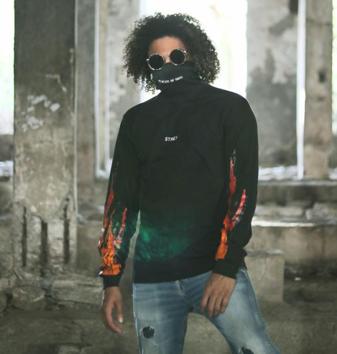
Confused about what streetwear is? Think Ranveer Singh promoting Gully Boy: eye-catching, oversized ensembles with splashes of bright colours or quirky design elements.
With its roots in the skater and surfer subcultures of the 1970s, and later hip hop by the 1990s, streetwear was meant to be comfortable but bold, a reflection of your personality and your politics.
Typically, such apparel — oversized hoodies, jackets, tees and drop-crotch pants — were made popular by global brands like Supreme, Vetements or Stussy. Unlike the product lines churned out by mainstream brands like Levi’s, Lee Cooper or Diesel, the streetwear was limited-edition, grunge chic.
Now, there are Indian streetwear brands, and the clothes they’re producing, while adhering to the loose silhouettes, gender-fluidity and hip hop aesthetic, are also distinctly desi.
Harkrishan Singh’s label, Delhiwear, has a Vardi collection inspired by the kurta; and a Dukaan collection that pays homage to the outfits worn by shopkeepers.
“We’ve taken garments found on Indian streets and made them functional and comfortable by adding pockets or experimenting with the silhouette,” he says. “Each collection tells a unique story and is meant to be long-lasting. That’s why we don’t churn out collections every six months like fast-fashion brands.”
Aasshna Aroraa and Eashan Parekh’s label, Strey, gives voice to the spirit of streetwear with garments that are loose, oversized, comfortable, but also political. The ‘Save the planet’ collection, for instance, features graphic prints, cautionary slogans, and garments such as the sweatshirt with a turtleneck that stretches into a face mask bearing the words, ‘Use in case of smog’.
{{/usCountry}}Aasshna Aroraa and Eashan Parekh’s label, Strey, gives voice to the spirit of streetwear with garments that are loose, oversized, comfortable, but also political. The ‘Save the planet’ collection, for instance, features graphic prints, cautionary slogans, and garments such as the sweatshirt with a turtleneck that stretches into a face mask bearing the words, ‘Use in case of smog’.
{{/usCountry}}BISKIT, founded by siblings Harsha and Shruti Biswajit, also draws inspiration from current events. A collection called Spaced Out pays homage to India’s steps forward into space, with streetwear covered in sci-fi motifs, astral prints and a jumpsuit made to look like a spacesuit.
Jay Ajay Jajal’s Jaywalking offers loud unisex silhouettes — from neon-bright, oversized jackets to voluminous hoodies and baggy track pants in neoprene, velvet corduroy and reflective synthetics. Graphic artwork, fabric patches in bright colours and multiple colourful pockets heighten the effect.
“In India, people are getting bolder with what they wear; they’re embracing experimentation,” says Parekh of Strey. “A while ago, clothes didn’t really have meaning for the average urban Indian. Today, people are looking to express themselves through their clothes. When it comes to streetwear, each item of clothing should have a story and be worn to expresses something you feel strongly about.”
Mumbai-based entrepreneur, Siddharth Deravariya, 23, bought the smog mask T-shirt for that very reason. “I care about the environment, but I’m not the kind of person who goes to rallies. So the garment allowed me to wear my opinion in a way that would allow people to take note,” he says.
While some users are taking to streetwear because they connect with its philosophy, many are doing so just because it’s trending. This wave of hype is threatening to push the fashion genre away from its origins in the margins and into the mainstream, some designers fear.
“Streetwear was supposed to be affordable, inclusive and durable, because it was made for skaters and surfers. But brands today are labelling themselves ‘exclusive’ and bumping up the prices of their creations,” says Allen Claudius, a fashion consultant and founding editor of the online Indian fashion magazine, Bowties and Bones.
Harkrishan Singh has a more optimistic take on streetwear going mainstream. “Bollywood celebs are sporting it, and couturiers are referencing streetwear in their collections. So it is becoming commercialised. But you need some amount of commercialism for any industry to thrive,” he says. “Also, I think people are educating themselves about the trend and making more meaningful purchases. And that is the essence of streetwear.”
Catch your daily dose of Fashion, Taylor Swift, Health, Festivals, Travel, Relationship, Recipe and all the other Latest Lifestyle News on Hindustan Times Website and APPs.
Catch your daily dose of Fashion, Taylor Swift, Health, Festivals, Travel, Relationship, Recipe and all the other Latest Lifestyle News on Hindustan Times Website and APPs.