There’s a link between insufficient sleep and the development of insulin resistance, one of the factors that cause Type 2 diabetes. A team of US researchers has discovered a biological reason for this relationship, at least in men: an imbalance between their testosterone and cortisol hormones.
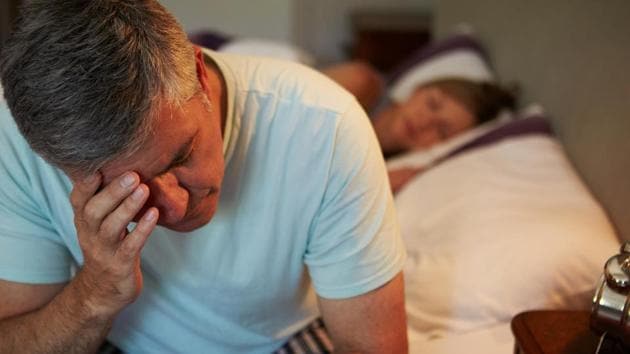
“Our highly controlled sleep study showed that even one night of restricted sleep can cause insulin resistance and that we can dampen this effect by controlling levels of these two important hormones,” said senior investigator Peter Y. Liu of Los Angeles Biomedical (LA BioMed) Research Institute at Harbor-UCLA Medical Center, Torrance, California.
Insulin resistance occurs when the body does not properly use the hormone insulin. Testosterone is the main anabolic, or muscle-building, hormone, whereas cortisol – often called the “stress hormone”– helps catabolism, or breaking down energy and fat stores for use, Liu explained. Past research shows that sleep loss reduces a man’s testosterone levels and increases cortisol levels.
Liu and his fellow researchers conducted five nights of sleep studies in 34 healthy men with an average age of 33. They controlled what the subjects ate and how much they slept, giving them 10 hours of sleep the first night and restricting them to four hours of sleep the remaining nights.
In this “crossover” study, the men served as their own controls. In one series of sleep studies, they received three medications: ketoconazole, which switches off the body’s production of testosterone and cortisol; testosterone gel; and oral hydrocortisone, a synthetic form of cortisol. The doses of testosterone and hydrocortisone were in the midrange of levels that the body normally produces, according to Liu. This arm of the study was called a dual “clamp” because it stopped the body’s production of these two hormones and then gave them a fixed amount of the hormones, thus clamping levels in a normal hormonal balance, he said.
{{/usCountry}}In this “crossover” study, the men served as their own controls. In one series of sleep studies, they received three medications: ketoconazole, which switches off the body’s production of testosterone and cortisol; testosterone gel; and oral hydrocortisone, a synthetic form of cortisol. The doses of testosterone and hydrocortisone were in the midrange of levels that the body normally produces, according to Liu. This arm of the study was called a dual “clamp” because it stopped the body’s production of these two hormones and then gave them a fixed amount of the hormones, thus clamping levels in a normal hormonal balance, he said.
{{/usCountry}}In another set of experiments, the men received inactive placebos that matched the medications. The order of when they received the clamp and the placebo was random, with a two-week interval between the study conditions. The morning after the first and last nights of each part of the study, all men took the oral glucose tolerance test, in which they gave blood samples while fasting and again after drinking a sugary drink. This test result allowed the researchers to calculate each man’s insulin resistance using standard measures, including the Matsuda Index.
After sleep restriction, this index reportedly showed greater insulin resistance with both the clamp and the placebo. However, Liu said this increase was significantly dampened, or less severe, with the dual-clamp, demonstrating that testosterone and cortisol reduced the negative effects of sustained sleep restriction on insulin resistance.
“Maintaining hormonal balance could prevent metabolic ill health occurring in individuals who do not get enough sleep,” he said. “Understanding these hormonal mechanisms could lead to new treatments or strategies to prevent insulin resistance due to insufficient sleep.”
The study was presented at ENDO 2018, the Endocrine Society’s 100th annual meeting in Chicago, Ill.
Follow @htlifeandstyle for more
Catch your daily dose of Fashion, Taylor Swift, Health, Festivals, Travel, Relationship, Recipe and all the other Latest Lifestyle News on Hindustan Times Website and APPs.
Catch your daily dose of Fashion, Taylor Swift, Health, Festivals, Travel, Relationship, Recipe and all the other Latest Lifestyle News on Hindustan Times Website and APPs.