A sleep disorder that causes repeated shallow or paused breathing may be associated with changes in brain structure that are also seen in the early stages of dementia. Obstructive sleep apnoea (OSA), common among elderly, is a condition where the walls of the throat relax and narrow during sleep, stopping breathing, and is known to reduce levels of oxygen in the blood. It has also been linked with heart diseases, strokes and cancer.
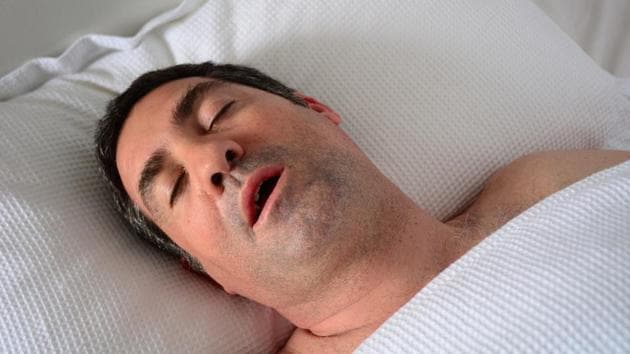
The new study suggested that the drop in oxygen may be linked to a shrinking of the brain’s temporal lobes and a corresponding decline in memory.
“Between 30 and 50% of the risk for dementia is due to modifiable factors, such as depression, high blood pressure, obesity and smoking. In recent years, researchers have recognized that various sleep disturbances are also risk factors for dementia,” said lead author, Sharon Naismith, from the University of Sydney, Australia.
“We wanted to look specifically at obstructive sleep apnoea and its effects on the brain and cognitive abilities,” Naismith added.
In the study, published in European Respiratory Journal, the researchers analysed data from nearly 100 participants aged between 51 and 88 years, who had visited doctors with concerns over their memory or mood but had no OSA diagnosis.
The results showed that patients who had low levels of oxygen in their blood while they were sleeping tended to have reduced thickness in the left and right temporal lobes of the brain -- regions known to be important in memory and affected dementia.
{{/usCountry}}The results showed that patients who had low levels of oxygen in their blood while they were sleeping tended to have reduced thickness in the left and right temporal lobes of the brain -- regions known to be important in memory and affected dementia.
{{/usCountry}}Further, the team found that this alteration in the brain was linked with participant’s poorer ability to learn new information. “There is no cure for dementia so early intervention is the key. On the other hand, we do have an effective treatment for OSA. This research shows that diagnosing and treating OSA could be an opportunity to prevent cognitive decline before it’s too late,” Naismith added.
Follow @htlifeandstyle for more
sh/mag/vm
Catch your daily dose of Fashion, Taylor Swift, Health, Festivals, Travel, Relationship, Recipe and all the other Latest Lifestyle News on Hindustan Times Website and APPs.
Catch your daily dose of Fashion, Taylor Swift, Health, Festivals, Travel, Relationship, Recipe and all the other Latest Lifestyle News on Hindustan Times Website and APPs.