
 E-Paper



For generations of footballers, PK Banerjee was a father figure
He was a father figure to all of us. He used to invite us to his house for lunch and dinner,” said Bhutia.


Many in India would have a favourite Pradip Kumar Banerjee story and not all of them would be about football. “He could talk on any subject. Foreign tours were always less boring when he was coach,” said Shabbir Ali, India captain for three tournaments in 1981 under Banerjee was coach. Banerjee, who died aged 83 on Friday after being on life support since March 2, could tell a tale. It was a gift that was genetic, he would say. A debilitating cerebral stroke didn’t blunt his mind. He was gregarious and because he had more than cursory interest in current affairs, music, literature and sport, he was always great company.
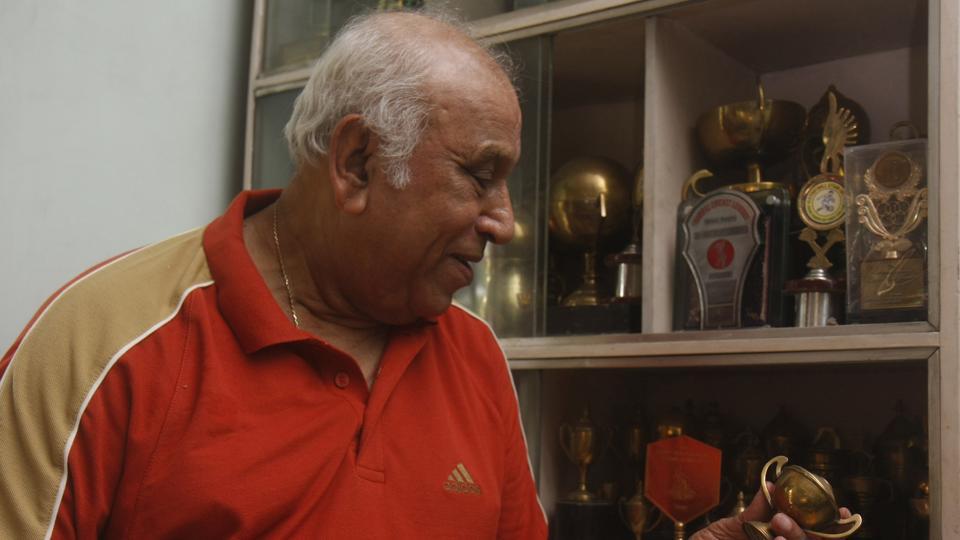
“What stood out most for PK ‘da’ was that he was always a very happy person. Every time we met and spoke, he was full of energy, full of great stories and always a fun person,” said Bhaichung Bhutia who played for East Bengal and India under Banerjee. “He was a good human being who would put people at ease with his warmth and friendliness,” said Ali.
“He was a father figure to all of us. He used to invite us to his house for lunch and dinner,” said Bhutia. It was under Banerjee that Bhutia played what he said was one of his most memorable matches: a Federation Cup semi-final in 1997.
Coached by Amal Dutta, who had introduced a midfield diamond, Mohun Bagan had romped into the penultimate round. Using the language of boxers at weigh-in, Dutta had amped the atmosphere by poking fun at East Bengal players, Bhutia included. In front of 1.31 lakh people Bhutia scored a hattrick in East Bengal’s 4-1 win.
“PK ‘da’ was cool and composed through it all. All derbies have so much pressure, he ensured we didn’t take an extra burden for that game,” said Bhutia.
Bhutia had just returned to East Bengal as India’s biggest star after two seasons at JCT. “He managed the team with such ease. It was a gift PK ‘da’ had, his biggest asset. I have seen a lot of coaches and he would be among the best.”
Shyam Thapa agreed. Thapa was part of the 1970 Asian Games team that won bronze beating Japan 1-0. It was the last time India went that far.
“Along with (GM) Basha ‘sahib, Pradip ‘da’s ability to motivate and his ability as a tactician were very important,” said Thapa, now head of the All India Football Federation’s Technical Committee. “Some players would say, he is talking too much. But he always made sense, about football and life.”
Thapa returned from Dharamshala on Friday afternoon. “I knew he would not leave without me getting a ‘darshan’. If people know Shyam Thapa today, it is because of Pradip ‘da’. It was under his coaching that two of my best goals including the scissor-kick for Mohun Bagan against East Bengal (in 1978) came. It was because of what I learnt from him that I could become an international coach. ‘Lead a disciplined life, Shyam,’ he would tell me,” said Thapa.
“I don’t like comparing eras but in his time, he was the best,” said Ali. According to Subhas Bhowmick, Banerjee was the biggest character of Indian football. “Few great players have become successful coaches of the national team. The golden period of the sport in India was between 1956-62. And the biggest character of that period was PK Banerjee. That alone assured him a place in the history of Indian football but he didn’t stop there, he became a successful coach. He has given so much to Indian football,” said Bhowmick also part of the 1970 Asian Games side and whose club career was then revived by Banerjee at East Bengal.
“What I am today, as a player and coach, is because of him. And with many of us he formed a relationship beyond football,” said Bhowmick who coached East Bengal to the ASEAN Cup title in 2003 and National Football League titles in 2002-03 and 2003-04. As technical director, Bhowmick helmed Churchill Brothers to the I-League crown in 2012-13.
“The systems, the processes he brought to football in India enriched us,” said Subrata Bhattacharya who played for India and Mohun Bagan under Banerjee. Bhattacharya was the Mohun Bagan captain in 1977 when with Banerjee as coach, they held New York Cosmos 2-2.
Ali and Banerjee were never at the same club so it was only at India camps that they got to know each other. “I was among the probables but not selected for the 1974 Asian Games but in 1981 and 1982 we spent a lot of time together. He was friendly off the pitch but strict on it. He knew how to get the best out of players,” said Ali.
“I lost my father early so PK was the father figure in my life. He was a fighter all his life. Even in hospital this time, he refused to give up,” said Prasun Banerjee, former India captain and midfielder.
Prasun was 19 years younger to Pradip and played for Mohun Bagan and India under him. In 1975, when East Bengal beat Mohun Bagan 5-0, Prasun played for Mohun Bagan while his brother coached East Bengal. They stayed in the same house. In 1982, Prasun was at the forefront of a players’ revolt over club contracts while at the national camp when Pradip was India coach. It led to Pradip being given a ticking off by Prime Minister Indira Gandhi.
After the crisis was resolved, Prasun scored in India’s 1-0 win against Bangladesh. In India’s last group game, after Ali equalised and Kartick Seth had put India ahead, China scored in the 82nd minute to make it 2-2. In the quarter-final, India lost to bronze medallists Saudi Arabia 1-0 through an 89th minute goal.
“I was shattered…My grief was deep and uncontrollable,” Banerjee said in ‘Beyond 90 Minutes,’ his autobiography co-authored by Anirban Chatterjee.
“You cannot cook biryani with cheap spices,” Banerjee had said after that match. It was possibly the only time he took out his frustration on players in public. “I felt the players were deeply distressed at my outburst and I am sorry,” he said.


