
 E-Paper



Haryana power utilities in ₹27,915 crore loss despite high tariffs, alleges AAP’s Anurag Dhanda
AAP compares Haryana’s power sector losses with Punjab’s profit-making model despite free electricity for households.

 Prefer HTon Google


Aam Aadmi Party (AAP) national media in-charge Anurag Dhanda on Wednesday criticised the Haryana government over the financial condition of its power distribution companies, alleging that despite charging consumers high electricity tariffs, the state’s power sector has slipped deeper into losses.
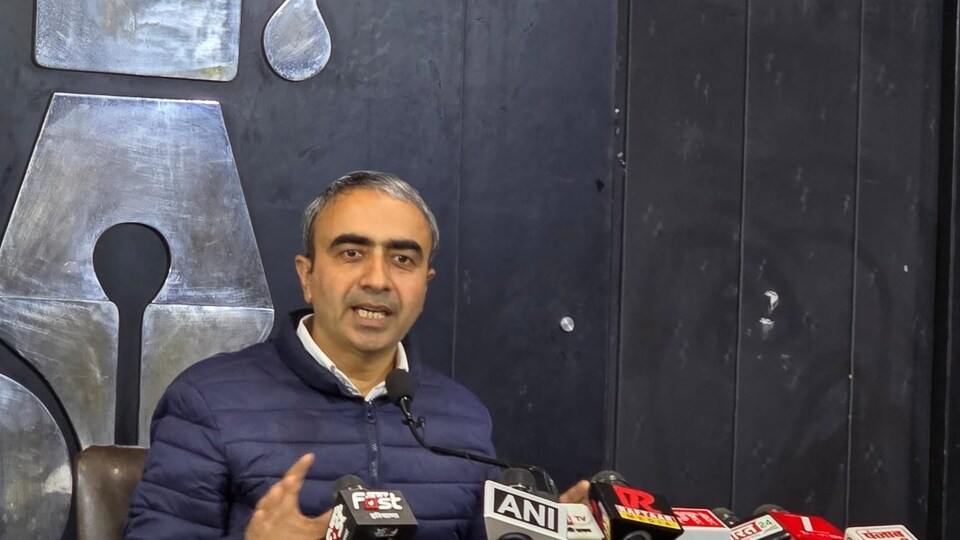
Citing official figures, Dhanda said Haryana’s electricity distribution corporations are facing a cumulative loss of ₹27,915 crore, while their total outstanding debt has risen to ₹20,311 crore. He alleged that the BJP-led government under Chief Minister Nayab Singh Saini has failed to carry out meaningful financial or structural reforms in the power sector.
“After ten years of BJP rule, Haryana’s electricity system is burdened with debt and losses, while ordinary households are struggling with expensive tariffs, heavy fixed charges and rising power bills,” Dhanda said. “The government has neither improved finances nor provided relief to consumers.”
The AAP leader questioned why losses continued to rise despite consumers paying higher bills. “Instead of reducing the deficit, the government kept increasing borrowing and passed the burden on to the public. Who is responsible for this ₹27,915 crore loss, and why should future generations pay for it?” he asked.
Drawing a comparison with neighbouring Punjab, Dhanda said that under Chief Minister Bhagwant Mann, the state-owned Punjab State Power Corporation Limited reported a profit of around ₹2,600 crore in the 2024–25 financial year. He added that the utility secured an A+ rating and ranked second nationally in the power sector.
Dhanda said Punjab’s “Roshan Punjab Mission”, under which households receive up to 300 units of free electricity, has benefited more than 90% of domestic consumers, with zero electricity bills for a majority of homes. “This clearly shows that with honest leadership and transparent administration, it is possible to provide free power to people while still running electricity utilities in profit,” he said.
He questioned why Haryana, despite charging higher tariffs, has been unable to achieve financial stability in its power sector. “If Punjab can provide free electricity and still make profits, why has Haryana’s debt and losses continued to increase even after expensive billing?” Dhanda asked.
The AAP leader demanded that the Haryana government release a white paper on the financial health of its power utilities and clarify accountability for the mounting losses and debt. He said the Punjab model had demonstrated that public welfare and institutional strength could go hand in hand, and that people in Haryana were now drawing comparisons and seeking answers from the government.
Steps ordered by HERC to address power sector stress
The Haryana Electricity Regulatory Commission has issued a series of directions to the state’s power distribution companies to address mounting financial stress and operational inefficiencies. During public hearings on the Annual Revenue Requirement (ARR) for 2026–27, HERC directed Uttar Haryana Bijli Vitran Nigam and Dakshin Haryana Bijli Vitran Nigam to strictly reduce aggregate technical and commercial (AT&C) losses and ensure that losses do not increase further.
The commission also asked the discoms to narrow the gap between average cost of supply and average revenue realisation, improve efficiency in power procurement, and ensure uninterrupted 24-hour electricity supply to villages. In addition, HERC advised the utilities to explore borrowing at lower interest rates to ease financial pressure, as part of efforts to manage an estimated revenue gap of around ₹4,400 crore.


