
 E-Paper



The Entrepreneurs Building India’s Next Opportunity Economy
Shifu Foundation supports founders in Tier 2 cities with resources and mentorship, aiming to strengthen local business ecosystems.

 Prefer HTon Google


Legal guidance before a dispute becomes a crisis. Retired corporate laptops repurposed for learning and work. Entrepreneurial ecosystems built beyond India’s largest cities. Better mathematics inside government classrooms. Stronger local businesses creating meaningful jobs closer to home.
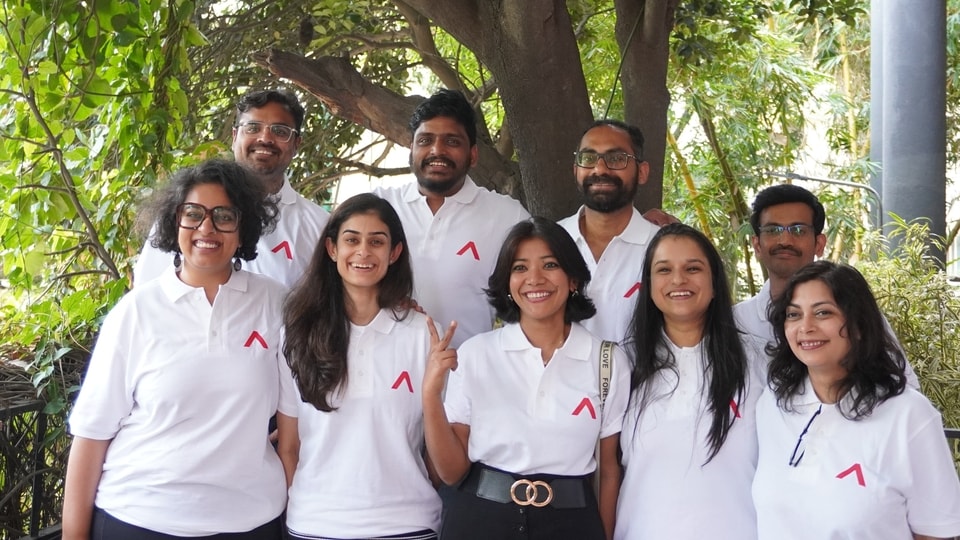
These ideas may seem unrelated. They begin, however, with a common question: what would it take to make opportunity less dependent on geography, income and circumstance?
A growing number of Indian entrepreneurs are choosing to work on these barriers directly. They are asking how legal support can reach people earlier, how learning can work better inside existing classrooms, and how jobs and enterprise can grow beyond India’s largest cities.
Five organisations selected from more than 480 applications for the^delta incubator 2026 cohort offer a glimpse of this shift. Their models are still early, but each begins with a problem observed closely and a practical idea for addressing it.
Justice before crisis
For millions of Indians today, access to justice is largely reactive. People must first recognise that they have a legal issue, understand their rights and know where to seek help. A wage dispute, eviction or workplace conflict can quickly spiral into debt, housing insecurity or loss of livelihood.
Through their work in law, public policy and international development, Prashant Mara and Avanti Durani repeatedly saw how the absence of accessible legal information prevented people from acting before problems escalated. They founded Jann 16 Foundation to close this gap. Their solution is a multilingual, audio-enabled legal assistant available through WhatsApp. It helps people understand their rights, identify possible next steps and seek support before a dispute becomes a crisis.
Designed with lawyers and delivered through civil society organisations, the platform works through institutions that communities already trust. The model is being piloted across six states, with the larger ambition of making legal literacy as accessible as a conversation on a mobile phone.
Giving retired devices a second life
Millions of corporate laptops are retired every year. At the same time, many women and young people remain excluded from digital learning and work because they lack access to a reliable device.
Manisha Sinha saw that one problem could help solve the other. After working in banking and helping scale NavGurukul, a nonprofit technology-skilling organisation, she founded Sama Digital Foundation to put retired corporate devices into the hands of people who could use them to learn, work or build a livelihood. Sama does more than refurbish laptops. It is building systems to source, certify and distribute devices safely, so that the technology reaching learners and workers is reliable and fit for use.
More than 16,500 devices have already been distributed. Sama aims to reach one million women and young people by 2030. Its work is a reminder that digital inclusion requires more than connectivity. For many people, meaningful participation begins with access to the right device.
Entrepreneurship beyond the metros
Entrepreneurial talent is not confined to India’s largest cities. Capital, mentorship and networks often are. India produces nearly 10 million graduates every year, but much of its startup capital, mentorship and networks remain concentrated in a few metropolitan centres. Many young people leave smaller cities to find the support they need to build.
Having built and scaled technology companies themselves, Mausmi Ambastha, Sri Maneru and Prateek Sethi began asking what it would take for founders outside the major startup hubs to build without first having to leave. Shifu Foundation supports entrepreneurs in Tier 2 cities and beyond with early capital, mentorship, networks and practical guidance. Its aim is not limited to helping individual ventures survive. It seeks to strengthen local entrepreneurial ecosystems and enable people to build businesses in the places they know closely.
Shifu hopes to support 15,000 founders over the next five years. Its premise is that some of India’s most relevant businesses may emerge from places that rarely appear on venture capital maps.
Better mathematics, wider choices
Foundational learning shapes much of what becomes possible later in life. Yet fewer than half of Indian teenagers aged 14 to 18 can solve a basic division problem.
Madhumita Halder and Rajat Dhariwal began with a simple vision: to remove the fear of mathematics from every child. SLAM Labs is using AI to democratise high-quality mathematics education for government school children. It builds visual mental models that help children understand concepts rather than memorise procedures, delivering personalised learning in their own languages while working alongside teachers in existing classrooms. Early pilots have shown promising gains. The longer-term ambition is to make strong mathematics learning available regardless of a child’s geography or background.
Stronger mathematical foundations do more than improve examination scores. They can widen the educational and career choices available to a young person later in life.
Local businesses, local opportunity
India’s more than six crore micro, small and medium enterprises anchor local economies and employ millions of people. Many struggle to grow because of gaps in leadership, management capability, market access and talent.
Across their work in healthcare, consulting and enterprise leadership, Shruthi Iyer and Krishna Venkitaraman kept seeing the same mismatch. Young people were leaving smaller cities in search of meaningful work, while local businesses struggled to grow because they could not find or develop the capability they needed. Mangai works with small and medium enterprises in Tier 2 and Tier 3 cities to strengthen their leadership, management, access to markets, and ability to attract and develop talent.
The organisation is still at an early stage, but its premise is clear. Stronger local enterprises can create better jobs closer to home, allowing more young people to build fulfilling careers without leaving their communities behind.
What these ventures reveal
The five organisations work on different problems, but each is trying to move opportunity closer to people.
Legal guidance can reach a worker before a dispute escalates. A retired laptop can help someone enter education or work. Founders can build from smaller cities rather than leave them. Children in government schools can learn mathematics in ways that make sense to them. Local businesses can create better jobs close to home.
These ventures are still early. Some assumptions will hold, others will not, and the models will change as the founders learn. Over the coming months, they will work with mentors and ecosystem partners to test what works and prepare for growth.
India’s next opportunity economy will not be built through one breakthrough idea. It will emerge from many practical attempts to make learning, justice, enterprise and meaningful work accessible to more people. The barriers these founders are taking on have existed for years. Their starting point is the belief that familiarity should not be mistaken for inevitability.
About the^delta
the^delta enables entrepreneurs to create social impact at scale. Through its incubator, accelerator and grand challenges, it provides capital, mentorship and ecosystem support to early-stage, impact-first entrepreneurs.
Learn more at www.thedelta.org.in
Note to the Reader: This article is part of Hindustan Times' promotional consumer connect initiative and is independently created by the brand. Hindustan Times assumes no editorial responsibility for the content.


