Travelling is one of the greatest delights in life. It enables you to explore different destinations and cultures, meet new people, and understand their viewpoints, broadening your perspective. Like everything else in the world, travelling has its own set of challenges. And as a traveller, you must be prepared for it. But the question is: How? You can safeguard yourself by purchasing a travel insurance policy.
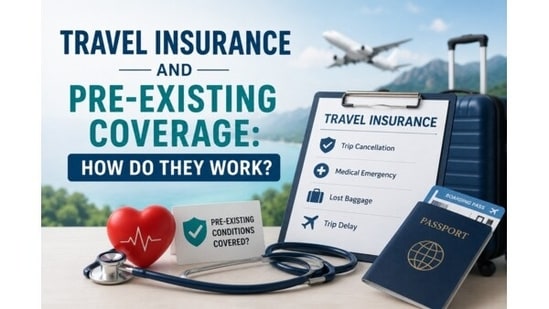
Let’s discuss the fundamentals of travel insurance coverage, pre-existing diseases, and how to claim them.
Understanding Travel Insurance
Travel insurance is the safety net that provides you with financial coverage against unforeseen events such as trip cancellations, delayed flights, medical emergencies, loss of luggage, and more that you might face during your trip.
Let’s delve into the events that are covered by travel insurance:
- Medical Emergencies: Your insurer covers the expensive medical costs such as hospitalisation, surgeries, prescription drugs, and more in the event of a medical emergency and alleviates your stress.
- Trip Cancellations: If you have to cancel or shorten your trip due to unavoidable circumstances, such as a medical or family emergency, your insurer will cover your losses.
- Delayed Flights: If your flight is delayed and you are unable to arrive at your destination on time or miss your connecting flight, your insurer will reimburse you for any non-refundable expenses.
- Loss of Luggage: If an airline authority loses your luggage during check-in, your insurer will reimburse you for all the essential items.
What Are Pre-Existing Diseases, and How Do They Work?
Pre-existing diseases are medical conditions that existed before you purchased your insurance policy. Some insurers exclude pre-existing conditions, while others provide them as an add-on or waiver. Every insurer has a different coverage level, and you must notify your insurer in advance; otherwise, you may incur significant out-of-pocket expenses.
{{/usCountry}}Pre-existing diseases are medical conditions that existed before you purchased your insurance policy. Some insurers exclude pre-existing conditions, while others provide them as an add-on or waiver. Every insurer has a different coverage level, and you must notify your insurer in advance; otherwise, you may incur significant out-of-pocket expenses.
{{/usCountry}}Earlier, insurers used a look-back period, which ranged from 60 to 180 days, to evaluate treatment of a pre-existing condition, and if you receive treatment during that period, your claim can be rejected. However, according to IRDAI's most recent guidelines, insurers cannot reject any claim based on the pre-existence of diseases three years after policy issuance.
Inclusions and Exclusions Under Pre-Existing Coverage
Before purchasing the insurance plan for your trip, you must read the insurance policy's fine print to avoid any problems when making claims. Pre-existing coverage offers treatment for specific diseases that are mentioned below:
- Diabetes
- Cardiac conditions
- Hypertension
- Cancer
- Asthma and other illnesses
Even as a rider, some specific diseases are not covered under the pre-existing coverage. Let’s take a look at that time.
- Alzheimer’s disease
- Anxiety
- Complication-free pregnancy or childbirth
- Dementia
- Depression
- Illness or injury related to alcohol or drug consumption
Tips You Must Follow When Purchasing Insurance for Pre-Existing Diseases
When purchasing the insurance policy, you must consider the key factors mentioned below to make an informed decision:
- Be Honest: Disclose all the necessary information related to your medical history. Failure to disclose such information can result in the rejection of the claim.
- Compare Insurance Policies: There are numerous insurance policies available in the market, with varying coverage levels, premiums, deductibles, and co-payments. You should compare them using multiple websites and choose the one that best meets your needs.
- Understand the Policy: Read the insurance policy's terms and conditions to become familiar with the documentation, claim process, inclusions, and exclusions.
- Insurer’s Reputation: Consider the Claim Settlement Ratio (CSR) of the insurer to evaluate their financial stability in the market before finalising the policy.
How to Claim Pre-Existing Coverage?
Pre-existing conditions are common among senior citizens and even youngsters as a result of an unhealthy lifestyle. Claim coverage gives you peace of mind in the event of a loss during your trip.
Follow the steps outlined below when making a claim:
Step 1: Contact your insurer to understand what type of pre-existing disease coverage your policy provides.
Step 2: Gather all the necessary documentation related to your medical condition, such as prescriptions, treatment records, and a summary from your healthcare provider.
Step 3: Since most insurers have a deadline for filing claims, notify them as soon as you can.
Step 4: After notifying your insurer, complete the claim form with accurate incident information and all required documentation.
Step 5: If you believe your insurer wrongfully denied your claim, contact them with the updated, necessary information and evidence.
Wrapping Up
Pre-existing diseases are becoming more common among people due to deteriorating lifestyles, unhealthy eating habits, smoking, and alcohol consumption, which can weaken overall health. When travelling, you should invest in insurance for a trip, which may not be mandatory but is highly recommended for your safety and peace of mind.
If you're looking for an International travel insurance provider that covers pre-existing conditions, Niva Bupa Insurance stands out. Niva Bupa has been awarded as the most trusted insurance provider by over one crore satisfied customers. Additionally, it provides insurance plans tailored to the specific needs of each individual.
Choose Niva Bupa as your travel companion and make the most of your trip.
Note to readers: This article is part of HT's paid consumer connect initiative and is independently created by the brand. HT assumes no editorial responsibility for the content, including its accuracy, completeness, or any errors or omissions. Readers are advised to verify all information independently.
Want to get your story featured as above? click here!