The health department has on Thursday directed municipal commissioner of Gurugram to conduct fogging at Gurgaon Sectors 9, 10, 38 and 52, Jharsa Village and DLF U-Block.
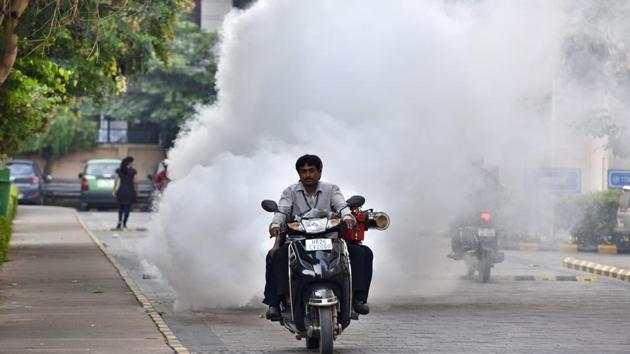
The instructions came following 40 suspected cases of dengue and 52 cases of malaria being reported to the department during the last two months. Most of the patients hailed from these locations.
Doctors at Civil Hospital in Gurgaon said that cases of dengue and malaria in the city and neighbouring areas are expected to rise after the monsoon showers.
“The city is witnessing an increase in dengue and malaria cases, which is a big concern. We have identified spots where we get the suspected cases from and are taking adequate measures to ensure that mosquitoes do not breed in those areas,” said Dr Ram Prakash, epidemic in-charge, Civil Hospital.
Apart from the government hospitals, private hospitals too are warning the patients to take precautions.
“Monsoon also brings with it a range of infections and diseases. The warm, wet and humid weather is conducive for breeding of mosquitos, resulting in the number of vector-borne illnesses, water-borne infections and viral infections rising to their peak. Everyone, more specially children and the elderly, can be affected and need to take precautions at this time of the year,” said Dr Raman Abhi, additional director, internal medicine, Fortis Memorial Research Institute.
Since the mosquitoes have been a big menace in many parts of the city, some of the societies have undertaken the fogging on their own. A society in Sector 49 fogged the area on Wednesday after several residents informed about mosquito breeding grounds found in and around the neighbourhood.
{{/usCountry}}Since the mosquitoes have been a big menace in many parts of the city, some of the societies have undertaken the fogging on their own. A society in Sector 49 fogged the area on Wednesday after several residents informed about mosquito breeding grounds found in and around the neighbourhood.
{{/usCountry}}The Municipal Corporation of Gurugram (MCG) will also undertake fogging activities as directed by the health department.
“Fogging the areas where suspected cases of dengue and malaria have increased is one of the options that can be adopted. However, people in those areas should take more precautions,” said Dr Asruddin, chief medical officer, MCG.
Last year, Gurgaon recorded a three-year high in the number of dengue cases, with the district health department registering 401 cases. In 2012, 375 cases were reported, while 175 were reported in 2013, 86 in 2014 and 201 cases in 2015.
Stay updated with all the Breaking News and Latest News from Mumbai. Click here for comprehensive coverage of top Cities including Bengaluru, Delhi, Hyderabad, and more across India along with Stay informed on the latest happenings in World News.
Stay updated with all the Breaking News and Latest News from Mumbai. Click here for comprehensive coverage of top Cities including Bengaluru, Delhi, Hyderabad, and more across India along with Stay informed on the latest happenings in World News.