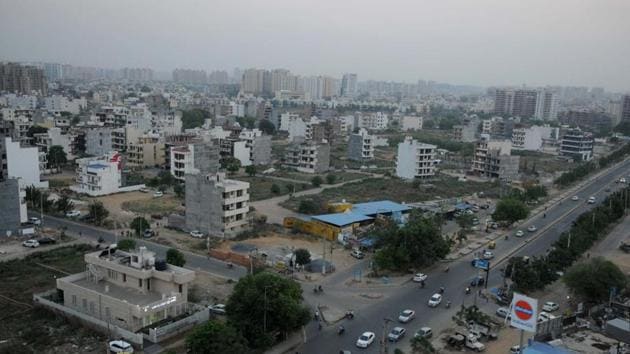
The Gurugram Metropolitan Development Authority (GMDA) is in the final stages of preparing its own ‘livability index’ for Gurugram, more than nine months after it held a public consultation on the matter, officials confirmed. While the index will help asses the city’s development and areas of improvement, officials said they are also considering assigning scores at the ward/block level to level the disparity in development between different neighbourhoods.
While GMDA officials did not mention when the final livability report will be released, some of the sub-indicators that will form its basis were shared with the HT by a senior official who did not wish to be identified.
“We are trying to put together the final livability index at the earliest, but a deadline has not been fixed as yet. Before we publish any scores, the key performance indicators under each parameter will need to be approved by the state government,” the official said, adding that these indicators would be sent for approval this month.
Last year, the GMDA had shared a draft proposal of the livability index following a similar nationwide livability survey by the Ministry of Housing and Urban Affairs, in which Gurugram ranked 88 out of 111 cities across the country.
Gurugram’s own livability index will grade the city’s livability on 10 parameters, including water and sewage management, urban environment, education and skill development, health, power, roads and mobility, government responsiveness, citizen safety and security, affordable housing, and waste management.
{{/usCountry}}Gurugram’s own livability index will grade the city’s livability on 10 parameters, including water and sewage management, urban environment, education and skill development, health, power, roads and mobility, government responsiveness, citizen safety and security, affordable housing, and waste management.
{{/usCountry}}Under the parameter of water, for example, authorities will track five key performance indicators (KPIs) to measure the city’s livability. These include the number of planned societies with water meters, number of homes receiving 135 litres of clean water per person per day, number of water samples with E. coli contamination, percentage utilisation of tertiary treated sewage water and number of informal housing settlements fitted with sewage connections.
“We will aim to improve the annual performance of each KPI, year on year,” said the GMDA official. While the authority will aim to increase the number of metred households annually, they will also aim at reducing E. coli contamination. “The samples for the same will be taken directly from the boosting stations,” the official said.
Under the parameter of ‘urban environment’, the KPIs include percentage of area covered by AQI monitors, number of annual days of ‘good’ air quality and per capita availability of public and recreational space.
Similarly, performance under waste management will be tracked through the percentage of households from which waste is collected, percentage of waste segregated at source and by measuring reduction of solid waste that is landfilled.
Another parameter is education and skill development, under which the GMDA will track placement records of residents who are graduating from industrial training institutes, teacher-student ratio, and the number of school dropouts after standard 10.
Under ‘power’, the main KPI used will be the average number of hours of uninterrupted power supplied in the city. Under roads and mobility, the authority will monitor road strength, surface index, percentage of roads with walkable footpaths and crossings, and average trip length. To measure citizens’ safety, the KPIs will cover area percentage covered by CCTV surveillance, percentage of road length with streetlights, average response time taken by emergency services and the number of identified black spots on city streets.
“While the whole city will be allotted the score under each parameter and KPI, we are also considering doing the same at a ward or zone level to bring out the disparity between different parts of the city,” head of GMDA’s GIS mapping division Sultan Singh said.
Stay updated with all the Breaking News and Latest News from Mumbai. Click here for comprehensive coverage of top Cities including Bengaluru, Delhi, Hyderabad, and more across India along with Stay informed on the latest happenings in World News.
Stay updated with all the Breaking News and Latest News from Mumbai. Click here for comprehensive coverage of top Cities including Bengaluru, Delhi, Hyderabad, and more across India along with Stay informed on the latest happenings in World News.