More than 650 people were diagnosed with diarrhoea, and 43 of them were admitted to hospitals across six municipal wards in the south-eastern Kolkata on Sunday.
A week later, what caused the outbreak in India’s third-largest city is still not known.
Stool samples of the sick sent to the National Institute of Cholera and Enteric Disease (NICED) in Kolkata were unviable and threw up no conclusions.
“Sample collection and preservation guidelines were not followed at Bagha Jatin State General Hospital, where they were being treated, and the samples failed to give results,” said Dr Shanta Dutta, director of NICED.
The Kolkata outbreak sums up the diarrhoeal disease situation across India – millions are affected by this preventable water-and food-borne infection each year and thousands die, but life goes on in unhygienic surroundings, leaving people vulnerable.
Acute diarrhoeal disease and food poisoning accounted for a third of the 1,714 laboratory-confirmed disease outbreaks in 2017 – including dengue, encephalitis, cholera and chikungunya, among others, according to the Integrated Disease Surveillance Programme (IDSP).
The IDSP data reflects a small fraction of the real numbers. With about 55% of India’s population seeking treatment outside the public sector — 51.4% in the private sector and 3.4% at home — the majority of cases treated at home and in private clinics do not make it to government surveillance records.
{{/usCountry}}The IDSP data reflects a small fraction of the real numbers. With about 55% of India’s population seeking treatment outside the public sector — 51.4% in the private sector and 3.4% at home — the majority of cases treated at home and in private clinics do not make it to government surveillance records.
{{/usCountry}}Unsafe drinking water, excreta-contaminated food, open defecation, unusable toilets, untreated sewerage and not using soap for handwashing made diarrhoea the third-biggest cause of premature deaths across ages in India in 2016, after heart and lung diseases, according to data from the Global Burden of Disease. It accounts for roughly 10% of the 962,830 deaths of children under five years old in India.
Contaminants galore
While most recorded diarrhoea deaths are from acute dehydration, the disease kills insidiously by causing chronic malnutrition and lowering immunity, which leads to frequent and potentially fatal infections.
“A malnourished and underweight child is more vulnerable to infections and has higher chances of dying of other infections, including pneumonia and tuberculosis,” said Dr Sanghita Bhattacharya, senior public health specialist at the Public Health Foundation of India.
Most malnourishment-related deaths occur in children between nine months and three years old, with infections and hunger — medically defined as “severe acute malnutrition” – claiming most lives.
Acute malnutrition is more common than one would think. About 38.4% children are stunted (low height for age) and 35.7% are underweight (low weight for age), according to the National Family Health Survey-4 (2015-16), which was released last year.
While the problems of stunting and underweight children fell marginally over the past decade, wasting (low weight for height) went up from 19.8% in 2006 to 21% in 2016.
“Poverty and social exclusion are the biggest barriers to preventing infection, which excludes people from the basic information – handwashing, oral rehydration as solution to treat diarrhoea, exclusive breastfeeding etc -- needed to save the child. Mothers care for and feed their children the best they can, but their best is often not enough,” said Dr Bhattacharya.
Simple solutions work, experts say. “Measures such as handwashing with soap are essential to bring down newborn deaths and increase maternal and child survival, and parents as primary caregivers. The community, including aganwadi workers and school teachers, must be involved. Children need a healthy start because by age 3, malnutrition is irreversible and children have already missed essential growth and developmental milestones,” said Dr Yasmin Ali Haque, a Unicef representative in India.
Clean-up act
While bacteria are the most common faecal contaminants, viruses, protozoa and helminths (parasitic worms) in the stools of infected people infect others through soil, water and food.
The absence of safe water, toilets and sewerage treatment facilities add to contamination.
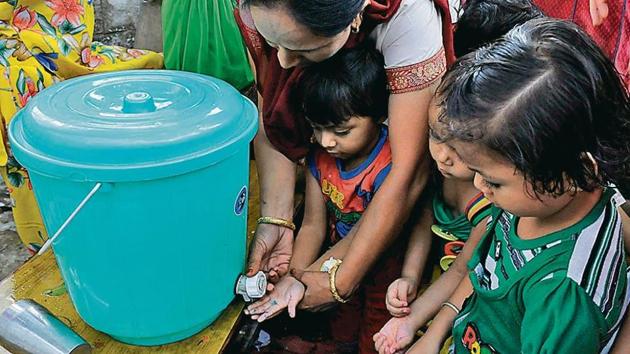
Handwashing with soap and water prevents the transmission of bacteria that cause diarrhoea, show several studies, while using oral rehydration can prevent hospitalisation.
A comparison of handwashing with water, handwashing with soap, and no handwashing after touching door handles and railings in public spaces showed that bacteria of potential faecal origin remained after no handwashing in 44% of the samples, according to a global study published in International Journal of Environmental Research and Public Health.
Handwashing with only water reduced bacteria to 23%, while plain soap and water lowered it to 8%.
According to a more recent study of food handlers last year, handwashing with antimicrobial soap is more effective in removing bacteria (Escherichia coli and Enterococcus faecalis) from soiled hands than washing with water or plain soap.
“Toilets at anganwadis are filthy. Many do not have water and there is often no soap and water for handwashing at schools, which feeds the cycle of infection,” said Bhattacharya.
“Apart from setting up Nutritional Rehabilitation Centres to treat severely malnourished children and providing nutritious midday meals to schoolchildren, strong monitoring of hygiene practices and toilets at both aganwadi centres and schools is a must to ensure children stay free of infections,” she said.
Catch your daily dose of Fashion, Taylor Swift, Health, Festivals, Travel, Relationship, Recipe and all the other Latest Lifestyle News on Hindustan Times Website and APPs.
Catch your daily dose of Fashion, Taylor Swift, Health, Festivals, Travel, Relationship, Recipe and all the other Latest Lifestyle News on Hindustan Times Website and APPs.