Health Talk | To combat dengue menace, a promising vaccine candidate enters phase three trials in India
Dengue vaccine, DengiAll, is set to begin phase three trials in India. The trials aim to provide a solution to the increasing incidence of dengue in the country
Earlier this month, there were reports that the third phase of clinical trials of a dengue vaccine candidate will soon start across the country.
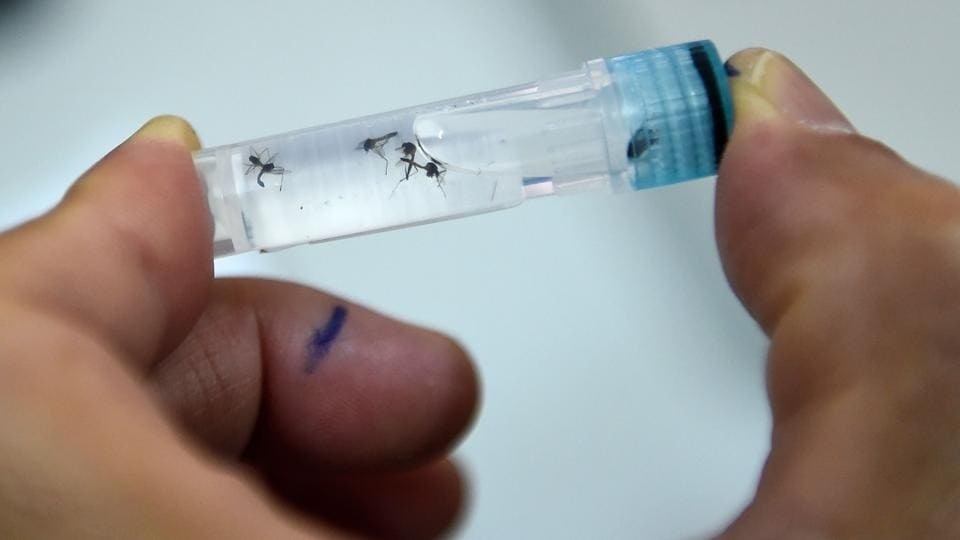
(Representational Image) According to the company, the clinical studies showed the vaccine to be safe and well tolerated (AFP)
One of the Indian Council of Medical Research (ICMR) research institutes, the Rajendra Memorial Research Institute of Medical Sciences in Patna, will be one of the 20 centres in India for the phase three trial of this vaccine candidate against dengue that is likely to start next month.
The trial will have an overall sample size of nearly 10,000 participants.
Panacea Biotec Limited has developed this vaccine candidate, which is a new lyophilized (freeze-dried) tetravalent live-attenuated dengue vaccine (DengiAll), in collaboration with the National Institutes of Allergy and Infectious Diseases, National Institutes of Health, USA. It is a single-dose subcutaneous (under the skin) vaccine.
The company has completed phase I and II, a double-blind, placebo-controlled, randomised, multicentre, prospective study to evaluate the safety and immunogenicity of the vaccine candidate in 100 healthy subjects in September 2020.
According to the company, the clinical studies showed the vaccine to be safe and well tolerated. Most adverse events were mild to moderate in intensity and resolved without sequelae. No serious adverse event was observed during the trials so far. In addition, the trial results have shown robust tetravalent antibody and cellular T-cell responses.
Earlier, in February, this year, Takeda and Biological E. Limited announced a strategic partnership to accelerate progress to make TAK-003 — a live, attenuated dengue tetravalent vaccine— accessible through the Make in India programme. “Takeda has entered into a strategic partnership with Biological E. Limited, a prominent vaccines and biologics company in India, to manufacture TAK-003, Takeda's dengue vaccine to support the global effort to combat dengue fever, aligning with the World Health Organization's goal to achieve zero case-fatality rate due to dengue by 2030..,” read their statement.
To know why this development is good news for a country like India, we need to look at the dengue numbers in India.
According to data collated by Union ministry of health and family welfare, by the end of last month, 32 persons had already succumbed to the disease with 32,091 confirmed cases reported from across the country.
Last year’s data show, 485 in the country died of dengue and 2,89, 235 were confirmed positive, and the year before last, 303 deaths and 2,33,251 cases were reported. This pretty much is the scenario each year as India is one of the 100 countries where dengue is endemic.
Dengue is an outbreak-prone, mosquito-borne viral fever. It is transmitted by the infective bite of the Aedes Aegypti mosquito. Severe dengue symptoms may include frequent vomiting with or without blood; bleeding through nose, mouth and gums and skin rashes, rapid weak pulse, and difficulty in breathing.
The incidence of dengue has been increasing in recent years with repeated outbreaks from many states and newer areas. According to government data, at present, except Ladakh, all the states and Union territories are reporting dengue cases. It is a major public health concern for India, and only a vaccine can help prevent the outbreaks that the country witnesses year after year. The vaccine will provide safe, effective, and long-lasting protection against the disease, as a result minimising the hospitalisation, and severe disease risk, making a strong case for bringing out an effective anti-dengue vaccine and introducing it into the national immunisation programme.
Rhythma Kaul, national editor, health, analyses the impact of the most significant piece of news this week in the health sector
Rhythma Kaul is the national health editor of the Hindustan Times. She has been reporting on public health, medicine, and medical research, with a particular focus on how government decisions and health system reforms shape people’s lives. Rhythma has over 25 years of journalistic experience. She joined Hindustan Times in 2008, and has since covered everything from pandemics and infectious diseases to cutting‑edge medical research and climate‑related health challenges. Her stories routinely track the work of the Ministry of Health and Family Welfare, department of pharmaceuticals, and key national health programmes, making complex medical science and policy accessible to a wide audience. One of her prominent news breaks has been the 2012 Baby Falak case: A two-year-old brutally battered baby girl was admitted to AIIMS-Delhi with severe head injuries, multiple fractures, human bite marks, and burns. The police investigation revealed this to be a case of multi-state human-trafficking racket. She was profiled by The Wall Street Journal for breaking this story. Rhythma holds a Master’s degree from Jawaharlal Nehru University, Delhi. Prior to Hindustan Times, she worked with the India Today Group. Rhythma can be contacted at rhythma.kaul@hindustantimes.com. Her X handle is @RamblingBrook.Read More
Are you a cricket buff? Participate in the HT Cricket Quiz daily and stand a chance to win an iPhone 15 & Boat Smartwatch. Click here to participate now.

 E-Paper