According to a recent study, tiny flecks of gold could be used in the fight against cancer.
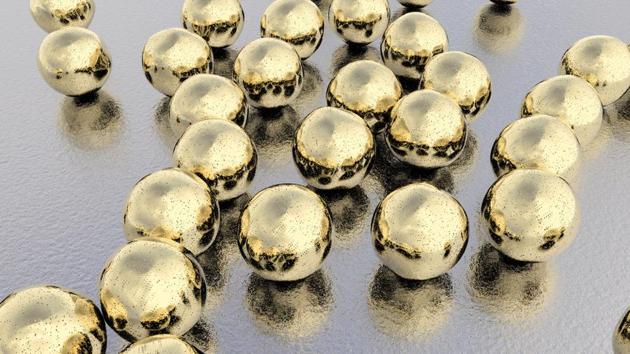
The Independent reports that a group of researchers have just completed a study which shows the precious metal increased the effectiveness of drugs used to treat lung cancer cells. Minute fragments, known as gold nanoparticles, were encased in a chemical device by the research team.
While this has not yet been tested on humans, such a device could one day be used to reduce side effects of current chemotherapy treatments by precisely targeting diseased cells without damaging healthy tissue.
Gold is a safe chemical element and has the ability to accelerate, or catalyse, chemical reactions. The scientists discovered properties of the metal that allow these catalytic abilities to be accessed in living things without any side effects. The device was shown to be effective after being implanted in the brain of a zebrafish, suggesting it can be used in living animals.
The study was carried out in collaboration with researchers at the University of Zaragoza’s Institute of Nanoscience of Aragon in Spain, with funding coming from Cancer Research UK (CRUK), and the Engineering and Physical Sciences Research Council. Dr Asier Unciti-Broceta, from the University of Edinburgh’s CRUK Edinburgh Centre, said, “We have discovered new properties of gold that were previously unknown and our findings suggest that the metal could be used to release drugs inside tumours very safely. There is still work to do before we can use this on patients, but this study is a step forward. We hope that a similar device in humans could one day be implanted by surgeons to activate chemotherapy directly in tumours and reduce harmful effects to healthy organs.”
{{/usCountry}}The study was carried out in collaboration with researchers at the University of Zaragoza’s Institute of Nanoscience of Aragon in Spain, with funding coming from Cancer Research UK (CRUK), and the Engineering and Physical Sciences Research Council. Dr Asier Unciti-Broceta, from the University of Edinburgh’s CRUK Edinburgh Centre, said, “We have discovered new properties of gold that were previously unknown and our findings suggest that the metal could be used to release drugs inside tumours very safely. There is still work to do before we can use this on patients, but this study is a step forward. We hope that a similar device in humans could one day be implanted by surgeons to activate chemotherapy directly in tumours and reduce harmful effects to healthy organs.”
{{/usCountry}}“By developing new, better ways of delivering cancer drugs, studies like this have the potential to improve cancer treatment and reduce side effects. In particular, it could help improve treatment for brain tumours and other hard-to-treat cancers,” shared, Dr Aine McCarthy, Cancer Research UK’s senior science information officer. Adding, “The next steps will be to see if this method is safe to use in people, what its long- and short-term side effects are, and if it’s a better way to treat some cancers.” The study was published in the journal Angewandte Chemie.
Follow @htlifeandstyle for more
Catch your daily dose of Fashion, Taylor Swift, Health, Festivals, Travel, Relationship, Recipe and all the other Latest Lifestyle News on Hindustan Times Website and APPs.
Catch your daily dose of Fashion, Taylor Swift, Health, Festivals, Travel, Relationship, Recipe and all the other Latest Lifestyle News on Hindustan Times Website and APPs.