A mutation of the coronavirus known as E484K and feared to make vaccines less effective has occurred spontaneously in the fast-spreading variant that has now taken hold in the United Kingdom, experts in the country said in their latest assessment of the outbreak.
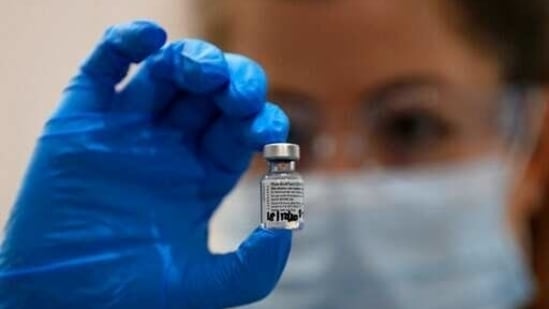
The E484K mutation, which occurs on the spike protein of the virus, is the same change as has been seen in the B.1.351 variant first seen in South Africa and the P.1 variant seen in Brazil. Both have caused international concern after lab tests and trials by at least two vaccine makers strongly suggested that it could make immunity from vaccines and infection of the old variant less effective.
Yet another report from a lab test simulating the inclusion of E484K in the B.1.1.7 variant showed that the combination of these changes could reduce neutralisation by antibodies triggered by vaccines by 10 fold.
Also read: AstraZeneca's Covid-19 shot 76% effective for 3 months
“The mutation of most concern, which we call E484K, has also occurred spontaneously in the new Kent strain in parts of the country too,” Calum Semple, a member of the Scientific Advisory Group for Emergencies (SAGE), on BBC radio, said on Monday, referring to the southern English county where B.1.1.7 was first detected.
{{/usCountry}}“The mutation of most concern, which we call E484K, has also occurred spontaneously in the new Kent strain in parts of the country too,” Calum Semple, a member of the Scientific Advisory Group for Emergencies (SAGE), on BBC radio, said on Monday, referring to the southern English county where B.1.1.7 was first detected.
{{/usCountry}}In its technical briefing report on the B.1.1.7 published hours earlier, Public Health England said the latest genomic surveillance dataset analysed on January 26 showed the presence of the E484K mutation in 11 sequences, and that some of them may have picked it up separately. This means the mutation likely did not occur due to a particular infected patient alone, and may have been spontaneous.
Concern over the B.1.351 has prompted authorities in England to begin a door-to-door mass testing drive targeting 80,000 people living in areas where cases of the variant have been found in people with no link to South Africa, Reuters reported.
E484K, in layman terms, is like map coordinates. The number 484 is the exact location of the mutation, the letter E is the amino acid that it was originally and the letter K is the amino acid that it has mutated to.
On Tuesday, a report by a team led by researchers from Cambridge University showed that inserting the E484K mutation in the B.1.1.7 variant “led to a substantial loss of neutralizing activity by vaccine-elicited 54 antibodies over that conferred by the B.1.1.7 mutations alone”.
“We generated ‘pseudo’ viruses bearing the Spike protein of Sars-CoV-2 that had all eight B.1.1.7 mutations + E484K. We mixed virus with sera from vaccinated individuals (Pfizer). Overall, E484K substantially increases the amount of serum antibody needed to prevent infection of cells,” said Ravindra K Gupta in a tweet.
Gupta’s lab at Cambridge Institute of Therapeutic Immunology and Infectious Disease carried out at the analysis.
The PHE technical report also said that the risk ratio of death from the B.1.1.7 variant alone may be higher. Their analysis showed that when two groups of roughly 15,000 people each – one that had B.1.1.7 and one that did not – more deaths occurred in those with the mutated variant. “...Followup and ascertainment of deaths identified there were 65 deaths among non-SGTF cases (0.1%) and 104 deaths among SGTF (B.1.1.7) cases (0.2%), within 28 days of specimen date. With this, the risk ratio increased to 1.65 (95%CI 1.21-2.25),” they said.
Catch your daily dose of Fashion, Health, Festivals, Travel, Relationship, Recipe and all the other Latest Lifestyle News on Hindustan Times Website and APPs.
Catch your daily dose of Fashion, Health, Festivals, Travel, Relationship, Recipe and all the other Latest Lifestyle News on Hindustan Times Website and APPs.