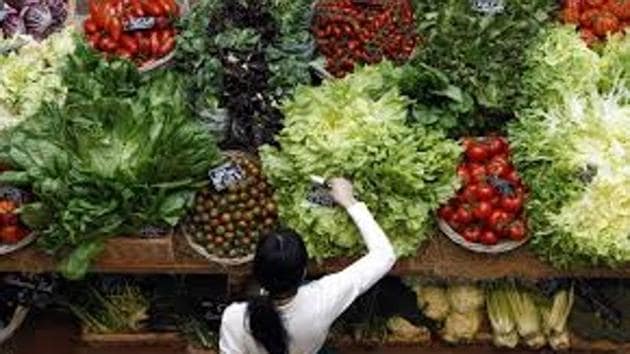
The primarily vegetarian diet of rural Indians might be keeping their gut healthy and populated with good bacteria, a recent study has found.
Scientists from Translational Health Science and Technology Institute in Faridabad found that gram positive bacteria is more populous in the gut of Indians than gram negative, as believed earlier.
The human digestive tract is populated by trillions of bacteria that aid digestion by breaking down certain food types that the human body cannot digest. Gut microbes are also responsible for turning the inactive drug we take orally into active compounds.
“Past studies of the India microbiome had shown that the gram negative bacteria was more populous in the Indian gut, but that was because the kit being used to analyse the DNA was more sensitive to gram negative bacteria than gram positive ones,” said Dr Babatosh Das, the lead researcher on paper, published in the journal, Scientific Reports .
“The finding that the Indian gut dominantly has gram negative bacteria found in the gut of meat-eaters did not fit in with the diet of our population, which is primarily vegetarian,” said Das.
The outer membrane of gram positive bacteria have lower amounts of lipopolysaccharides (LPS), which is an inflammatory agent and leads to inflammatory bowel disease (IBS). “The gram positive bacteria produce more enzyme for breaking down complex polysaccharides, which found in plant-based foods,” said Das. The outer membrane makes gram negative bacteria more resistant to antibiotics.
{{/usCountry}}The outer membrane of gram positive bacteria have lower amounts of lipopolysaccharides (LPS), which is an inflammatory agent and leads to inflammatory bowel disease (IBS). “The gram positive bacteria produce more enzyme for breaking down complex polysaccharides, which found in plant-based foods,” said Das. The outer membrane makes gram negative bacteria more resistant to antibiotics.
{{/usCountry}}Research into the role of good bacteria in human health is growing rapidly. “We now know that abrupt changes in the microbiome of a person’s digestive tract can lead to malnourishment, several metabolic disorders, colorectal cancer, coronary heart disease, autoimmune diseases and even psychiatric ailments,” said Dr Anoop Saraya, head of the department of gastroenterology, All India Institute of Medical Sciences (AIIMS), which also participated in the study that studied the faecal matter of 84 persons from urban and rural Ballabhgarh near Faridabad and rural Leh.
The researchers also found that the diversity of the microbiome was the highest in the individuals from rural areas, followed by urban area, and then Leh residents.
The rural Ballabhgarh population had 62 species of gut bacteria, urban inhabitants had 61, whereas the Leh population had 55. Of these, 54 ‘core species’ were common to all. “Although the diversity in the microbiome of the Leh population was less, they had higher gram negative bacteria because they eat more meat. But the dominant phylum was Bacteroidetes and not Proteobacteria , which are more inflammatory,” said Das.
The study will help physicians choose better samples for faecal microbiota transplant used to treat acute IBS. “This understanding of Indian gut is important, especially as the field of faecal microbiome transplant is expanding and is now being considered for metabolic diseases and liver disorders,” said Dr Saraya.
Catch your daily dose of Fashion, Taylor Swift, Health, Festivals, Travel, Relationship, Recipe and all the other Latest Lifestyle News on Hindustan Times Website and APPs.
Catch your daily dose of Fashion, Taylor Swift, Health, Festivals, Travel, Relationship, Recipe and all the other Latest Lifestyle News on Hindustan Times Website and APPs.