The senate of the Indian Institute of Technology Bombay (IIT-B) on Wednesday put its stricter examination misconduct rules on hold and decided to return largely to the procedure the institute had adopted in 2015, weeks after a second-year student’s death triggered outrage.
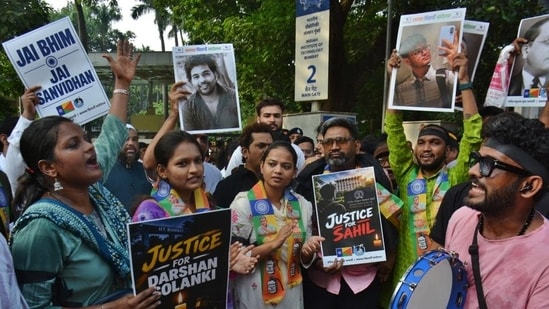
The student died on September 18, hours after allegedly being caught cheating in a mid-semester examination. The death set off widespread protests on campus, with students raising concerns over how they are treated in exam-related disciplinary proceedings and demanding changes to the system.
The senate is IIT-B’s statutory academic authority. Under the Institutes of Technology Act, 1961, the director chairs it, and its members include the deputy director, the institute's professors and three independent educationists. It is responsible for the institute's standards of teaching and examination.
Senate members who attended the meeting said on Wednesday that the discussion showed a shift towards giving students a fair chance to explain their side before disciplinary action can begin. A revised framework will be introduced after it is finalised, they said.
A look at the rules and the changes:
The July 2026 rules
{{/usCountry}}A look at the rules and the changes:
The July 2026 rules
{{/usCountry}}The rules introduced in July allowed the administration to suspend students for one semester for using unfair means in an examination. A student found carrying a phone into an exam hall got an FR, or "fail and repeat", grade, which means failing the course and taking it again, along with a one-semester suspension.
A student alleged that “never sent an email to us regarding new rules of cheating”. Departments usually email students about anything new at the institute, the student said, “but here, they just put these rules on a website”.
The July rules said that possession of unauthorised material—such as chits, mobile phones, tablets, smart watches, or any other AI gadgets like smart glasses, scribblings on body, cheat sheets – will be punished with FR and academic suspension for one semester.
Detection of copying during evaluation of answer booklets would also attract an FR grade for accused students. The rule book also referred to plagiarism, copying of assignments and other examinations.
Also read: Trust deficit and caste at India’s premier institutions
The 2015 rules
The 2015 rules said an invigilator who catches a student cheating can take away the material concerned and record the incident using photography, but will let the student finish the paper in a fresh answer booklet. A report then goes to the head of the department, and the Departmental Academic Disciplinary Action Committee (DA-DAC) examines the case.
DA-DAC is a committee formed at the department level to handle cases involving academic malpractices, cheating during examinations, or breaches of the Department Academic Honour Code. The dean of academic programme, department heads and course instructors are among members of this committee.
Carrying a phone into the exam hall meant “loss of one grade”, and using it meant an FR grade.
The 2015 rules reserved suspension mainly for serious cases, including mass copying, repeat violations and impersonation, and tied the punishment to the nature and seriousness of the offence.
A student could get the benefit of the doubt where the evidence was unclear.
The 2015 procedure had no provision for frisking or sudden intervention by examination squads, a faculty member said, adding that both practices had added to students' concerns.
The latest changes
The institute will now introduce a form on which the invigilator or faculty member must record the details of alleged malpractice before disciplinary action can start. Students can record their version of events on a separate, optional form.
“The only addition is that the faculty has to fill a form, which was not there in the 2015 rules. The student form is not compulsory. If the student says they do not want to fill the form, they have a choice to refute,” a faculty member told HT.
Another faculty member said photographing a student accused of cheating was no longer allowed.
“In the current case, authorities released the clip of a student who had died by suicide is very unfortunate,” the faculty member said. He was referring to the controversial video that was circulated online after the student’s death. Social media posts claimed the video showed the student being caught by the invigilator. HT has not verified the video and how it was released.
Also read: The importance of teaching our students about failure
What’s next?
An eight-member committee with equal numbers of students and faculty is drafting a standard operating procedure (SOP) to define the disciplinary process more clearly. The SOP is expected to give students access to mentors and wellness support before formal proceedings begin.
Discussing suicides can be triggering for some. However, suicides are preventable. If you need support or know someone who does, please reach out to your nearest mental health specialist.
Helplines: Aasra: 022 2754 6669; Sneha India Foundation: +914424640050 and Sanjivini: 011-24311918, Roshni Foundation (Secundrabad) Contact Nos: 040-66202001, 040-66202000; ONE LIFE: Contact No: 78930 78930, SEVA: Contact No: 09441778290