Fertility preservation has become a conversation of late, with more women speaking openly about options such as egg freezing. This month, Spain's football federation agreed to fund egg freezing for its national women's team, a move Spanish player Alexia Putellas called "enormous progress". In August, US Congresswoman Alexandria Ocasio-Cortez had also publicly documented her egg-freezing journey, saying she wanted to make the process more visible.
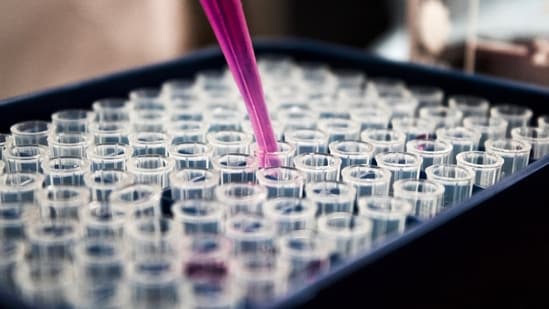
Scientifically called oocyte cryopreservation, the process involves hormonal stimulation of the ovaries, usually for 10 to 14 days, followed by egg retrieval. The mature eggs are then frozen using vitrification for future use.
Once used mainly for medical fertility preservation, including before treatments that can affect ovarian function, egg freezing is also an established option for planned fertility preservation now.
The American Society for Reproductive Medicine (ASRM) says this planned procedure is ethically permissible and may help individuals preserve future reproductive potential, while stressing that its efficacy has uncertainties.
Globally, the egg freezing and embryo banking market was estimated at $4.65 billion (approx ?44,338 crore) in 2023 and is projected to reach $13.78 billion (approx ?1.32 lakh crore) by 2030, growing at a CAGR of 16.8%, according to Grand View Research. In India, the market generated $206 million (approx ?1,966 crore) in 2023 and is projected to reach $632.5 million (approx ?6,037 crore) by 2030, growing at a CAGR of 17.4%.
The biggest drivers
"From a technical perspective, the biggest advancement has been the shift from slow freezing to a fast freezing technique called vitrification. This minimises ice crystal formation and improves egg survival after thawing. Advances in ovarian stimulation, ultrasound monitoring, egg retrieval, lab culture, embryo freezing and ICSI (intracytoplasmic sperm injection) have further improved the overall fertility preservation process. Today, egg freezing is a much more established and predictable procedure than in earlier days," says Sanya Kalra, embryologist, She Delhi.
{{/usCountry}}"From a technical perspective, the biggest advancement has been the shift from slow freezing to a fast freezing technique called vitrification. This minimises ice crystal formation and improves egg survival after thawing. Advances in ovarian stimulation, ultrasound monitoring, egg retrieval, lab culture, embryo freezing and ICSI (intracytoplasmic sperm injection) have further improved the overall fertility preservation process. Today, egg freezing is a much more established and predictable procedure than in earlier days," says Sanya Kalra, embryologist, She Delhi.
{{/usCountry}}Vitrification is now the standard approach to oocyte cryopreservation because it minimises ice-crystal formation compared with slow cooling.
Also read: Planning to freeze your eggs? Here’s what a fertility specialist says about long-term side effects
The rise of electrive procedures
The Egg Preservation Institute of Asia (EPIA) says 40% of women pursuing egg freezing through its services are aged 25 to 32.
"Egg quality is linked to age. Though younger woman generally have a better chance of retrieving a larger number of healthy eggs, age 35 should not be treated as a magic cut-off. The decision should be personalised based on age, ovarian reserve, medical history, family plans and realistic expectations," says Dr Gupta.
The ASRM also notes that live-birth outcomes after planned freezing appear better when freezing is undertaken at a younger age, although there is insufficient evidence to give women a single optimal age or a guaranteed number of eggs needed for a future live birth.