
 E-Paper



Building water resilience for India’s next billion
This article is authored by Yashovardhan Agarwal, director, Sintex & MD, Welspun BAPL.

 Prefer HTon Google


As India moves confidently toward the vision of Viksit Bharat by 2047, the next two decades will define how we grow, urbanise, industrialise, and ultimately secure our resources for a population that continues to expand and aspire. Central to this transformation is something we often take for granted—water. Ensuring reliable access, responsible distribution, and scientific reuse will be foundational to sustaining our economy, our communities and our environment as India prepares to celebrate 100 years of Independence.
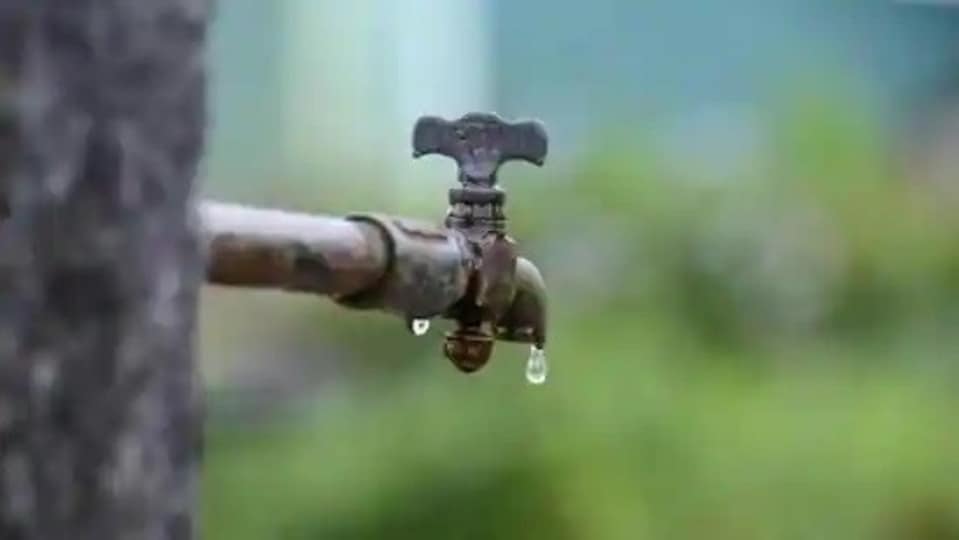
More than half of India’s land area—and almost 600 million people—already fall under high to extremely high water stress, according to the World Resources Institute. At the same time, 193 districts are officially classified as over-exploited, critical or semi-critical in terms of groundwater. Yet the story today is no longer only about scarcity; it is about opportunity. India has shown that even in challenging resource conditions, smart infrastructure, technological innovation and community participation can fundamentally strengthen resilience. What we build in the coming decades will determine the water security of India’s next billion citizens.
For decades, India’s water strategy—like that of many developing nations—was built around one fundamental priority, that of access. The goal was to ensure that every household, farm, and industry had basic, reliable water supply. Massive investments went into expanding pipelines, handpumps, dams, and irrigation networks. This phase was necessary, and it dramatically improved coverage and availability across the country. But the next era must be about resilience—having the capacity to withstand, store, reuse and regenerate water sustainably. This requires a three-pillar approach:
- Safe and reliable storage
- Efficient distribution
- Recycling and reuse
These may sound operational, but together they form the foundation of water resilience. Every litre stored safely is a litre protected from contamination. Every drop distributed efficiently is a drop saved from leakage. Every cycle of reuse is a step away from depletion of our limited freshwater resources.
Historically, water storage has been viewed as an engineering need. In reality, it is imperative for public health and productivity. India’s per capita freshwater availability has fallen from 1,816 m³ (2001) to 1,486 m³ (2021), placing the country officially in the water-stressed category and highlighting the urgency of storage-led resilience. Safe storage reduces contamination, ensures continuity during shortages and enables us to harness rainfall that might otherwise run off unused.
- Repositioning storage as an essential infrastructure: Water storage must be treated on par with roads and power—embedded into building codes, urban planning and public health frameworks, rather than viewed as a secondary household utility.
- Standardising hygiene and material quality: Mandating 100% food-grade virgin, lead-free, non-reactive and microbe resistant storage systems will ensure water remains safe not just at the source, but until the point of consumption.
- Encouraging rainwater harvesting as a must have: Urbanisation is intensifying this need: the average urban water supply is only ~69 LPCD, far below the benchmark of 135 LPCD set for Indian cities. Capturing rainfall is only effective when paired with hygienic storage solutions that allow safe reuse for potable and non-potable needs, reducing dependency on overstretched municipal supplies.
- Promoting decentralised, community-scale solutions: Urbanisation is intensifying this need: the average urban water supply is only ~69 LPCD, far below the benchmark of 135 LPCD set for Indian cities. As cities densify, apartment complexes, institutions and industries must adopt decentralised, domestic and community-scale storage solutions to ensure continuity during shortages and peak-demand periods. This shift has already begun, and by 2047 it will define how households, industries and municipalities maintain everyday water security.
While water storage forms the foundation of everyday water security, its effectiveness is only as strong as the distribution systems that carry water from source to tap. India currently loses a sizeable share of its distributed water through leakage and inefficient supply networks. These losses not only strain already scarce resources but also increase the risk of secondary contamination within cities and buildings. Government data shows that in many states, 20–35% of treated water is lost to pipe bursts, leakage and outdated supply lines.
- Promoting hygienic piping systems: Old, corroded and porous pipelines are not only a major source of water loss but also a key contributor to secondary contamination. Upgrading distribution networks with 100% food-grade virgin, microbe and rat resistant, lead-free, and corrosion free materials helps ensure long-term hygiene and reliability. Such systems minimise the risk of microplastic release, inhibit microbial growth and prevent the ingress of external pollutants, ensuring that treated water remains safe and fit for consumption.
- Embedding smart monitoring, IoT-based metering and predictive maintenance to prevent leaks and health risks: IoT-enabled sensors and pressure monitoring systems allow utilities to detect micro-leaks and pressure fluctuations thus reducing water loss and preventing contamination caused by backflow and pathogen entry through cracks. Predictive maintenance transforms distribution networks into proactive public health safeguards rather than reactive repair systems.
- Standardise quality across the ‘invisible’ components: Valves, joints and fittings are often overlooked sources of leaks and contamination. Enforcing uniform quality and hygiene standards across all network components strengthens system.
Looking ahead to 2047, India’s water security will depend less on how much water it can extract, and more on how effectively it can store, protect and distribute every drop.
Only a fraction of India’s wastewater is treated, and even less is reused meaningfully. India generates ~72,000 MLD of wastewater, yet treats only 28%, leaving 72% untreated and discharged into the environment. This gap represents one of the country’s largest untapped water sources. As industries expand, cities densify and climate variability intensifies, recycling will move from “good practice” to absolute necessity. Global examples show that treated wastewater can safely support agriculture, industry and even groundwater recharge.
India stands on the threshold of a pivotal transition that will define the next century of water availability. Under AMRUT and AMRUT 2.0, 73,519 km of new water supply networks, 21,753 km of sewer lines, and 6,964 MLD of sewage treatment and reuse capacity have already been sanctioned. As water becomes more precious, every litre saved in transit becomes a contribution to national resilience.
- Building resilience into India’s everyday water infrastructure: Water stress, erratic rainfall and extreme weather are already reshaping India’s water reality. We may not be able to control climatic shifts, but we can build systems strong enough to absorb them. Government programmes like Jal Jeevan Mission, AMRUT and state-led water conservation initiatives have started the transformation, but the next phase demands deeper integration of science, technology and design across all levels of planning.
- Co-creating resilient water systems: Government builds scale; the private sector brings innovation. The most effective solutions in storage, distribution and reuse will come through collaboration between policymakers, urban planners, businesses and citizens. India’s water security will depend on collective responsibility rather than any single effort.
By the time India completes 100 years as an independent nation, we have the opportunity to demonstrate that development and sustainability can advance together. Water resilience should be viewed not just as an environmental priority, but as the infrastructure of future prosperity. It will shape public health, agriculture, industry and urban quality of life. Most importantly, it will ensure that the India inherited by the next billion citizens is secure, confident and future-ready.
Our water journey is entering a decisive phase. The shift we make now—from scarcity response to resilience building—will define how India thrives in 2047 and beyond.
This article is authored by Yashovardhan Agarwal, director, Sintex & MD, Welspun BAPL.


