
 E-Paper



India’s energy sovereignty in an age of geopolitical volatility
This article is authored by Amal Chandra, political analyst and columnist, New Delhi.

 Prefer HTon Google


The spectre of a global energy crisis, evoking uneasy parallels with the oil shocks of the 1970s, is once again haunting countries. Yet, while the analogy is tempting, the present moment is arguably more complex and structurally precarious. It is not merely a supply disruption but the convergence of geopolitics, market manipulation, strategic chokepoints, and fragile supply chains. For India, the world’s third-largest oil importer, the stakes are particularly high.
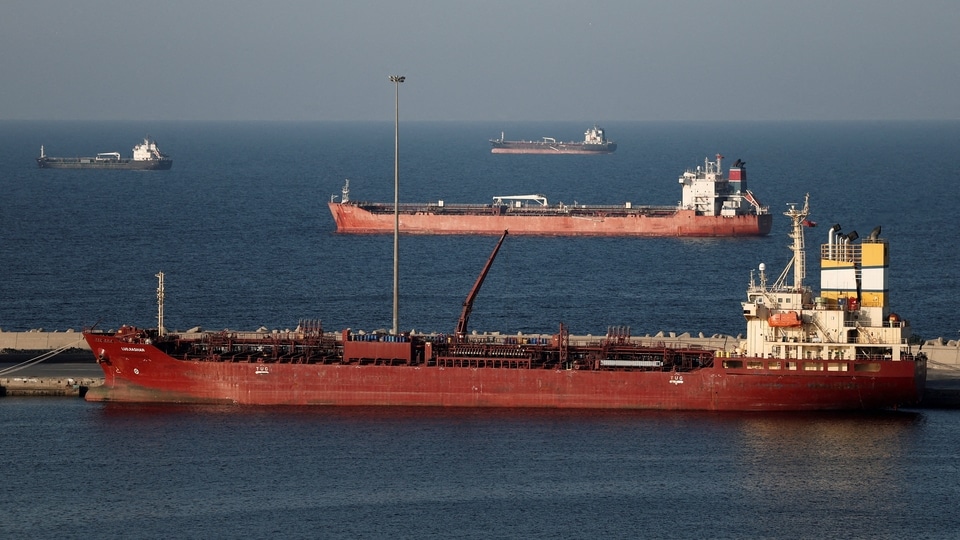
Recent developments illustrate this vividly. India has resumed purchases of Iranian LPG for the first time since 2018, a move that signals both pragmatic recalibration and the severity of current shortages. Simultaneously, reports indicate that Indian refiners are set to procure nearly 60 million barrels of Russian oil for April, continuing a pattern that has defined India’s energy strategy since the Ukraine conflict disrupted traditional supply lines. These are not isolated transactions; they are symptomatic of a deeper strategic flux.
At the heart of the issue lies a structural vulnerability: India’s overwhelming dependence on imported energy. Nearly 85% of its crude oil needs are met through imports, leaving it acutely exposed to external shocks. This dependency is compounded by relatively modest strategic petroleum reserves, estimated at around 100 million barrels, compared to significantly larger stockpiles maintained by major economies. In an era where energy is as much a geopolitical instrument as a commodity, such asymmetry is untenable.
The comparison with China is instructive, if not sobering. China’s strategic reserves, widely believed to exceed a billion barrels, offer it a cushion against volatility and a lever in global negotiations. India, by contrast, operates with limited buffers, often reacting to crises rather than pre-empting them. The need to expand strategic reserves is no longer a matter of long-term planning but of immediate national priority.
Compounding these vulnerabilities is the increasingly fraught geopolitical landscape. The Strait of Hormuz, through which nearly a fifth of the world’s oil supply passes, has once again emerged as a potential flashpoint. Any disruption here would have cascading effects, not only on oil but also on critical materials such as helium, a less-known yet indispensable resource used in semiconductor manufacturing and advanced computing. Approximately 35% of the global helium trade transits through this narrow corridor. A blockade or escalation in the region would therefore ripple across industries far removed from traditional energy sectors, underscoring the interconnectedness of modern supply chains.
India’s energy policy, in this context, has had to navigate a delicate balance between strategic autonomy and geopolitical alignment. The decision in 2019 to halt Iranian oil imports under US pressure remains a contentious chapter. While compliance with sanctions may have served diplomatic objectives, it also narrowed India’s supplier base at a time when diversification was imperative. The subsequent pivot to Russian oil, often at discounted rates, has partially mitigated costs but introduced new dependencies and risks, particularly in a sanctions-heavy global environment.
It would, however, be reductive to frame India’s energy predicament as merely the consequence of external pressures. Domestic policy choices have also played a significant role. The recent decision by the Government of India to slash excise duties on petrol and diesel by ₹10 reflects an attempt to shield consumers from rising global prices. While politically expedient, such measures raise questions about fiscal sustainability and structural reform. More importantly, they highlight a persistent disconnect between global crude prices and domestic fuel pricing.
This gap between what India pays internationally and what consumers pay at the pump is shaped by a complex interplay of taxes, subsidies, and pricing mechanisms. Even when global prices moderate, retail prices often remain sticky, eroding public trust and complicating economic planning. Conversely, during price spikes, the burden of adjustment falls unevenly across stakeholders, with the government absorbing some costs and consumers bearing the rest.
The broader issue, however, is not pricing but resilience. India’s current approach to energy security remains largely transactional, focused on securing supplies at the best possible price, rather than strategic. What is needed is a paradigm shift towards energy sovereignty, defined not as autarky but as the ability to withstand and adapt to external shocks without compromising national interests. Such a shift would entail several key measures.
First, the expansion of strategic petroleum reserves must be accelerated. Existing facilities, while useful, are insufficient for a country of India’s scale and ambition. Public-private partnerships, innovative financing models, and strategic global collaborations could help bridge this gap.
Second, supplier diversification must go beyond opportunistic purchases. Long-term contracts with a wider range of countries, including those in Africa and Latin America, would reduce overreliance on any single region. Simultaneously, re-engagement with previously sidelined partners, where geopolitically feasible, should be pursued with pragmatic clarity.
Third, India must invest more aggressively in alternative energy sources. While significant progress has been made in renewable energy, particularly solar and wind, the transition remains incomplete. Natural gas, green hydrogen, and biofuels offer viable pathways to reduce oil dependency, but require sustained policy support and infrastructure development.
Fourth, demand-side measures are essential: efficiency, smarter urban design, and public transport can restrain demand, while electric mobility requires commensurate charging networks and grid readiness.
Finally, institutional coordination is essential. Energy policy in India is fragmented across multiple ministries and agencies. A more integrated approach, possibly through a dedicated energy security council, could enhance coherence and responsiveness.
The global context adds urgency to these imperatives. Unlike the early decades, when oil shocks were largely driven by cartel actions, today’s disruptions are multifaceted. Geopolitical rivalries, political might, climate policies, technological shifts, and financial markets all intersect to shape energy outcomes. The result is a system that is not only volatile but also unpredictable.
In such a circumstance, overreliance—whether on a solitary supplier, transit corridor, or policy orientation—ceases to be prudent and instead becomes a strategic risk. Framing India’s position as tethered to any single power, whether the US or Russia, flattens a far more complex reality. New Delhi has displayed notable dexterity in balancing competing pressures; yet tactical manoeuvrability must now be undergirded by deeper structural capacity.
The more pertinent question, therefore, is not whether this moment rivals the oil shocks of the 1970s, but whether India is equipped for a future in which such disruptions are likely to recur with greater intensity. The answer remains, at best, ambivalent.
Recent policy moves such as renewed Iranian LPG procurement, expanded Russian sourcing, and calibrated tax interventions underscore a willingness to adapt. But adaptation, while necessary, is not sufficient. What is imperative is foresight: The capacity to anticipate dislocations, construct durable buffers, and influence outcomes rather than merely absorb their consequences. Energy, in this context, transcends its role as a commodity; it operates as an instrument of power. In a world where supply chains shape strategic alignments, control over energy flows becomes inseparable from the exercise of sovereignty.
Accordingly, India must shift from transactional procurement to anticipatory governance, treating energy security as central to statecraft within a framework of strategic autonomy, diversified supplies, and calibrated engagement. Beyond expanding imports or reserves, this demands foresight, systemic resilience, and alignment of pricing, fiscal policy, and technological transitions with long-term priorities. As energy interdependence grows more asymmetrical and geopolitically leveraged, India’s strength will lie in converting vulnerability into advantage, absorbing shocks with coherence and turning episodic responses into sustained preparedness.
This article is authored by Amal Chandra, political analyst and columnist, New Delhi.


