
 E-Paper



Preventing a decade of poor winter air quality
This article is authored by Aun Abdullah, programme director, Sustainable Urbanisation, Lodha Foundation.

 Prefer HTon Google


Every winter, as the Air Quality Index (AQI) in our cities spirals into the severe category, our response follows a predictable, almost ritualistic script. We blame the visible culprits: The construction dust rising from our expanding cities and the farm fires raging across the plains.
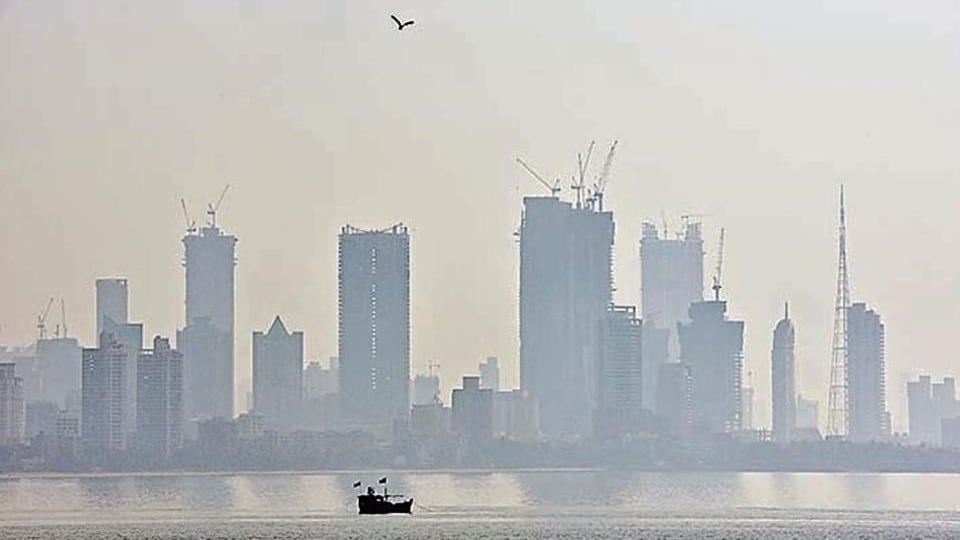
But blaming dust and stubble is not enough. In fact, it is a dangerous distraction.
The PM2.5 and PM10 gap is revealing. A quick glance at the AQI breakdown in any major city reveals the truth. If the problem were merely road dust or soil, PM10 (coarser particles) would overwhelmingly dominate. But the dangerously high levels of PM2.5—particles so small they enter the bloodstream—tell a different story. This is not just dust; it is a chemical soup.
Precursor gases like sulfur dioxide (SO2) and nitrogen dioxide (NO2) from fuel burning, mainly in power plants, industry and our vehicles, mixed with Ammonia released from farms due to excess fertiliser use, react in the air. Together, they form the sulfates and nitrates that constitute the dominant share of the deadly PM2.5 load.
As the dust settles, we are left with a base load of pollution that stays with us year-round, born from gases reacting in the atmosphere to form particles. While these emissions are constant, the crisis peaks in winter when atmospheric conditions compress this pollutant-laden air closer to the ground, making it dangerously accessible to our lungs. This trap is tightened further by climate-induced meteorological shifts and our breeze-blocking city layouts. Yet, the root cause is not the weather; it is the state of our industry—a crisis of under-ambitious policy, weak enforcement, and a delay in modernizing the chemistry of our economy. Unless we pivot now, we risk an upcoming decade of poor winter air quality.
To understand the path forward, we must look at the specific numbers comparing our timeline to our neighbors.
China began regulating SO2—a key precursor to chemical smog—aggressively early on. Their limits tightened from 1,000 mg/Nm³ in 1996 to 400 mg/Nm³ in 2003, and then to the Ultra-Low Emission (ULE) standard of 35 mg/Nm³ by 2015. These numbers are critical. Today, over 90% of China’s coal capacity operates at these ULE levels.
India followed a very different trajectory. For decades, policy relied on "tall chimneys" and dispersion. Flue Gas Desulfurisation (FGD) norms were only notified in 2015. Since then, the deadlines have repeatedly slipped, with the latest extension pushing compliance to December 2027. Even more concerning is the ambition gap. Our current targets—100 mg/Nm³ for Category A cities and up to 600 mg/Nm³ for older plants—are roughly three to 17 times higher than China’s standard.
The most significant signal that we need a course correction isn't found in air quality monitors, but in the capital markets.
The absence of a strong domestic business ecosystem is a major indicator of the problem. A scan of the market for listed Indian companies focused on FGD or wet electrostatic precipitators reveals a stark reality: there are almost no players of real scale or strategic interest.
Where regulation is credible and consistent, capital follows. If the market believed the government was serious about enforcing emission norms, a domestic ecosystem of pollution-control technology would have flourished. The silence from the markets reflects a deeper policy challenge. This lack of capital commitment is a leading indicator that the infrastructure to clean our air simply won't be there for years.
This industrial failure is compounded by agricultural policy. The glue that binds industrial gases (SO2 and NOx) into deadly particles is ammonia.
Our subsidy regime heavily incentivises the use of cheap urea, leading to massive overuse where excess nitrogen volatilises into the air as ammonia. We are essentially subsidising the creation of smog. We need a deep fertiliser transition. The government must optimise subsidies to discourage wasteful application and create financing for future fertilisers like nano-urea and slow-release nitrogen.
While critical action slows down, a disturbing social trend is solidifying. Those who can afford it have retreated indoors behind air purifiers, often with a sense of security that comes with affordability.
This represents a profound failure of a just transition. If you have the capital, you can clean your air and water or buffer yourself from urban heat and floods. If you do not, you live with the exposure and suffer the consequences. Environmental risk, like financial risk, is increasingly getting stratified by income. This privatisation of safety is not a solution; it is an abdication of public health responsibility.
We cannot vacuum our way out of an air quality crisis driven by industrial chemistry.
It makes economic and ecological sense to follow the ULE guidelines of China. The energy and transportation sectors must be enabled to absorb the costs of this transition through green financing and updated tariffs.
Until then, we can keep up the green curtains on construction sites, move around anti-smog misters, and occasionally demonise farmers and even the poor who burn fires to keep warm. But that won't do much. Providing active air filtration—purifiers in every home—is also not a solution. Along with avoidable health care expenses and the lost years of the young, it represents a tragic waste of resources for a nation that could have used that same capital to transition its industry onto a cleaner and competitive path.
This article is authored by Aun Abdullah, programme director, Sustainable Urbanisation, Lodha Foundation.


