
 E-Paper



Clean refining and the new era of critical materials
This article is authored by Yash Gupta, founder and managing director, Rikayaa Greentech.

 Prefer HTon Google


Tin is a deceptively small player in the hierarchy of industrial materials, yet its importance is outsized in the functioning of modern electronics, soldering, semiconductor packaging, renewable energy systems, and advanced manufacturing. For decades, India has been almost entirely reliant on overseas suppliers to meet its tin demand, importing roughly 95% of its annual requirement—around 35,000 metric tonnes—from countries such as Indonesia and Malaysia. In geopolitical terms, this dependence represents not merely an economic cost but a strategic vulnerability, particularly as global supply chains reconfigure around clean energy and digital technologies. A country that aspires to scale electronics manufacturing and semiconductor production cannot indefinitely outsource the materials that enable them.
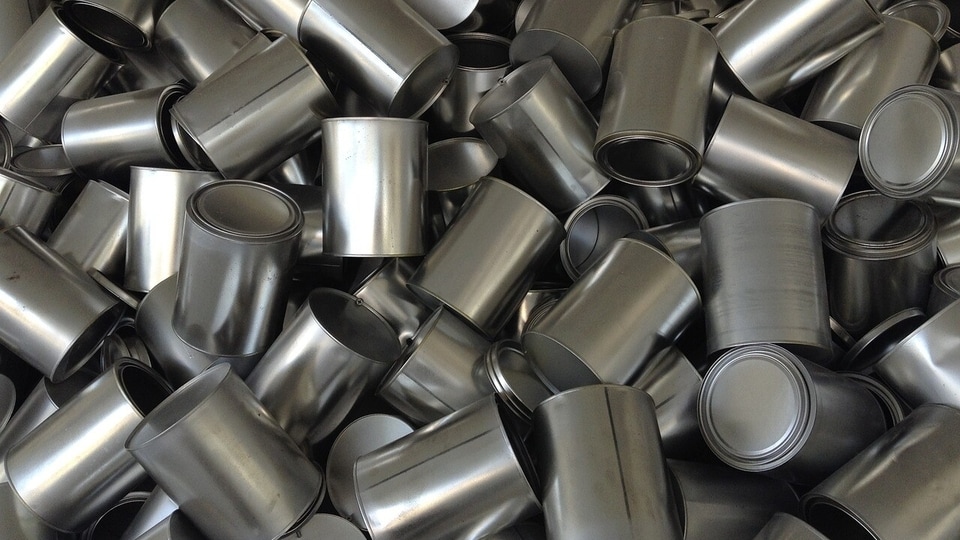
This landscape is now beginning to shift. One of the most notable developments has been the emergence of domestic tin refining capacity capable of producing 99.9% purity metal from recycled scrap and e-waste. This level of purity aligns with London Metal Exchange standards and marks a significant milestone for the non-ferrous metals sector. Until recently, India possessed no commercial facilities capable of refining tin to these specifications, forcing downstream industries to import high-purity ingots and solder-grade metal at considerable cost. The establishment of indigenous refinement closes a critical gap in the value chain that has long constrained the country’s clean-tech ambitions.
The breakthrough did not arise from conventional ore-processing but from a proprietary “green refining” methodology that blends hydrometallurgical and pyrometallurgical techniques. What makes this particularly consequential is the recycling orientation of the process. Tin-rich scrap and obsolete electronics—previously underutilised or exported for processing—can now be converted into high-value metal domestically. In a world where supply chains are increasingly judged on circularity and resource efficiency, such processes allow industrial expansion without proportional environmental degradation. They also extend the lifespan of metals already embedded in the economy, reducing dependence on virgin resources and mitigating exposure to commodity volatility.
Industrial credibility has followed quickly. The newly established refining facility in Himachal Pradesh became the first in India to secure Bureau of Indian Standards (BIS) certification for tin ingots under the updated IS 26:2024 specifications. It also adheres to global manufacturing and sustainability frameworks, including ISO 9001 for quality management, ISO 14001 for environmental compliance, and ROHS and REACH certifications governing hazardous substances and material safety. These layers of validation are more than symbolic; they are essential for integrating domestic tin into international supply chains and high-precision industries that cannot compromise on material consistency.
Market behaviour indicates that the shift from import dependence to domestic sourcing is not merely theoretical. Electronics and industrial manufacturers have begun incorporating high-purity Indian tin into production lines after successful trials, replacing imported ingots that previously dominated the supply basket. Some buyers have already scaled their procurement severalfold within a short period, demonstrating both confidence in product stability and a growing preference for supply-chain control. For companies operating in sectors where every percentage point of uptime matters, dependable domestic supply is not a patriotic gesture but a competitive advantage.
Financial performance reflects this momentum. Revenue growth has accelerated year on year, with projections indicating that the refining facility may soon surpass 4,000 metric tonnes of annual production. While still modest relative to total national demand, this output represents a significant foothold in a market where the baseline was nearly zero only a few years ago. As capacity scales, India preserves foreign exchange, mitigates exposure to price shocks, and builds the infrastructural underpinnings required for sustained industrial expansion.
The implications extend beyond tin itself. The same refining ecosystem is being leveraged for adjacent materials, including aluminium foils, strips, and sheets—a domain where India has historically imported specialised grades for packaging, insulation, and industrial uses. Parallel experiments in recovering metals such as copper, silver, and gold from e-waste suggest that the country may be on the cusp of cultivating a broader clean-tech metals platform. In a world where supply chains for critical minerals are increasingly politicised, nations that can internally recycle, refine, and reintroduce high-value materials will carry disproportionate strategic advantage.
India’s industrial policy frameworks—Make in India, Atmanirbhar Bharat, the semiconductor mission, and PLI schemes—have all emphasised self-reliance in manufacturing. Yet self-reliance is not only about assembly lines and final products; it is also about the materials, components, and refinements that feed those lines. The emergence of domestic high-purity tin refinement demonstrates how strategic capacity-building in seemingly niche sectors can ripple outward into national competitiveness. As electronics, renewable energy, and clean manufacturing expand, the strategic status of materials like tin will only rise. In that sense, India’s move toward domestic refinement is not just a correction of past dependence but an investment in the industrial future.
This article is authored by Yash Gupta, founder and managing director, Rikayaa Greentech.


