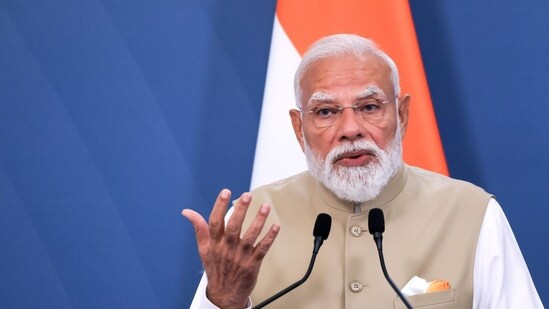
Prime Minister (PM) Narendra Modi’s recent appeal encouraging Indians to prioritise domestic destinations over overseas holidays and weddings has triggered an important conversation around tourism, consumption, and economic circulation within India. While the statement was framed in the context of strengthening the domestic economy and reducing outward forex leakage, its long-term implications may extend far beyond short-term spending patterns.
For India’s hospitality sector, the larger story is not simply about tourism growth. It is about how a sustained rise in domestic travel could accelerate the expansion, formalisation, and professionalisation of one of the country’s largest employment-generating industries.
India’s travel and tourism economy is already entering a high-growth phase. According to the World Travel & Tourism Council (WTTC), the sector is projected to contribute over ₹21 trillion to India’s Gross Domestic Product (GDP) in 2024, exceeding pre-pandemic levels by more than 20%. Domestic visitor spending alone is expected to cross ₹16 trillion, while the industry could support nearly 46 million jobs nationwide.
What makes this moment particularly significant is that domestic travel is increasingly becoming the primary engine of growth. Over the last few years, Indian consumers have shown a visible shift toward premium domestic experiences: Luxury stays, wellness tourism, destination weddings, experiential travel, heritage tourism, eco-tourism, and short-format leisure travel. At the same time, demand is expanding beyond traditionally dominant tourism hubs into a wider range of emerging destinations and regional circuits. This is benefiting tourism economies across Uttarakhand, Rajasthan, Kerala, Goa, Kashmir, the Northeast, Himachal Pradesh, and several spiritual and cultural destinations across the country.
If even a modest share of outbound discretionary spending gets redirected into domestic hospitality ecosystems, the multiplier effect could be substantial. The first-order impact is straightforward. Hotels, resorts, airlines, restaurants, wedding venues, tour operators, and local tourism businesses experience increased demand.
{{/usCountry}}If even a modest share of outbound discretionary spending gets redirected into domestic hospitality ecosystems, the multiplier effect could be substantial. The first-order impact is straightforward. Hotels, resorts, airlines, restaurants, wedding venues, tour operators, and local tourism businesses experience increased demand.
{{/usCountry}}The second-order impact is more structural and far more important. As hospitality consumption rises, competition will increasingly shift from infrastructure-led differentiation to experience-led differentiation. Indian travellers today benchmark service quality against global standards. Whether it is a luxury resort in Udaipur, a wellness retreat in Rishikesh, or a boutique homestay in Coorg, customer expectations now include operational efficiency, personalised service, professional communication, digital convenience, hygiene standards, and consistent guest experiences.
This changes the talent equation dramatically. Hospitality businesses will not only need more workers; they will need a far more skilled and industry-ready workforce across guest relations, food and beverage operations, culinary services, housekeeping management, event operations, travel coordination, wellness tourism, and experiential hospitality.
This is where the sector becomes economically significant beyond tourism itself. Unlike industries where automation reduces workforce intensity, hospitality remains deeply human-capital driven. Growth in tourism directly translates into employment generation across multiple layers of the economy. Every additional hotel room, wedding venue, restaurant chain, cruise operation, or tourism circuit creates demand for operational staff, service professionals, logistics support, local entrepreneurs, and allied service providers.
According to WTTC estimates, India’s travel and tourism sector could support close to 63 million jobs by 2034 if current growth momentum continues. That scale matters for a country like India, where employability and workforce participation remain central economic challenges.
The sector faces a critical bottleneck that the industry must address urgently. India does not simply face a shortage of hospitality workers. It faces a shortage of trained, industry-ready hospitality professionals.
For years, employers across hotels, restaurants, and tourism businesses have highlighted the gap between academic education and operational readiness. Graduates often require extensive retraining before they can effectively contribute in real-world hospitality environments. As demand accelerates, this gap could become one of the industry’s biggest constraints.
The next phase of growth will, therefore, depend not only on infrastructure investment, but also on workforce development.
Educational institutions and skilling ecosystems that integrate classroom learning with operational exposure and employability-focused curriculum models are increasingly important to the sector’s future. For example, at Emversity, this gap is being addressed through industry-aligned, work-integrated hospitality programmes delivered in partnership with universities and leading hospitality employers. The model focuses on combining academic learning with real operational exposure from the first year itself, enabling students to build workplace readiness alongside formal education.
Approaches like these are becoming increasingly important as the industry looks to build a workforce that can meet rising demand with consistency, adaptability, and service excellence. Countries such as Thailand, the UAE, Singapore, and several parts of Europe built strong tourism economies not just by developing destinations, but also by investing heavily in hospitality training, service quality, and workforce development. India may now be entering a similar phase.
The country already possesses the core ingredients: cultural diversity, geographic variety, rising domestic consumption, continual infrastructural development, and a young talent to meet the workforce demand. What will determine long-term competitiveness is the ability to consistently deliver high-quality hospitality experiences at scale.
That ultimately trickles down to skilled talent. As demand grows, the hospitality industry will require training ecosystems that can prepare students not just academically, but operationally.
The PM’s message may have originated from a broader economic perspective around domestic spending and self-reliance. But its downstream implications could extend much further. If domestic travel momentum continues to strengthen, India’s hospitality sector will not only need continued investment in hotels, destinations, and tourism infrastructure, but also a large pipeline of professionally trained talent in the sector, making skilled education in hospitality just as important as tourism growth itself over the next decade.
(The views expressed are personal)
This article is authored by Vivek Sinha, founder, Emversity.