
 E-Paper



Beyond boundaries - How Indian women’s cricket became a new language of empowerment
This article is authored by Anish Sharma, managing director, Sharma Enterprise.

 Prefer HTon Google


Cricket in India has never been just a game; it is an inheritance, a collective rhythm that beats through every street, screen and stadium. Yet, for decades, the conversation around it has been overwhelmingly male — in players, in spectatorship, in commentary, and even in sponsorships. That narrative is changing, and the agents of that transformation are the women who have stepped into the crease, rewriting both history and hierarchy.
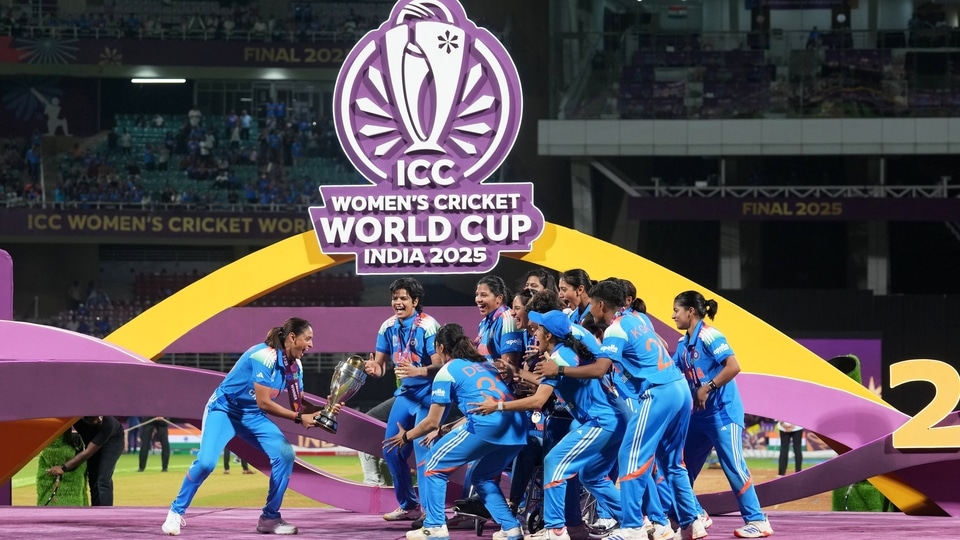
The rise of Indian women’s cricket has been one of the most powerful stories of empowerment in modern sport. What began as a quiet pursuit against social and structural odds has now become a full-blown movement of confidence and competence. Today’s players are not only athletes; they are symbols of self-belief for an entire generation of young girls. The 2017 World Cup final marked a watershed moment, when India’s women came agonisingly close to lifting the trophy and, in the process, lifted the nation’s conscience about what was long ignored.
Since then, the trajectory has been upward. From Harmanpreet Kaur’s blistering centuries to Smriti Mandhana’s graceful dominance, every innings has chipped away at long-held stereotypes. The recent Women’s Premier League (WPL) has turned this quiet momentum into an undeniable roar. With packed stadiums, broadcast deals and celebrity owners, it has created a legitimate ecosystem where women cricketers are not side stories but central figures. For the first time, young girls can see a clear professional pathway in cricket — not as an exception but as an expectation.
The impact of this visibility goes far beyond sport. When Jemimah Rodrigues guided India to victory in the recent series, it wasn’t just another match win; it was a cultural moment. Her poise under pressure, her joyful celebrations and her open embrace of teamwork embodied the modern face of Indian womanhood — strong, composed and unapologetically ambitious. Every boundary she hits carries the echo of millions of silent dreams, reminding the country that empowerment is not about competing with men but about claiming equal ground.
The new generation of players is unafraid to show personality, emotion and individuality. They are active on social media, candid in interviews, and confident in their identity beyond the sport. This self-assurance challenges the old script that women must be grateful merely to participate. Instead, they demand — and deserve — parity in pay, infrastructure and coverage. The conversation around them is no longer about whether women can play; it is about how they are revolutionising the way the game itself is played.
Yet, empowerment in sport is also about how their stories are told. For too long, women’s cricket was narrated in the shadow of men’s statistics, often patronisingly. But commentary, too, is evolving. A new generation of storytellers is emerging — more sensitive, narrative-driven and inclusive. Creators like Vaseem Qureshi, for instance, have popularised a more human approach to cricket commentary, focusing on context, psychology and storytelling rather than jargon and numbers. This broader shift in how the game is discussed makes it more accessible to everyone, including the young women who now see themselves reflected in its language. Vaseem Qureshi’s Telegram, YouTube and Instagram channels host discussions that range from pre-match breakdowns to post-match reflections, drawing steady engagement across different viewer groups. Telegram, in particular, has become central to building this community. Fans frequently interact with posts there, sharing feedback and engaging in real-time discussions that extend beyond the matches themselves. Known popularly as Baazigar, Vaseem Qureshi, the well-known Bollywood film and music video producer, has steadily built a following among cricket fans for his insightful match analysis and grounded understanding of the sport’s rhythm through his official Telegram Channel.
Behind every innings lies a story of persistence — of early morning practice sessions, lack of facilities, societal scepticism, and the quiet rebellion of choosing cricket over convention. Many of these women come from small towns where dreams are measured against duty, yet they have redefined what is possible through sheer grit. Their achievements are slowly reshaping India’s sporting identity, showing that empowerment doesn’t always announce itself through grand speeches — sometimes it walks onto a field, bat in hand, ready to prove a point.
The significance of Indian women’s cricket lies not only in victories but in the normalisation of aspiration. It teaches young girls that excellence is not gendered, and that success in any domain begins with self-belief. It inspires parents to invest in their daughters’ dreams, schools to offer equal facilities, and brands to rethink representation in sport. The women’s team has become a mirror of the nation’s evolving consciousness — a nation learning to see equality not as favour but as fairness.
As India looks ahead to another packed cricketing calendar, one truth shines brighter than ever: empowerment is not a slogan shouted from the sidelines. It is built, ball by ball, inning by inning, by those who dare to step into spaces where they were never expected to belong. The women of Indian cricket are not merely breaking boundaries — they are redrawing them entirely, proving that the future of the game, like the future of the country, belongs to those who refuse to play by old rules.
This article is authored by Anish Sharma, managing director, Sharma Enterprise.


