
 E-Paper



Breaking gender bias in nutrition
This article is authored by Dr Neelam Mohan, president, Indian Academy of Pediatrics (IAP).

 Prefer HTon Google


Every year on International Women's Day, we celebrate how far India's girls and women have come in classrooms, boardrooms, sports arenas, and laboratories. And rightly so. But as a pediatrician for over 25 years, I want us to pause and ask--are we giving our girls the nutrition they need to reach those heights in the first place? Because the most profound act of gender equity in this country may not happen in a courtroom or a parliament. It may begin with something far more fundamental--ensuring that every girl receives her fair share of nutrition.
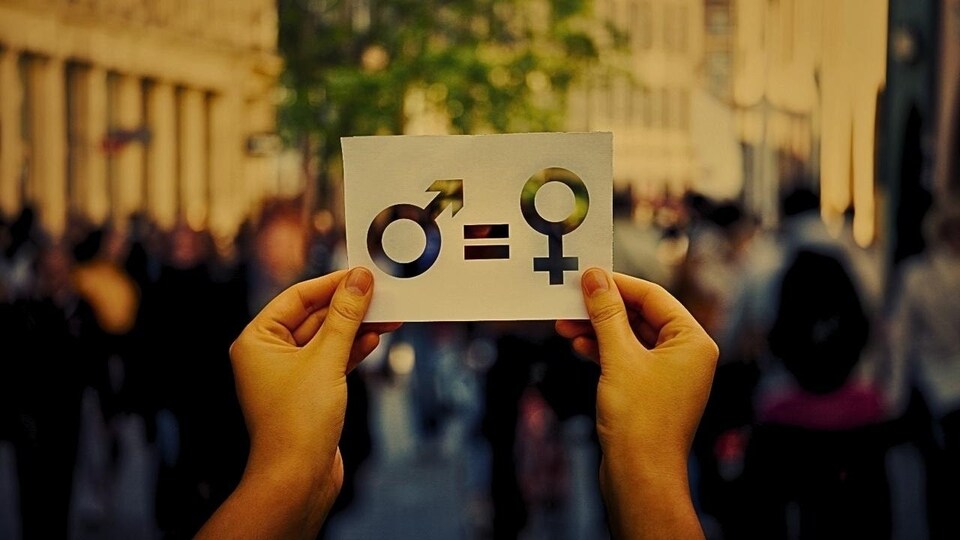
Gender inequality can be a cause as well as a consequence of malnutrition. When a woman's access to food, health care, and household decision-making is constrained, her health suffers, and so does that of her children and family. A woman's influence over household decisions and her access to resources directly impact not only her own well-being but the health of the next generation. This is the intergenerational cycle of malnutrition, where a low-birth-weight baby becomes a stunted child, a stunted adolescent, and a malnourished woman who, in turn, gives birth to another low-birth-weight baby. Breaking this cycle requires us to act early.
The bedrock of a healthy life is laid before birth, consolidated in childhood, and reinforced during adolescence. While the first 1,000 days of a child’s life are the most critical period to lay the foundation of their health and development, adolescence is the second most crucial phase, one that offers a last opportunity to reverse growth faltering experienced during childhood. Growth during this period is faster than at any other time in an individual’s life except the first year; girls gain up to 25% of their adult height and accumulate nearly half their lifetime bone mass. Feed a girl well in this window, and you unlock potential that cannot easily be recovered later in life.
India is home to the world's largest adolescent population, nearly one-fifth of its 1.4 billion people are between the ages of 10 and 19. Translating this into human capital requires deliberate investment. Nutrition in these years yields a triple dividend, for the adolescent's own health and well-being, for their entry into productive adulthood, and for the health of the next generation.
Across many Indian households, cutting across class, religion, and region, deeply ingrained cultural beliefs shape who gets fed first and fed best. The conviction that boys are inherently stronger, that they work harder, that their bodies need more, quietly tilts the plate in their favour. Protein-rich foods like eggs, milk, meat, and legumes are disproportionately directed toward sons. A girl's nutritional needs, particularly as she moves through adolescence, are routinely underestimated.
According to NFHS-5 (2019–21), 57% of girls aged 15–19 in India are anaemic, and nearly one in four adolescent girls is underweight. These are not inevitable outcomes. They are choices, and choices can be changed.
The evidence is compelling. Girls who are well-nourished through adolescence are far more likely to stay in school, complete their education, and participate in the workforce. The World Bank's Investment Framework for Nutrition (2024) estimates that every dollar invested in addressing undernutrition returns $23 in enormous economic benefits.
Adolescent girls also have distinct nutritional needs. During puberty, their iron requirements are actually higher than those of adolescent boys, due to the onset of menstruation, yet they are disproportionately less likely to receive iron-rich foods. Iron-deficiency anaemia impairs cognitive development, reduces physical stamina, and increases the risk of complications in pregnancy. Addressing it is one of the highest-return investments we can make.
India has to protect its past progress. The PM POSHAN scheme reaches over 116 million students daily. The Weekly Iron and Folic Acid Supplementation (WIFS) programme delivers weekly iron and folic acid to adolescent girls. States like Tamil Nadu, Andhra Pradesh, and Telangana have demonstrated that including eggs in school meals measurably improves nutrition outcomes. The priority now is closing the gaps in uneven coverage, poor supplement adherence, and school meals that still fall short on protein in too many states.
This Women's Day, IAP is calling on every doctor, health worker, teacher, and parent to champion equitable nutrition in clinics, classrooms, and at home. We are calling for universal protein-rich school meals, full WIFS coverage, and honest community conversations to feed our girls better.
The change we seek can begin today. The intergenerational power of getting this right is extraordinary as a well-nourished girl becomes a productive adult, a healthy mother, and the foundation of a thriving next generation. True gender equity begins with something fundamental--ensuring that every girl receives her fair share of nutrition. When we nourish a girl well, we give her a fair share of the future.
This article is authored by Dr Neelam Mohan, president, Indian Academy of Pediatrics (IAP).


