
 E-Paper



How safe are women workers in their daily commute?
This article is authored by Sona Mitra, principal economist, IWWAGE.

 Prefer HTon Google


In recent years, conversations around women’s economic empowerment in India have rightly centred around deeper enablers such as safety and mobility highlighting the need for greater infrastructural support and investments to allow women to participate freely in the workforce. Several of the discussions around the topic emphasises the need to build robust road and transport infrastructures – however, these infrastructures need to inbuilt the women’s safety aspects, perceptions of which lead women in their workforce participation decision.
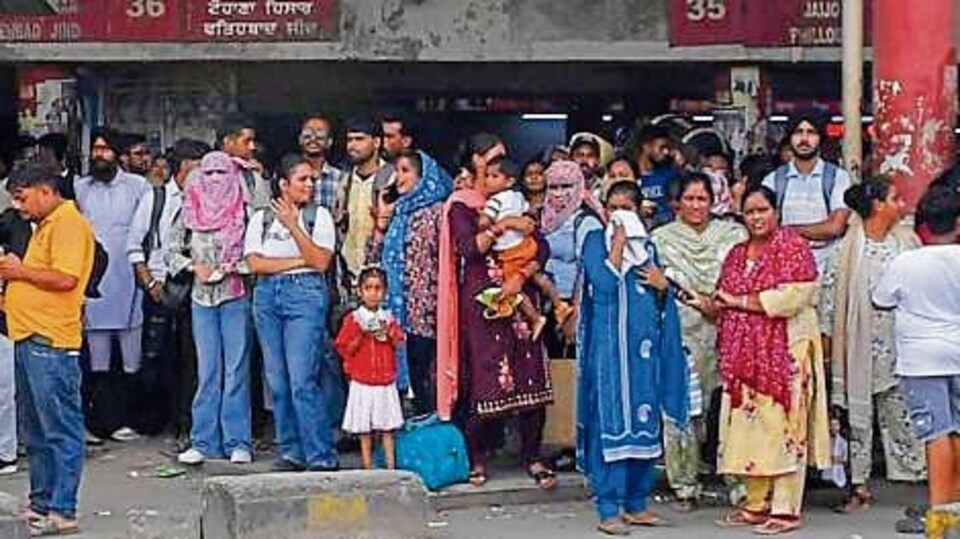
According to the PLFS 2023-24, the women’s labour force participation rate has increased over the past six years from 23.3% in 2017-18 to 41.7% in 2023-24. Irrespective of the caveats on what drives the increase, the imperative to create safe public infrastructures for mobility and workplaces becomes even more dire.
Data clearly indicates that for every additional crime per 1,000 women in a district, roughly 32 women are deterred from joining the workforce. The Deloitte Women@Work 2024 Report states that 46% of Indian women worry about their safety either at the workplace or during commutes, whether to work or for other purposes. Studies have repeatedly emphasised the need for improved safety mechanisms within urban transport and planning.
The concerns get reflected in lived realities of women workers. Across India, women are opting out of economic opportunities not only due to lack of ambition or skills, but because the ecosystem does not guarantee their basic safety at workplaces, organisation of workplaces and during all their commutes.
The idea of safety to become a systemic principle requires a transformational approach. For women to feel safe at all times in public sphere, the notion of prevention needs to transcend the boundaries of women protecting themselves using several self-censoring mechanisms and encompass an approach where cities and public infrastructure is planned in keeping with specific safety norms. Measures like better-lit streets, women-only transport options, and improved surveillance tactics using digital mechanisms and so on. These would be more effective if the broader planning framework prioritises and integrates women's needs for safe mobility and spaces.
At the workplace, safety must extend beyond legal compliances. A 10-year review of the Sexual Harassment of Women at Workplace (Prevention, Prohibition and Redressal) Act, 2013, conducted by the FICCI-EY, found that only one in four Indian companies are fully compliant with the laws. The IC at local levels often does not register any complaints year after year. These trends emphasise the need for organisational awareness building and integration of women’s safety perceptions to foster safe spaces, rather than relying solely on formal mechanisms.
Women are unsafe even in the digital spaces. A UN Women report of 2021 revealed that one in three women in India had faced online harassment, constraining them from accessing digital platforms and devices, their ability to learn, network, or work online. As the digital economy grows, safety interventions must ensure that women’s needs and perceptions are well-addressed.
Clearly, safety is also a perception in addition to all the physical safeguards and mechanisms – in fact perception is a positive function of mechanisms, especially their effectiveness. Thus, while it is about prevention, it is also about bridging the gaps towards a well-functioning physical infrastructure and a social ideal of trust. Women’s perception of safety in public transport, at the workplace, on digital platforms, and within communities depend heavily on the effectiveness and the well-functioning systems of safety.
Safety is not only a women’s issue to be addressed through piecemeal interventions, but as a systemic enabler of social, political and economic prosperity. It needs political will and collaborative efforts by think tanks, policymakers, and civil society to integrate safety into the fabric of conscience, governance, and physical and social design.
Systems of gender audits for urban infrastructure and transport systems as well as spot checks and random scrutiny of safety systems across public infrastructures in all geographies, within formal and informal set ups are necessary to build that trust for changing safety perceptions leading to greater freedom of women in public spaces. Transformative ideas such as these need to be embedded towards building a Viksit Bharat 2047 and thus non-negotiable.
This article is authored by Sona Mitra, principal economist, IWWAGE.


