Despite years of conversation and focused efforts on diversity and equality in workplaces, women continue to occupy only about 25–30% of senior leadership roles globally. A 2025 McKinsey report on Women in the Workplace further highlights a worrying trend—women are receiving less career support and fewer opportunities to advance professionally.
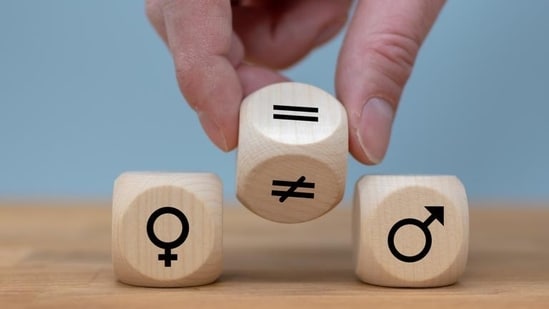
Why are we facing this situation? Is it a case of women not wanting to achieve and grow? Or does it reflect missing support systems in organisations? Women reach a stage in their lives where they need to rethink their career choices due to socio-cultural pressures and personal commitments. In this tussle, it is not only the employee that loses out, but the organisation as well, which ends up limiting its own potential.
To truly understand the shift in gender equality across the employee lifecycle, we must examine each stage closely to understand where women begin to step back.
It is predominantly seen that this shift happens at the mid-career stage. As women navigate this phase, professional growth often coincides with increased life and family responsibilities. This is not a question of diminishing ambition, but of conflicting priorities requiring difficult trade-offs. At this juncture, the role of the organisation becomes critical.
Do organisations go the extra mile to accommodate these roadblocks? Enabling flexibility, sustaining growth opportunities, and continuing to recognise both performance and potential irrespective of other factors are key to nurturing and sustaining an equal workforce.
{{/usCountry}}Do organisations go the extra mile to accommodate these roadblocks? Enabling flexibility, sustaining growth opportunities, and continuing to recognise both performance and potential irrespective of other factors are key to nurturing and sustaining an equal workforce.
{{/usCountry}}But I have seen some organisations take the easy path out by consciously but subtly investing in the male workforce, perceived to be a safe or more uninterrupted option.
These choices have far-reaching implications. When organisations fail to actively support women through this transition, they are not just losing talent in the moment—they are weakening their future leadership pipeline and potential. The consequences, as I have seen, with critical top-level presence of women missing, are strategically far-reaching and critical.
A diverse, balanced workforce brings the opportunity for vast potential and performance. Balanced leadership always results in better decision-making, a deeper understanding of stakeholder expectations, and an inclusive culture in the workplace. I would like to add a detailed analysis of the impacts.
- Promote decision-making: A balanced workforce enables holistic decision-making in the most critical strategic areas of the organization. This kind of leadership is more risk-aware, allows for responsibility and sustainable decisions, and leads to higher levels of employee happiness, engagement, and retention.
- Innovation & creativity: Diverse teams develop more ideas and are more likely to apply practical solutions. We have seen the great results that come out when staff members work together to exchange ideas and innovative solutions. Diversity is critical for innovation and creativity, which are still the real differentiators in the AI era we are in today.
- Better understanding of customer expectations: It is essential for an organisation's leadership to have a holistic understanding of customer requirements. This is nearly impossible to achieve without a diverse and balanced representation at the top, which brings varied perspectives into decision-making. We do know that there are different sensibilities and nuances that come with a diverse stakeholder portfolio. To navigate this canvas successfully and to deliver highly effective business outcomes, balanced leadership is pivotal. In an increasingly competitive environment, such depth of understanding is key to long-term partnership and growth.
- Attracting & retaining talent: A balanced and representative leadership sends a strong message of fairness, openness, and inclusivity to the organisation. It helps to break down common perceptions of limited opportunities for women in the workforce. This, in turn, allows organisations to draw and keep high-calibre talent from a broader and more varied pool, thus bolstering the overall talent pipeline.
- Improved organisational culture: One of the most significant impacts of gender-balanced leadership is its impact on organizational culture. Having visible representation of women leaders builds confidence and trust throughout the workforce, especially among younger employees. Women leaders often have a pivotal role in motivating and mentoring others, enabling a positive shift in overall organisational performance. This builds a culture over time where trust and values drive an empowering work culture, enhancing both internal cohesion and external stakeholder confidence.
The argument cannot be more compelling. For a balanced, high-trust, and empowered work culture, it is critical for the leadership to present a diverse outlook. This balance fosters a high-performing organization—one that builds employee confidence, drives customer delight, and ultimately delivers a winning top line and bottom line.
There are some foundational criteria that organisations should focus on to ensure maximum productivity from the available talent pool while prioritising inclusivity and diversity. These are:
- Importance of flexible work models: Women need to have options like working from home and having flexible hours that work for them. This helps women balance their jobs and their personal lives. When companies are understanding and flexible, women are more likely to stay with the company and work harder. Flexible work models are essential for women to balance their aspirations with their personal responsibilities.
- Having a mentor: Women need guidance to help them navigate challenges and find opportunities. This helps women build confidence and explore new avenues. Individual mentoring and coaching play a critical role in shaping the career paths of women.
- Women benefit from talking to each other and learning from each other: Companies should create avenues for women to meet and talk. This helps women feel like they are part of a community where they belong. Peer group initiatives and support networks are important for women to share their experiences and learn from each other.
- Rejoining from career breaks: Companies should have programmes to help women come back to work after taking time off. This helps women feel confident and prepared to restart their careers. Return-to-work and career continuity programmes are necessary for women to transition back into the workforce with confidence, and this benefits the company too.
It all begins with intent—the intent to ensure that talent gets its due and that equitable career advancement opportunities are accessible to all. When this intent is clear and unwavering, meaningful action inevitably follows. The consequences of this action can never go wrong. You put in the mind and process, and what you get in return is a hugely driven, high-performing workforce embedded in a healthy, progressive work environment, translating to strong business outcomes.
Gender parity in leadership is not a milestone to be achieved, but a mindset that needs to be organically cultivated. The organisations that lead this change today will set the benchmarks for tomorrow.
(The views expressed are personal)
This article is authored by Oliver Sam, vice-president & global CHRO, VDart Group.