
 E-Paper



Women’s reservation and the delimitation’s baggage
This article is authored by Urvashi Prasad, senior fellow and Rajdeep Singh, executive assistant, Leadership Office, Pahle India Foundation, New Delhi.

 Prefer HTon Google


Between September 2023 and April 2026, the same Parliament voted on the same 33% -- and produced two entirely different outcomes. In 2023, the Nari Shakti Vandan Adhiniyam passed the Lok Sabha 454 to 2 and the Rajya Sabha unanimously, 214-0. On April 17, 2026, the Constitution (131st Amendment) Bill secured 298 votes in favour and 230 against, falling short of the 352 required for a two-thirds majority, and the government accused the Opposition of voting against women. What changed was not the women. It was the cargo attached to them.
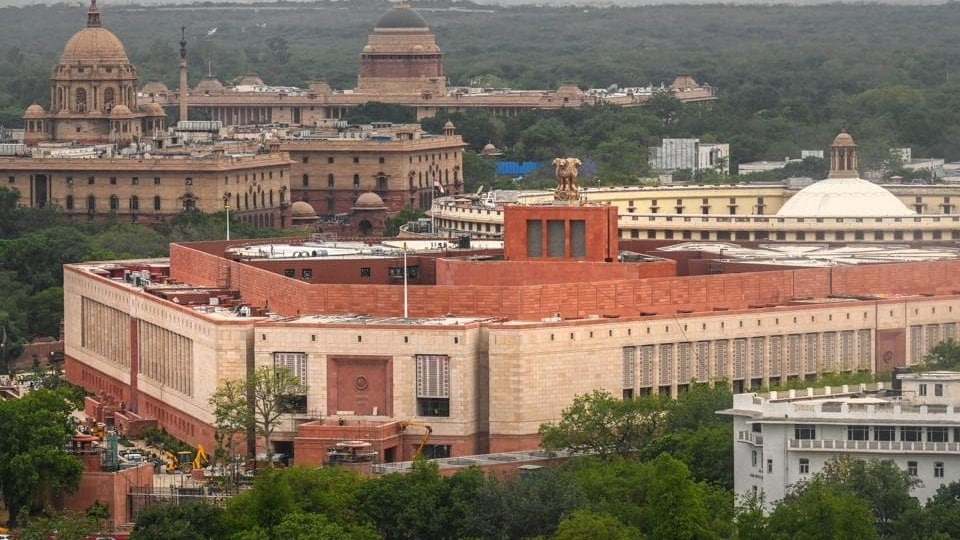
The 131st Amendment was not a women’s reservation bill. It proposed expanding the Lok Sabha from 543 to 850 seats, reverting to constituency allocation in proportion to population, and -- crucially -- authorising Parliament by a simple majority to decide which Census would govern delimitation. The accompanying Delimitation Bill pointed to the 2011 Census. On that Census’s arithmetic -- drawn from PRS India’s analysis of the Bill -- Uttar Pradesh climbs from 80 to 89 Lok Sabha seats; Bihar from 40 to 46; Rajasthan from 25 to 30. Tamil Nadu falls from 39 to 32; Kerala from 20 to 15. The states that spent a generation on demographic stabilisation at the Centre’s urging are being asked to accept diminished relative representation as their reward. Women’s reservation was framed as the key that would unlock this package. The Opposition’s refusal to accept the package was then framed as hostility to women.
That framing requires examination -- as does the legal architecture that produced this impasse.
The 106th Amendment inserted Article 334A into the Constitution, tying the commencement of women’s reservation to ‘the first census taken after the commencement of this Act’ and the delimitation that follows. This is the tether. But it is a tether of legislative design, not constitutional necessity. To implement women’s reservation on the existing 543-seat Lok Sabha map -- without seat expansion, without redrawing state boundaries, without touching the federal arithmetic -- Parliament needs to pass a single constitutional amendment targeting Article 334A alone: Removing the Census-and-delimitation precondition and commencing reservation at the next general election. A separate Delimitation Commission, constituted and operating independently can conduct its exercise on its own timeline. Delimitation is a legitimate and long-overdue exercise. It is not, and need not be, a precondition for women’s constitutional representation.
The government’s notification of the 106th Amendment’s commencement -- issued on April 16, 2026, the very day the 131st Amendment was introduced -- is itself instructive. The notification arrived with conspicuous timing, anchored to a package the government knew faced severe federal resistance. If commencement was achievable in April 2026, it was achievable in October 2023. The question of when it was notified is inseparable from the question of what it was notified to accomplish.
Every party’s internal ledger warrants scrutiny, not just the government’s. The BJP’s own numbers were placed on the floor of the House during the debate: 12.91% of its Lok Sabha MPs are women, 16.98% of its Rajya Sabha members. In March 2025, it announced district presidents for 70 of its 98 organisational units in Uttar Pradesh; five were women. But the Opposition benches that voted against the 131st Amendment are equally accountable. Every major party contesting the five ongoing state elections -- West Bengal, Tamil Nadu, Kerala, Assam, and Puducherry -- controls its own ticket distribution entirely.
The more consequential argument, however, is about what reservation actually delivers once in place. India’s panchayats have carried 33% reservation for women since the 73rd Amendment in 1992; several states have raised it to 50%. Thirty years on, the ministry of panchayati raj runs a national campaign called ‘Say No to Proxy Sarpanch’, has published a dedicated report on eliminating proxy participation in gram panchayats, and has broadcast awareness programmes on community radio stations specifically to address the phenomenon of sarpanch pati -- elected women gram panchayat presidents displaced by their husbands or male relatives, who exercise real authority in their name. Prime Minister Modi called for ending the practice in his speeches in both 2015 and 2016.
This is not an argument against reservation. It is an argument about what reservation without institutional support and genuine party investment produces: Women’s names on men’s seats. The conversion of a constitutional entitlement into substantive legislative power requires candidate development, campaign resources, meaningful positions within party structures, and a political culture that treats women’s leadership as an end rather than an instrument of optics. None of that is delivered by a constitutional amendment alone. None of it is currently being delivered by the parties most loudly demanding one.
The honest reckoning is this: The 106th Amendment can be implemented in the existing Parliament, without seat expansion, without delimitation as a precondition, through a targeted amendment to Article 334A. The five state elections currently underway offer every major party the opportunity to demonstrate its commitment through its candidate lists -- and the Association for Democratic Reforms’ analysis of those lists is already available. Women make up just 11% of all candidates contesting in Tamil Nadu, 11% in Kerala, 11% in West Bengal Phase I, and 8% in Assam -- field-wide averages across all parties and independents.
The Trinamool Congress -- which voted against the 131st Amendment -- is the best-performing major party in these elections, having fielded 52 women out of 291 candidates in West Bengal: 17.9%, confirmed by the party’s own announcement. That is the highest of any major party contesting these elections. It is also barely half of 33%. If the party leading on gender representation in these five elections cannot reach the threshold it demanded as a constitutional right, the argument for constitutional necessity has collapsed into political convenience. The parties most invested in the symbolism of 33% should ask themselves whether they are building a chamber with more women in it -- or a chamber in which more women exercise independent, substantive power.
(The views expressed are personal)
This article is authored by Urvashi Prasad, senior fellow and Rajdeep Singh, executive assistant, Leadership Office, Pahle India Foundation, New Delhi.


