
 E-Paper



Why India’s visas must put national security first
Authored by Sriparna Pathak, professor, China Studies and International Relations, Jindal School of International Affairs, OP Jindal Global University, Sonipat.

 Prefer HTon Google


In an increasingly interconnected world driven by globalisation, nations increasingly rely on cross-border mobility for economic growth, cultural exchange, and diplomatic engagement. Tourism, in particular, serves as a vital revenue generator, contributing substantially to foreign exchange earnings, employment, and infrastructure development in many economies, including India. However, this openness must be tempered by rigorous safeguards to protect national security, as unrestricted or inadequately vetted access can expose sovereign states to existential threats from espionage, terrorism, and subversion.
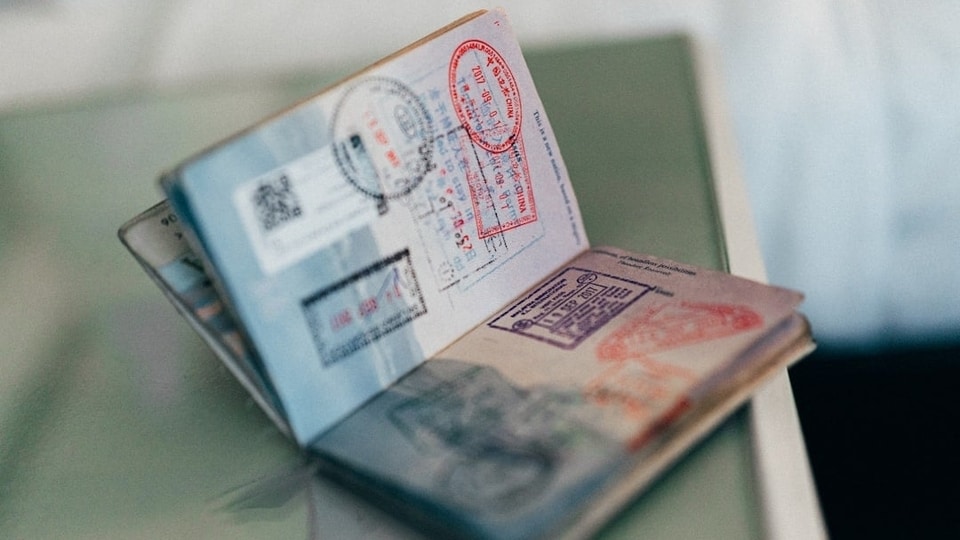
The imperative for prioritising national security in India's visa-granting processes for foreign nationals arises from a series of documented incidents where individuals exploited entry permissions to undermine the country's integrity. A recent case exemplifies this vulnerability: the National Investigation Agency (NIA) arrested six Ukrainian nationals and one US citizen for conspiring to conduct terrorist activities in India. These individuals entered on valid visas but proceeded to Mizoram, a restricted border area, without obtaining the mandatory Restricted Area Permit. From there, they allegedly crossed into Myanmar to engage with ethnic armed groups hostile to India, which have been accused of supporting proscribed Indian insurgent outfits through the supply of weapons, terrorist hardware, and training. The plot centred on importing large consignments of drones from Europe via India to Myanmar for adversarial use, raising alarms about potential terror strikes and cross-border destabilisation. Their detention at airports in Kolkata, Lucknow, and Delhi, followed by remand in custody, underscores the need for enhanced scrutiny to prevent such conspiracies from materialising.
Historical precedents in India further illustrate the recurring risks associated with lax visa oversight. In this case while nationals from western countries have been arrested, nationals from India’s eastern neighbour, China have also featured prominently in espionage-related cases, often entering on ostensibly legitimate visas; tourist, business, or employment-related, before engaging in activities detrimental to national security. In 2020, Delhi Police's Special Cell arrested a Chinese woman, Qing Shi, alongside accomplices, for involvement in an espionage ring that passed sensitive information on Indian Army movements, defence acquisitions, foreign policy, and the Dalai Lama to Chinese intelligence handlers. Payments were routed through shell firms and hawala channels, highlighting sophisticated foreign-directed operations. Earlier, in 2011, three Chinese nationals, purportedly employees of Huawei Technologies, were detained in Uttar Pradesh near the Nepal border for allegedly spying on border security installations and money laundering, after being caught photographing sensitive sites without valid permissions.
Additional instances include repeated arrests of Chinese individuals for illegal entry or overstay, often linked to suspicious activities along porous borders. For example, multiple cases along the Indo-Nepal border involved Chinese nationals attempting unauthorised entry or overstaying visas, sometimes with equipment suggestive of surveillance. In 2022, Noida police operations uncovered Chinese nationals living illegally, suspected of ties to broader spy networks. More recent reports from 2025 noted arrests of Chinese individuals for visa violations and illegal border crossings, including one case involving a national entering from Nepal. These patterns indicate that while not all Chinese visa recipients pose threats, the volume of such incidents, amid continued geopolitical tensions with China, necessitates heightened vigilance, including thorough background checks, intelligence sharing with agencies like the NIA and R and AW, and stricter enforcement of area-specific restrictions.
Beyond specific nationalities, broader concerns emerge from foreigners using India as a transit or staging ground for illicit activities. Reports from Mizoram's legislative assembly have highlighted its misuse as a transit route by foreigners, potentially facilitating infiltration into sensitive north-eastern regions prone to insurgency. Such lapses expose gaps in monitoring compliance with visa conditions, particularly in border states where restricted area regulations exist to safeguard against external interference.
To mitigate these risks, India's visa policy should integrate national security as a core criterion, rather than treating it as secondary to economic or diplomatic considerations. This entails multi-layered vetting: Pre-issuance intelligence screening against watchlists, real-time tracking of movements in restricted zones via digital permits and biometric verification, and swift revocation mechanisms for violations. Enhanced inter-agency coordination, between the ministry of home affairs, Bureau of Immigration, and security forces, coupled with data analytics to detect anomalous patterns, which include but are not limited to unexplained border proximity or overstay risks; would strengthen defences. While globalisation demands openness, sovereign states retain the prerogative and duty to calibrate access in proportion to threats. Prioritising security in visa adjudication is not xenophobia but a prudent assertion of sovereignty in an era where borders remain permeable to malice despite economic interdependence.
By learning from past breaches involving Ukrainians, Americans, and notably Chinese operatives, as well as persistent Pakistan-linked espionage networks uncovered in 2025–2026, India can refine its framework to balance tourism's economic benefits with the imperative of safeguarding territorial integrity and public safety. Implementing proactive, intelligence-driven reforms will not only deter adversaries exploiting liberal entry regimes but also fortify India's strategic resilience against hybrid threats in a contested geopolitical landscape, ensuring that openness serves national interests rather than becoming a vulnerability in an increasingly adversarial world, where only self-help is the best foot forward in international relations.
This article is authored by Sriparna Pathak, professor, China Studies and International Relations, Jindal School of International Affairs, OP Jindal Global University, Sonipat.


