
 E-Paper



Attack on Iran will redefine the balance of power in West Asia
Authored by - Sanjay Turi, doctoral candidate, Centre for West Asian Studies, School of International Studies (SIS), Jawaharlal Nehru University, New Delhi.

 Prefer HTon Google


It is believed that the oldest and most fundamental structure of the world order is the Westphalian world order, which emphasises the sovereignty of States and is rooted in the primacy of national interest. It gradually evolved and, over time, transitioned to the establishment of the United Nations in 1945. This shift is well reflected in the UN Charter, Article 2(4), which explicitly states that States must refrain from the use of military force against other countries and respect their sovereignty. In this context, sovereignty is not a privilege granted by the strong but a right inherent in all nations equally. Hence, the recent joint preemptive attack on Iran by the US and Israel has actually undermined the very idea of the UN Charter, the most relevant and fundamental document for maintaining peace, stability, and international order.
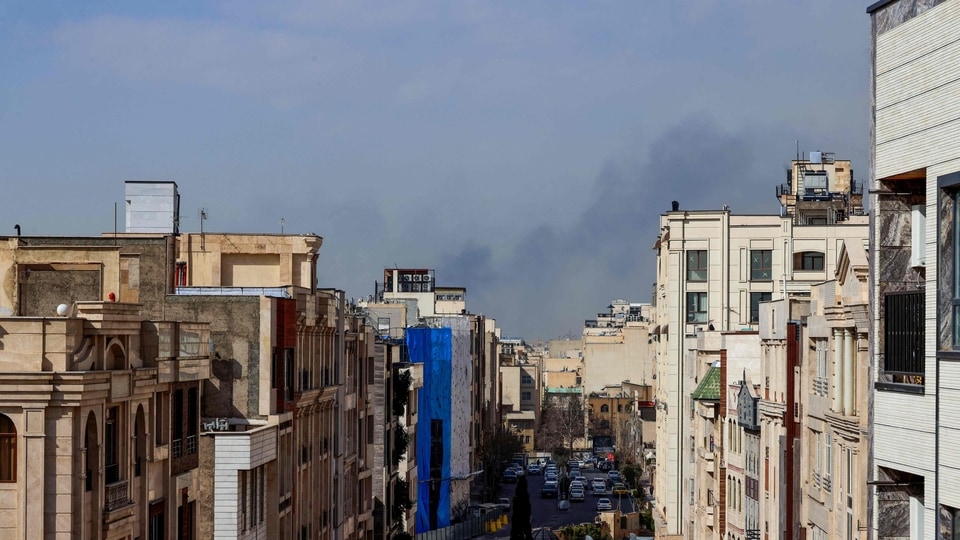
In his book History of the Peloponnesian War, Athenian historian Thucydides says that the strong do what they want, the weak should submit to what they should. Inspired by this thought, Thomas Hobbes says that man is a power-seeking animal. The former adviser to the US State Department during the Cold War era, Hans Morgenthau, a leading figure in the realist school of international relations who was deeply inspired by Thomas Hobbes and Machiavelli, says that international politics is based on human nature. Taking a Hobbesian view of human nature one step ahead, he argues that states are also power-seeking, and hence international politics is a struggle for power.
When it comes to unit-level analysis of international politics, the scientific approach of foreign policy for a country is categorised into two parts: problem-solving and decision-making approaches. Many scholars, such as John Burton and Richard Snider, argue that the problem-solving approach, also called the responsive approach, is a passive activity where the problem is given first, and then the institutions are asked to look for solutions, whereas the decision-making approach of foreign policy involves creating the problem first and then looking for solutions. Today, there is hardly any country in the world other than the US that is actively practising decision-making aspects of foreign policy.
Hans Morgenthau argues that international relations is an autonomous field that is neither governed by economics, nor law, nor ethics. It is rather governed by the principles of politics: power and national interests. Based on this, he classifies the foreign policy of a country into three types: status quoist, revisionist, and expansionist. In the status quoist aspect of foreign policy, he argues that those countries which are in an advantageous position at present want to preserve the existing system through any means possible, unlike revisionist states like Iran, which are not satisfied with the existing configuration and are willing to revise the system.
Morgenthau, being an ethical relativist while superficially talking about the role of ethics in politics, believes that universal principles do not apply in an absolute sense in international politics. However, in his theoretical prescription for peace, he says that until or unless there is a structural transformation in international politics, we cannot believe in the so-called liberal prescription (largely a US discipline) of peace through internationalism. Hence, the only way peace can be ensured is through diplomacy and the Balance of Power (BoP).
Giving primacy to BoP as a natural condition of interaction among nations, he always talks about the maximisation of ‘political power’ in a power view of IR, where he suggests dealing with issues through diplomacy, unlike Kenneth Waltz, a neo-realist, who talks about maximising military power and security to ensure their survival. Although Hans Morgenthau’s most stable world order is a multipolar one, the recent Venezuela episode and the joint preemptive US-Israel attack on Iran show that the US is well aware of its declining hegemonic power and hence aggressively moving towards a Realpolitik or military aspects of power view of IR.
The fundamental disagreement was that Israel did not only want Iran to give up its nuclear programme and end its missile production, but also to stop supporting non-State militias like Hamas, Hezbollah and Houthis. It means that Israel wanted total disarmament of Iran in this talk.
As Oman was doing mediation between Iran and the US, the Omani foreign minister said on February 27 that several rounds of partially successful talks were held, and before a deal was about to reach a conclusion based on Iran’s commitment to limited uranium enrichment, the US and Israel launched a preemptive attack on Iran within few hours. This itself shows that the US was no longer interested in any talk with Iran and was looking for an excuse to attack and eliminate the Iranian Supreme Leader, which is a clear-cut violation of the UN charter Article 2(4). In this context, President Trump’s rhetorical appeal to the Iranian people after the attack was that ‘the hour of your freedom is now in your hands’. This statement itself indicates that the core objective of this preemptive attack on Iran and the killing of Supreme Leader Ayatollah Khamenei is ‘regime change’. Historically contextualising, the previous Iranian regime under Mohammad Reza Pahlavi was pro-US/Israel, but as soon as Ayatollah Khomeini came to power after the Islamic Revolution in 1979, he turned Iran into a theocratic state and declared the ‘liberation of Jerusalem’ from Jewish occupation as a core objective. This half-century-old enmity between Iran and US-backed Israel broke out with a preemptive joint attack on Iran by the US and Israel, followed by the killing of the Ayatollah. As the situation explained above in the context of history, this war is probably not going to come to an end till the regime change happens in Iran.
Historically, it is seen that West Asia has been one of the most important regions in the world, particularly from a trade chokepoint and energy security perspective. Given the historical political hostility with the West, Iran is possibly the only country in the region which has the true potential to challenge the US hegemony. As Islam originated in West Asia, there is competition going on among several Muslim countries in the region to become the leader of the Islamic world. However, this competition is mainly and only among the three larger players of the region: Saudi Arabia, which is the spiritual epicentre and birthplace of Islam with two holiest places of Islam, Mecca and Medina; Turkey, with its imperial Islamic history through the Ottoman Empire; and Iran, with its role as the most important driving force of Islamic civilisation. Although Saudi Arabia and Turkey both are capable of becoming leaders of the Islamic world, taking sides with the US, along with becoming a flagbearer of Islam, are both contradictory in nature; therefore, given this situation, these two countries, even after having that potential, can neither challenge the US hegemony ever nor become a true leader of the Islamic world at all. In this situation, Iran is the only country left with this capacity of challenging the US hegemony and becoming the true leader of the Islamic world. To fulfil this dream, Iran, being the only Shia country, its unwavering support for Palestine (Sunni population) is not only a religious duty but a pragmatic foreign policy move aimed at winning over Muslim hearts and minds, bridging the gap between the Shia and Sunni divide.
This is what has been giving Israel nightmares for decades in the region. Once the regime is changed in Iran by installing a pro-West, the US may be able to not only freely control the resources-rich region, but also pave the way for Israel to create a greater Israel in the region. Therefore, the main objective of this joint preemptive attack is actually not just to force Iran to sign a nuclear deal, but possibly to change the regime in Tehran.
This article is authored by Sanjay Turi, doctoral candidate, Centre for West Asian Studies, School of International Studies(SIS), Jawaharlal Nehru University, New Delhi.


