
 E-Paper



BRICS: Impediments and potential areas of cooperation
This article is authored by Ananya Raj Kakoti and Gunwant Singh, scholars, international relations, Jawaharlal Nehru University.

 Prefer HTon Google


The BRICS acronym refers to five of the world's largest emerging economies: Brazil, Russia, India, China, and South Africa. The concept of BRICS emerged in 2001 when Goldman Sachs economist Jim O'Neill coined the term "BRIC" to refer to the four countries (excluding South Africa) that he predicted would become the world's largest economies in the coming decades. Since then, the BRICS countries have come together as a grouping to promote cooperation and economic growth, but many analysts believe that progress has been slow, with more talk than action. In this article, we will explore the reasons behind this and the impediments that are slowing down the progress of the BRICS grouping.
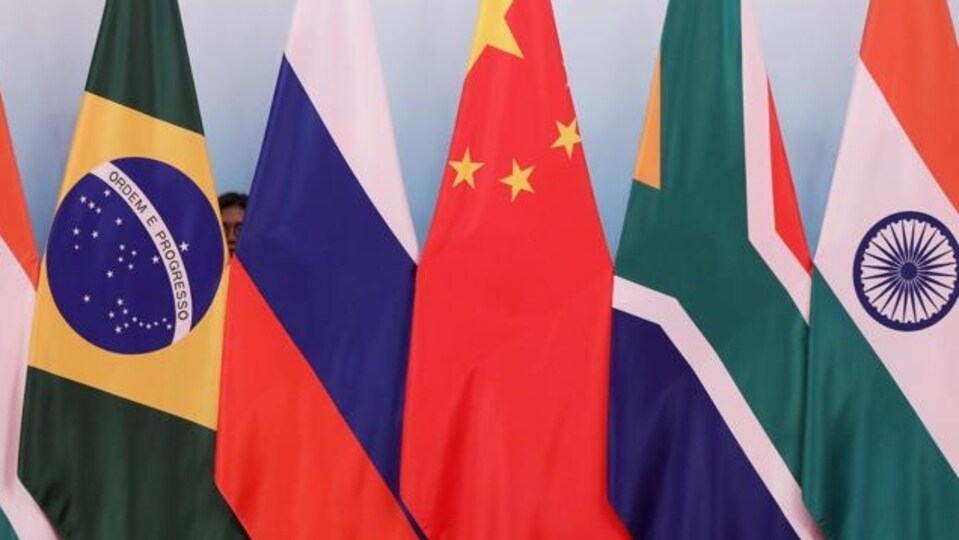
One of the main impediments to the progress of BRICS is the economic differences among its members. These five countries have vastly different economic systems, levels of development, and policy priorities, which can create obstacles to cooperation and integration. For instance, China has a more centralised and controlled economic system, while Brazil and India have more open and market-oriented economies. Russia is a major oil and gas exporter, while South Africa is heavily dependent on commodity exports. These economic differences can make it difficult for the member countries to agree on common economic policies and strategies.
Moreover, economic competition among BRICS countries can also hinder their cooperation. For example, China's rising economic power and its aggressive pursuit of trade and investment opportunities have raised concerns among other members. In addition, trade disputes, such as the ongoing trade tensions between China and the United States, can spill over into the BRICS grouping and create divisions among its members.
Another significant impediment to the progress of BRICS is political and geopolitical differences. The member countries have different political systems, interests, and priorities, which can create tensions and disagreements within the group. For example, China's assertiveness in the South China Sea has raised concerns among other members, while India's growing ties with the United States have caused friction with China and Russia.
Moreover, the member countries have different relationships with other countries and international organizations, which can create challenges for coordination and cooperation. Russia's annexation of Crimea in 2014, for instance, created tension with other members, while India's opposition to China's Belt and Road Initiative has caused friction with China. China and India also have long-standing border disputes, while Russia's actions in Ukraine have complicated its relations with the other members.
Trade barriers are also a significant obstacle to the progress of BRICS. While the member countries have pledged to promote free trade among themselves, there are still significant trade barriers that hinder their trade and economic growth. For instance, some member countries have high tariffs on imports from other members, while non-tariff barriers such as technical standards, regulations, and customs procedures can create obstacles to trade. Moreover, currency exchange differences and exchange controls can also create challenges for trade and investment between the member-countries.
Finally, infrastructure deficits, such as inadequate transportation networks and port facilities, can also create barriers to trade and investment among the member countries. For instance, India has a shortage of transport infrastructure, which can make it difficult to transport goods to other BRICS countries. Moreover, poor infrastructure can increase transaction costs and reduce the competitiveness of the member-countries' exports.
To overcome these impediments, the BRICS countries need to work together to promote cooperation and integration. This can be done through negotiations and agreements to reduce tariffs and non-tariff barriers, investment in infrastructure to improve transportation networks and port facilities, and coordination of exchange rate policies to reduce fluctuations and promote stability. The member countries also need to engage in dialogue and cooperation, with a focus on promoting mutual understanding and respect for each other's political systems and policies.
One potential area of cooperation for BRICS countries is the development of new financial institutions to support their economies. In 2014, the BRICS countries established the New Development Bank (NDB) to finance infrastructure and sustainable development projects in member countries and other developing countries. The NDB provides an alternative source of financing to the World Bank and the International Monetary Fund (IMF), which are dominated by developed countries. The establishment of the NDB shows that the BRICS countries are willing to work together to create new institutions that reflect their interests and priorities.
Another potential area of cooperation for BRICS is in the field of technology and innovation. The member countries have a significant pool of scientific and technological resources, and they can work together to promote innovation and the development of new technologies. For example, China has invested heavily in artificial intelligence and renewable energy, while India has a large pool of software engineers and technology entrepreneurs. By sharing knowledge and resources, the member countries can develop new technologies that can benefit their economies and improve their global competitiveness.
The BRICS grouping has faced several impediments to its progress since its inception in 2001. Economic differences, political differences, trade barriers, and infrastructure deficits are some of the key obstacles that have hindered cooperation and integration among the member countries. However, there are potential areas of cooperation that the BRICS countries can explore to promote economic growth and development. By working together to reduce trade barriers, invest in infrastructure, and promote innovation, the member-countries can build a stronger, more integrated economic bloc that can compete with the developed countries of the world.
This article is authored by Ananya Raj Kakoti and Gunwant Singh, scholars, international relations, Jawaharlal Nehru University.


