India has spent billions of dollars over the last three decades as one of the world’s largest arms importers, and most of that money was used to purchase machines as part of a security architecture, not capabilities. According to the Stockholm International Peace Research Institute’s latest report, India was the world’s second-largest arms importer between 2021 and 2025, and even with a decade of promoting the idea of self-reliance, Atmanirbhar Bharat, around 40% of India’s arms imports in that period still came from a single supplier, Russia, a sharp decline from 70% just a decade earlier. That is the uncomfortable backdrop against which Prime Minister (PM) Narendra Modi’s talks with President Emmanuel Macron in Nice, this June, can be judged. The question is not whether India and France get along, but whether this bilateral relationship can finally break the old pattern: India paying, the West building.
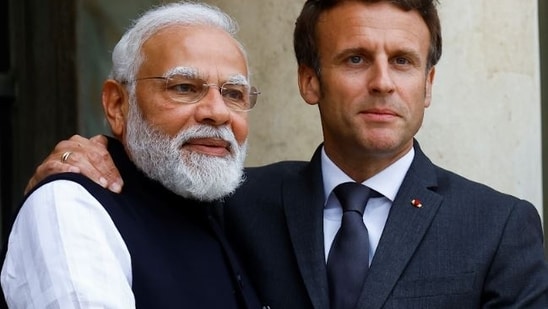
There is reason, cautiously, to think that this one might be different: our shared interest and history. Since France, unlike other European nations, has overseas territories, Reunion and Mayotte, in the Indian Ocean, India is a net security provider in the region, and that is what pushes both France and India towards strengthening security cooperation as both share a geostrategic convergence in the region. Both countries pursue strategic autonomy, with each respecting the other’s sovereignty to the fullest extent possible. When India tested nuclear weapons at Pokhran in 1998, and the world responded with sanctions, France, as expected, did not join hands with the US and its allies. It continued to strengthen its economic relations with India. That single decision, made when India had very few friends willing to take the diplomatic mileage, is why France gradually became India’s second-largest defence supplier after Russia. France, by selling Mirage 2000s and Rafales and ordering Scorpene submarines to be built at Mazagon Dock under technology shared by the French Naval Group, won India’s trust, significantly impacting India’s defence sector as well as foreign policy decision-making. It is widely believed that Trust in geopolitics is built in moments when it costs something to give it; it usually happens when, during periods of geopolitical tension, any of your strategic partners hardly stand by you.
This is exactly what France did with India during the post-Pokhran drama. In this context, France has paid that cost several times, be it the Indo-Pak war or India’s bid for joining the MTCR, Australia Group (AG), Wassenaar Arrangement(WA), and that is why India has very strong relation with France, possibly becoming a secret reason for gradually becoming the single largest destination for French arms exports, taking in well over a quarter of everything France sells abroad.
{{/usCountry}}This is exactly what France did with India during the post-Pokhran drama. In this context, France has paid that cost several times, be it the Indo-Pak war or India’s bid for joining the MTCR, Australia Group (AG), Wassenaar Arrangement(WA), and that is why India has very strong relation with France, possibly becoming a secret reason for gradually becoming the single largest destination for French arms exports, taking in well over a quarter of everything France sells abroad.
{{/usCountry}}Modi’s recent visit to France this June is really worth sitting with, because this meeting tells an ordinary citizen more than any joint statement will. India has formally requested 114 Rafale fighter jets from France, a deal that, at reported values, comes to nearly ₹3.3 lakh crore (around $39 billion), making it one of the largest single defence acquisitions in Indian history. But the interesting thing is that; of those 114 jets, only 18 jets will arrive ready-built from France. The remaining 96 jets, the overwhelming majority, are to be manufactured in India, with roughly half of their content sourced domestically. Strategically putting into context, this ratio matters more than the catchy headline price tag. Defence experts believe that this is an historic deal where 84% of the aircraft are assembled on Indian soil.
This defence deal is not happening in isolation. In addition to the Rafael jets, France and India are also discussing three additional Scorpene-class submarines to be built in India, adding to the six already delivered under Project-75 submarines that today form a meaningful share of the Indian Navy’s underwater fleet. Furthermore, in a development that deserves more public attention than it has received, French engine-maker Safran is already working with India’s Gas Turbine Research Establishment to co-develop a 120-kilonewton engine for India’s own fifth-generation fighter, the Advanced Medium Combat Aircraft. The reason why it is important to notice that India has never successfully built a fighter jet engine of this class on its own? Since the Kaveri engine programme, started in 1989, never reached the thrust levels required by modern fighters, if this Safran partnership delivers its promises, it would address the single biggest technological gap in India’s combat aviation ambitions, one that no amount of import substitution elsewhere has been able to fix. Hence, this strategic partnership with France has great potential to boost India’s defence sector, further helping Indian defence industries become self-reliant to the utmost capacity.
It is fair to ask why an Indian citizen who will possibly never fly a Rafale or board a submarine should still care about all of this. Since we are already moving towards achieving Vision 2047, for common men, the honest answer is obviously jobs and money, while for the Indian government, a great edge in self-reliance and strategic independence over adversaries. Every rupee spent building an engine in Bengaluru instead of importing one from Saint-Étienne is a rupee that will potentially circulate inside the Indian economy rather than leaving it. And every system India will build, maintain, and upgrade itself is one that will have almost zero dependence on a foreign government which can pull during a crisis. A lesson India has learned in the past is that it faced significant difficulties when it needed spare parts and technical support from other partner countries. India has witnessed several instances when its defence sector has become a victim of political disagreements. Therefore, once India’s defence industries flourish, it will not have to repeat the same mistake again.
Since India’s defence procurement history is littered with announcements that shrank on contact with negotiation, technology transfer clauses, timelines stretched by years, cost revisions, none of this is expected to happen for a done deal. The hardest sticking point in past Rafale talks, and likely in this one too, has been France’s reluctance to hand over source code for radar and electronic-warfare systems, the digital brain of the aircraft, without which Make in India risked its meaning, that is, assembly rather than mastery. However, the recent deal is quite different from the past. Macron has publicly defended this deal against critics in both countries, appealing to the idea that this defence deal between the two countries will strengthen our strategic partnership like never before. Defence experts say that this deal is a strategic milestone, further emphasising that while this defence partnership will help India become self-reliant, a step towards Vision 2047, it will also help France become an alternative to the US in Europe, as President Trump continues to threaten to leave NATO.
(The views expressed are personal)
This article is authored by Sanjay Turi, doctoral candidate, Centre for West Asian Studies, School of International Studies, Jawaharlal Nehru University, New Delhi and Sumeer Ranjan, assistant professor, Amity University, Ranchi.