
 E-Paper



Modi’s landmark visit to Maldives
This article is authored by Kamakshi Wason, Global COO, Tillotoma Foundation.

 Prefer HTon Google


Prime Minister (PM) Narendra Modi’s recent visit to the Maldives on July 25–26, 2025, was a defining moment in the evolving relationship between two Indian Ocean neighbors. Marking the 60th anniversary of Maldivian independence and diplomatic ties, this visit was much more than ceremonial pomp.
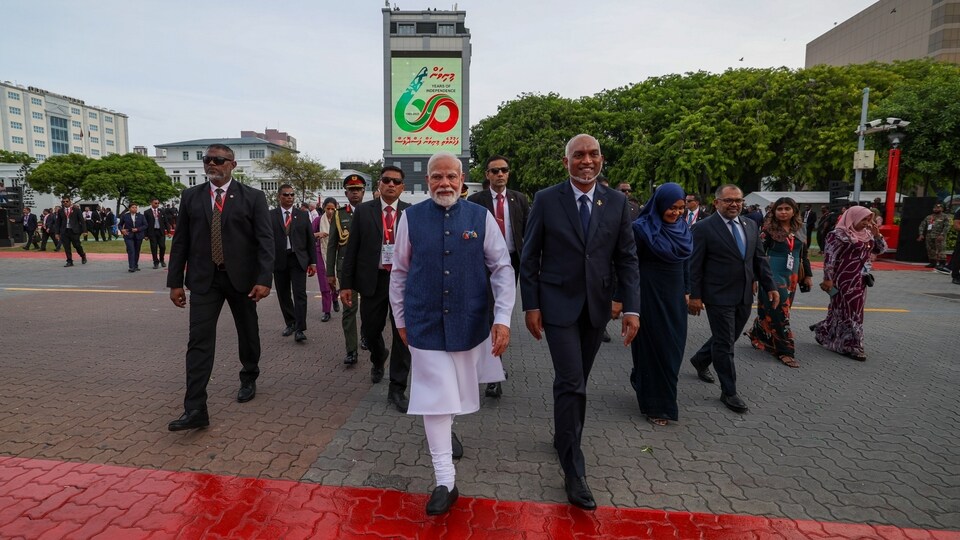
It was a carefully calibrated diplomatic gesture aimed at resetting, deepening, and future-proofing one of India’s most sensitive and strategic partnerships.
India and the Maldives have had a special relationship for decades, shaped by their geography, culture, and need for each other. But recent changes in Maldivian domestic politics and the island nation's growing ties with China have put this relationship to the test. PM Modi's invitation to be the guest of honour at the Maldives' 60th anniversary of independence was a strong, symbolic reset that showed both sides wanted to rebuild trust, work together, and be friends.
President Mohamed Muizzu's warm welcome of PM Modi, which included personally welcoming him at the airport and honoring him during national celebrations, says a lot about the goodwill both governments want to build. This warmth went beyond the rules and showed that everyone shares the same vision: That long-term and balanced cooperation is needed for regional stability, economic growth, and safety.
PM Modi's visit had important effects that will shape the Maldives' growth path for the next few years. India announced a ₹4,850 crore (about $565 million) line of credit for infrastructure projects in Maldives. They also cut debt payments by 40%, which directly eases financial pressures and is good news for growth and job creation across the nation.
Also, the start of talks between the two countries to reach a free trade agreement and a bilateral investment treaty marks a new stage in economic integration. The introduction of digital payment systems like India's UPI in the Maldives shows how people-to-people ties are getting stronger and how Maldivian businesses are becoming more modern. This will make it easier for tourism, trade, and cross-border business.
In an era of growing geopolitical contestation in the Indian Ocean, PM Modi’s visit reaffirmed India’s commitment to Maldivian sovereignty and security, fostering partnership rather than dominance. Expanding cooperation in maritime security, defence infrastructure, and disaster management equips the Maldives to meet emerging challenges while affirming its autonomy.
Such collaboration is essential not only for regional security but also for safeguarding the lifelines that connect this archipelago to the wider world. The emphasis on mutual respect alleviates past anxieties and paves the way for a sustainable partnership rooted in equality.
Perhaps most importantly, this visit marks a pivot toward tangible benefits for ordinary citizens. Investments in health care, education, housing, and public infrastructure reflect a developmental partnership that prioritises the well-being of Maldivians. These are not distant diplomatic gestures but real enhancements that will touch lives daily, strengthening social fabric and national resilience.
For India, this partnership fortifies the Neighbourhood First policy with substance, demonstrating that strategic interests and human development go hand in hand. A stable, prosperous Maldives is a steadfast anchor for regional peace and connectivity.
PM Modi's recent visit to the Maldives was more than just a diplomatic milestone; it was a plan for the future of the two countries' relations based on trust, respect, and shared goals. India's role as a responsive and reliable neighbour is still very important for Maldives as it tries to balance its foreign relations with different interests.
The road ahead requires ongoing involvement, turning agreements into action and goodwill into partnerships. India and the Maldives can work together to deal with the changing tides of geopolitics, making sure that their shared future is one of stability, prosperity, and success in the Indian Ocean.
This article is authored by Kamakshi Wason, Global COO, Tillotoma Foundation.


