
 E-Paper



Protests in Iran: Legacy of resistance
This article is authored by Harija Kodangat, research scholar, Panjab University, Chandigarh.

 Prefer HTon Google


Iran is currently experiencing one of its largest popular uprisings since the 1979 Islamic Revolution. The severe economic crisis and unemployment have prompted people to take to the streets. The current economic crisis is not a new development in Iran. Despite the country's abundant oil resources, the people have long faced economic difficulties. At present, the Islamic Revolutionary Guard Corps has taken control of all sectors in the country; however, widespread economic mismanagement is evident almost everywhere. Years of American sanctions have weakened oil revenues and strained the economy. Moreover, the 12-day war between Israel and Iran in June 2025 added further pressure to an already fragile economy.
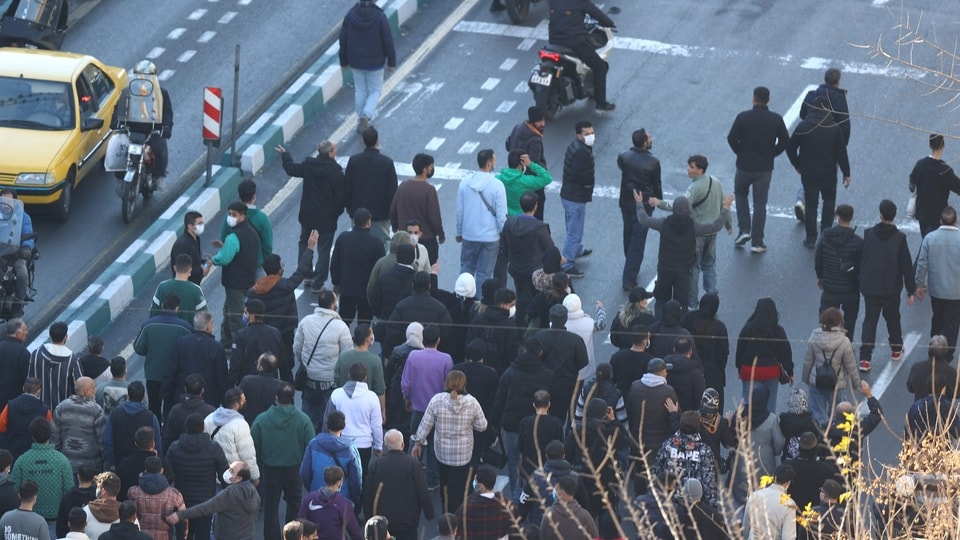
Since 1999, Iranians have consistently protested against the theocratic autocratic rule of the clerical regime. The protests mainly aimed for political, economic, and social reforms to improve citizens' quality of life. Most recently, in 2022, the arrest and custodial death of Mahsa Amini by Iran’s morality police for not wearing the hijab according to religious norms sparked mass outcry. Each time, the Iranian government suppressed the protests through the use of security forces, resulting in significant loss of life and large-scale arrests. However, the clerical regime often justifies its harsh suppression by invoking nationalist rhetoric and portraying dissent as the result of western interference. However, this time, anti-government slogans, initially driven by rising inflation, have turned into calls to end the clerical rule.
Throughout the 20th century, Iran experienced multiple transfers of power. Iran was ruled by the Qajar dynasty for about 150 years, until 1925. The economic decline caused by World War I created an opening for Reza Khan, who declared himself a king as Reza Shah Pahlavi, beginning the Pahlavi dynasty. He ushered in a new era of modernisation in Iran, focusing on infrastructure development, including transport and communication, industrial expansion, and education. He also launched social reforms, such as banning women from wearing the hijab. His primary goal was to make Iran resemble Europe. In 1941, his son, Mohammad Reza Pahlavi, assumed power and continued his father's development initiatives.
In 1951, the National Front came to power under Mohammad Mossadegh, driven by demands for national sovereignty and control over natural resources. However, in 1953, through a secret joint operation by the US and Britain, the democratically elected prime minister, Mohammad Mossadegh, was overthrown, and the Pahlavi dynasty reinstated the dictatorial monarchy. There are two reasons for this covert operation. First, the Mossadegh government nationalised the oil industry in Iran, ending the British-dominated Anglo-Iranian Oil Company (AIOC) 's monopoly over Iran's oil sector. Another reason was that the US feared Iran would fall into the erstwhile USSR's sphere of influence during the Cold War.
After the coup, Iran's economy grew. Oil revenue rose from under $34 million in 1973 to nearly $5 billion in 1977, then increased further to $20 billion by 1977. Mohammad Reza Pahlavi continued his father’s developmental initiatives, and an impressive expansion in the education and industrial sectors occurred during this period. He introduced a series of social reforms known as the White Revolution in 1963, including land redistribution, privatisation and socio-economic modernisation. The White Revolution made significant progress in health education and public welfare nationwide. The education system expanded more than tenfold over 25 years. The government established a literacy corps of young men who had completed high school and were required to serve in rural villages to teach. It also led to significant increases in the salaries of the middle class and the urban working class. For the first time, Iranian women gained the right to vote. Additionally, the marriage age for women was raised from 15 to 18.
Shah’s policies affected diverse groups differently. A bureaucratic bourgeoisie, comprising state elites and the dynasty's close associates, prospered, while other groups faced marginalisation. On one hand, it improved the lives of the salaried middle class and urban working class, but it worsened the circumstances of the traditional middle class and the rural and urban poor. Government policies favoured large industries and financial capital, whereas small bazaar merchants encountered difficulties due to new labour laws, taxation, and price controls. Many of the Shah's reforms, especially those concerning women's rights, conflicted with Islamic law, leading to opposition from the Shia clergy. Furthermore, Shah suppressed opposition voices and established a secret agency called SAVAK to maintain his autocratic rule in Iran. The Iranian Revolution of 1979, however, was mainly a result of the Pahlavi dynasty’s excessive obedience to western countries, particularly the US.
A key question is whether the political change in Iran following the 1979 revolution reflects the desires of the majority of protesters and supporters. The revolution was led by a heterogeneous coalition of students, intellectuals, liberals, leftists, nationalists, and religious groups, united by a shared ideology opposing imperialism. However, the clerical regime rose to power through Ruhollah Khomeini’s dominant populism, which resonated with the broader Shia revival occurring in the post-colonial West Asia. As Khomeini’s regime suppressed all opposition, branding dissenters as imperialist agents, Iran transitioned to a religious autocracy.
History shows that no political system can sustain long-term restrictions on its citizens' freedoms through autocratic rule. The people of Iran are proving that they cannot either. The Pahlavi regime sought to reshape the country in the image of Europe, disregarding its cultural identity and maintaining power through fear. Four decades later, the Islamic Republic faces a similar legitimacy crisis. Although ideologically different from the Pahlavi monarchy, it also functions against the will of its citizens. Cultural control and moral policing, coupled with prolonged economic hardship, have eroded public trust in the ruling regime. It failed to meet the expectations of a younger, urban, and increasingly globalised population. As a result, during an economic crisis, it lost widespread support from its own citizens. Recent events in Iran demonstrate the mounting resistance of the younger generation against the long-standing dominance of reactionary clerical ideologies. Women appearing in public without a hijab symbolise defiance against clerical authority.
This article is authored by Harija Kodangat, research scholar, Panjab University, Chandigarh.


