President Donald Trump's recent decision to impose additional tariffs—well above the Most Favored Nation (MFN) rates—on exports from several countries, including India, and the reportedly unfavourable trade deal reached with the European Union, have certainly introduced fresh complexities into global trade dynamics. While these disruptions are typically viewed as obstacles, they may also act as a catalyst for advancing the India-Middle East-Europe Economic Corridor (IMEC), forcing stakeholders to rethink established trade patterns and accelerate contingency planning.The IMEC project is
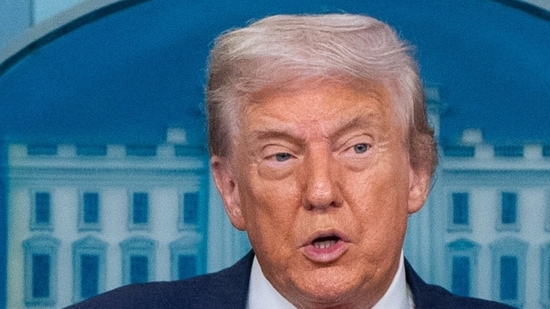
President Donald Trump's recent decision to impose additional tariffs—well above the Most Favored Nation (MFN) rates—on exports from several countries, including India, and the reportedly unfavourable trade deal reached with the European Union, have certainly introduced fresh complexities into global trade dynamics. While these disruptions are typically viewed as obstacles, they may also act as a catalyst for advancing the India-Middle East-Europe Economic Corridor (IMEC), forcing stakeholders to rethink established trade patterns and accelerate contingency planning.The IMEC project is ambitious, aiming to forge a faster, more efficient trade route that connects South Asia with Europe via the Middle East. Envisioned as a strategic counterbalance to China’s Belt and Road Initiative (BRI), IMEC promises substantial geopolitical and economic dividends for all participant countries. By consolidating longitudinal trade and energy links, it could potentially reshape regional supply chains, boost infrastructure investments, and establish new entry points into European markets for Asian and Middle Eastern goods.Yet, despite its potential, the corridor has struggled to evolve from a blueprint to reality. There are considerable logistical and regulatory hurdles, especially in the overland segments traversing geopolitically sensitive terrain. Many of the countries along the route face gaps in port and railway infrastructure that must be addressed for the corridor to function at scale. These issues require not just capital but also sustained political cooperation--often a challenge in the region’s volatile environment.Trump’s tariffs have, therefore, introduced a sense of urgency to these discussions. Several trade analysts argue that the new trade barriers could push India to diversify its export markets, lessening its reliance on the increasingly protectionist US. In this context, IMEC’s operationalisation is not just desirable but imperative for India, offering a direct and reliable conduit to Europe and beyond.Similarly, the European Union (EU)’s own experience with US trade tensions has reinforced its need to strengthen independent supply chains. The EU, which has traditionally leaned on transatlantic trade, may now see IMEC as a strategic insurance policy: a way to mitigate the risks posed by trade disruptions with both the US and China, while also enhancing energy security and overall supply chain resilience. In particular, the corridor could unlock new sources of energy from the Middle East, contribute to decarbonisation by improving logistics efficiency, and provide alternatives to routes vulnerable to geopolitical shocks--such as those near the Suez Canal.One nuanced argument is that IMEC could also serve as a diplomatic bridge in an era of rising polarisation. By tying together stakeholders from South Asia, the Middle East, and Europe, the corridor may help cushion disagreements among major powers. In an era when the US and China are competing to shape global trade landscapes, IMEC offers the possibility of a multilateral pathway insulated from the fluctuations of global politics. This could attract investment from private and sovereign players eager to bet on stable, long-term growth.However, success will depend on how effectively these countries navigate internal challenges. India must speed up the expansion of its own export-oriented industries and work on customs and regulatory harmonisation with partners. The Middle Eastern countries must mobilise significant investments in infrastructure, while ensuring the corridor remains economically viable and politically secure. The EU, meanwhile, must balance the interests of its various member states and ensure its own investment and regulatory alignment with IMEC’s goals.In this context, the high-level meeting convened by India on August 5 and 6 emerges as a crucial milestone for IMEC. Senior representatives from the UAE, France, Germany, Italy, the EU, Saudi Arabia, and the US participated. Significantly, the timing of this meeting came immediately after Trump’s tariff announcement on India. Despite rising trade tensions, the presence of the American delegation indicated that the US remains keenly interested in monitoring IMEC’s developments—even if only from the sidelines.The meeting’s objective was to identify concrete steps to unlock the corridor’s development. With all parties at the table, there was a renewed sense of urgency to overcome bottlenecks and accelerate implementation—especially as both India and Europe are now actively seeking alternative trade routes to minimise the impact of US tariffs and to reduce their exposure to potential shipping disruptions, such as those that have periodically affected the Suez Canal region.Another dimension worth considering is the growing trend towards supply chain de-risking. The Covid-19 pandemic and recent Red Sea shipping disruptions have already led countries to re-examine the vulnerabilities in their logistics systems. IMEC can be positioned as part of a broader ‘friend-shoring’ and supply chain diversification strategy gaining traction among G20 economies. By providing a corridor that is less vulnerable to chokepoints and more responsive to regional political realities, IMEC may attract support from businesses, banks, and multilateral institutions seeking greater stability.Clearly, therefore, the August meeting in New Delhi represents more than just a routine diplomatic gathering. It brought together the right stakeholders at a moment when the global trading environment could finally spur decisive action. The meeting was interpreted by many analysts as a positive sign that India and Europe are eager to proceed with IMEC, regardless of evolving US trade policies.In essence, while US tariffs are set to impact Indian exports, livelihoods, and even economic growth, the broader effect may be more transformative. By creating exigency among stakeholders, Trump’s tariffs may actually accelerate IMEC’s implementation and catalyse strategic cooperation. The next few months could prove decisive in determining whether IMEC transitions from a grand vision to a functioning economic corridor—one that not only reshapes trade routes but also redefines regional relationships for years to come.
This author is authored by Shishir Priyadarshi, president, Chintan Research Foundation and former director, economic development, WTO.
One Subscription.
Get 360° coverage—from daily headlines
to 100 year archives.
Archives
HT App & Website