
 E-Paper



India stopped polio 15 years ago; now it can end polio everywhere
This article is authored by Deepak Kapur, chairman, India National PolioPlus Committee, Rotary International.

 Prefer HTon Google


Fifteen years ago, a child in West Bengal was diagnosed with what would become India’s final case of wild polio. India — a nation that shouldered 60% of the world’s polio burden at one point — had finally interrupted transmission of one of humanity’s most feared diseases.
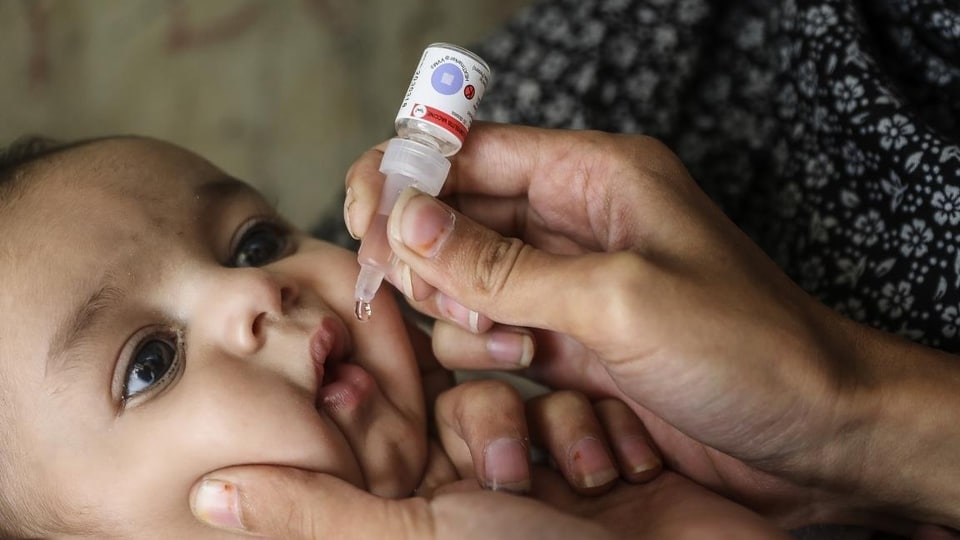
As we mark this anniversary, India’s success stands as proof that no challenge is too great when a country mobilises every level of society to reach children with lifesaving vaccines and strengthen community health. But this milestone is more than a moment for celebration. It is a call to action.
For decades, many doubted whether polio could ever be eliminated from India. The obstacles were immense: A population exceeding one billion, widespread poverty, poor sanitation, unsafe drinking water, malnutrition, and vast, hard‑to‑reach communities. Delivering vaccines repeatedly and reliably to every household seemed like an impossible task. What followed, however, was one of the most ambitious public health mobilisations in modern history.
India’s success rested on a few essential pillars. Above all was unwavering government commitment that translated into disciplined action at every level of the system. Even district administrators were empowered to confront gaps and move quickly to correct them.
That leadership created the foundation for the next essential element: a strong coalition of partners. A skilled technical and managerial workforce ensured that strategies became action on the ground, and partners were able to work seamlessly across their areas of expertise. Organizations such as the World Health Organization, UNICEF, and Rotary International provided technical support to local partners, and government leaders were willing to adopt real‑time changes when the data demanded it. At the height of the effort, 33,000 reporting sites across the country were monitored through a complex surveillance system to ensure every case was detected and resources could be quickly deployed. This openness to learning and adapting was critical.
Still, technical expertise could only go so far without trust. India prioritised understanding the needs and concerns of each community and region. The program employed local, respected people as health workers who could go door to door to address peoples’ concerns. The programme also engaged medical practitioners, religious leaders, and even cricket stars, to help educate parents about the need to immunise their children.
These elements converged into a powerful, coordinated push that achieved what once seemed unattainable. In the four years leading up to the last case, India delivered around one billion doses of polio vaccine to 172 million children annually — and continued vaccinating millions more in the years that followed.
Since 2011, National and Sub‑National Immunisation Days have remained fixtures of Indian public life, mobilising hundreds of thousands of volunteers to vaccinate children under five. In 2021 alone, roughly 165 million children received polio vaccines through these campaigns. High‑quality disease surveillance ensured that every suspected case was investigated, every contact traced, and every immunity gap addressed. India didn’t just stop polio; it built a durable public health system that continues to protect children and keep the country polio‑free 15 years later.
Yet even as India celebrates this milestone, the global fight continues. Wild poliovirus persists in just two final countries, and while both nations have seen promising declines in cases in 2025, major challenges remain, including conflict and security concerns that limit access to high‑risk communities, weak health systems, and pockets of distrust in immunization.
At the same time, variant poliovirus outbreaks — which occur when low immunization rates allow weakened vaccine virus to circulate and mutate — continue in several countries. These outbreaks underscore the need for sustained vaccination and surveillance everywhere, not just in the final endemic regions. The endgame of eradication demands intensified effort, fresh innovation, and a final surge of leadership from both affected countries and those long polio‑free.
India is already stepping up. As a major manufacturer of vaccines for diseases like dengue, malaria, polio, and more, one Indian-based company, Biological E, is producing nOPV2, a next‑generation polio vaccine designed to more sustainably stop variant outbreaks. This contribution is strengthening global vaccine supply and accelerating outbreak response — exactly the kind of leadership the world needs now. But India has the potential to do much more.
Few countries understand the complexities of eradication as deeply as India does. Few have demonstrated the ability to adapt to challenges at both national and local levels, mobilise communities across vast geographies, and deliver vaccines at such extraordinary scale. India can deploy its public health experts to advise affected countries, share lessons from its immunisation campaigns and surveillance systems, and use its diplomatic influence to ensure polio eradication remains a global priority.
India’s success was not the finish line — it was the catalyst. When India stopped polio, it proved that with adequate resources and sustained commitment, eradication is possible even in the toughest circumstances.
The nation that once bore the heaviest burden can now be a powerful advocate and partner in the final stretch. India has walked this path before. Its leadership today could help ensure that no child, anywhere, ever suffers from polio again.
This article is authored by Deepak Kapur, chairman, India National PolioPlus Committee, Rotary International.


