For three days, Shimla echoed with stories from across the world. From the quiet struggles of communities to questions of identity, displacement, climate and human resilience, the 12th International Film Festival of Shimla turned the ‘Queen of Hills’ into a cinematic crossroads, bringing together 96 films from 33 countries and 15 Indian states.
Two short films, Tenfa (a gift given by elders in the form of medicinal plants or herbs) and Chupi Roh (keep quiet), directed by Himachali filmmakers Nihaarika Negi and Disha Bhardwaj, brought the mountains into sharper focus, not simply as picturesque landscapes, but spaces where people negotiate relationships, struggles, identities and change.
Set in Himachal Pradesh’s Kinnaur, Tenfa (30 minutes) is rooted in an indigenous region currently under the threat of cultural erasure and climate change. The movie, which won the best short film award in the state category, follows three generations of Kinnauri women as they travel up the mountain in search of an indigenous herb that can save a young mother’s life, guided only by a folk song.
When asked how she thinks can the culture and language of places like Kinnaur be preserved, Negi suggested, “It has to happen at multiple levels. There needs to be greater cultural representation in mainstream media, along with strong archives that document the region’s history, traditions, language and way of life. Storytelling through different mediums can play a very important role in keeping these traditions alive and making them accessible to wider audiences.”
‘Serious work needs to be done in linguistics, phonetics’
{{/usCountry}}When asked how she thinks can the culture and language of places like Kinnaur be preserved, Negi suggested, “It has to happen at multiple levels. There needs to be greater cultural representation in mainstream media, along with strong archives that document the region’s history, traditions, language and way of life. Storytelling through different mediums can play a very important role in keeping these traditions alive and making them accessible to wider audiences.”
‘Serious work needs to be done in linguistics, phonetics’
{{/usCountry}}“At the grassroots level, we need to encourage local initiatives, education and the use and learning of regional languages. At the same time, we have to understand what the younger generation wants and needs, and find ways of making their culture relevant to them. There is also a need for much more serious work in linguistics and phonetics to document and preserve these languages before they disappear,” the director added.
For tribal communities, the connection with their land runs extremely deeper, Negi said, adding, “Villages have existed there for generations and their identity is closely linked to the ecosystem around them. When that system changes or is damaged, it is not just the environment that is affected. It can also impact the culture, traditions and identity of the people who call that land home.”
‘Chupi Roh is based on a story told by my mother’
Recipient of Special Jury Award (Short Film), Bhardwaj’s Chupi Roh (16 minutes) follows the story of a family of three — Leela, Raju and their son Abbu, who live in a hamlet deep in the lower Himalayas. “Chupi Roh is, at its heart, about relationships within a family — a mother trying to hold her family together as her husband, struggling with a personal loss and physical disability, channels his pain through aggression and violence. At the same time, their son, Abu, is quietly exploring his own identity,” she explained.
“Abu was inspired by a story my mother, Hitesh Bhardwaj, told me about a schoolmate from rural Kotgarh who was bullied for being effeminate, forced into marriage and died by suicide just days after his wedding. The empathy and grief with which my mother remembered him stayed with me,” Bhardwaj added.
On gender identity, she said, “I deliberately chose not to give Abu a fixed label. There are people in rural spaces who may not have the vocabulary to define who they are; they simply have certain longings and desires they cannot name. I wanted Abu to remain an innocent child, driven by curiosity and admiration. That became one of the entry points into gender identity in Chupi Roh.”
Speaking about empathy and sensitivity, Bhardwaj added that they are not inherently gendered. “These qualities are shaped by how we are conditioned and what we experience. But as women, we are often socialised to observe closely, read silences and hold space for others. When your own body, choices and emotions have been constantly scrutinised, you may develop a particular sensitivity towards those living on the margins. My conditioning and identity as a woman certainly inform the gaze I bring to my work.”
Awards mark festival finale
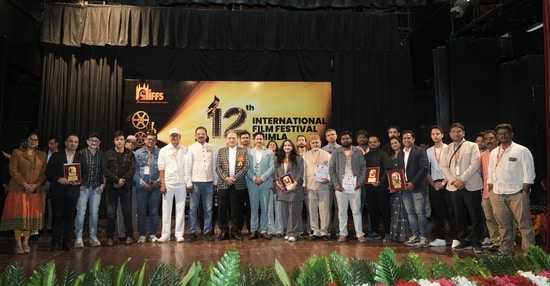
Himachal Pradesh governor Kavinder Gupta presented the awards to the winning filmmakers at the conclusion of the festival on Sunday. The three-day event brought directors and audiences together through interactive sessions and masterclasses. Among the noted filmmakers and actors who attended the fest were writer-director Amit Rai, Padma Shri Manoj Joshi, and actor-writer Sharib Hashmi.
‘Cinema behind the bars’
Selected films were also shown at Model Central Jail Kanda and Model Central Jail Nahan for inmates. A screening venue was set up at RKMV College for students as well, said festival organiser Devkanya Thakur.
“This fest aimed to build a film culture in Himachal Pradesh. We cannot look at everything only in terms of monetary benefits. Sometimes you have to develop a culture, and I think we were successful in that,” she said. Festival director Pushp Raj Thakur said the event provided a platform to independent filmmakers from India and around the world.
Roll of honour
(International category)
Best Long Documentary: Far From Home
Best Short Documentary: The Sound of the Soul
Special Jury Award – Short Documentary: The Everest Dream
Best Short Film: Renewal
Special Jury Award – Short Film: The Mould
Best Animation Film: The Rusty Fish
Special Jury Award – Animation Film: Milo
Best AI Film: Coexistence
Best Student Film: Eternal Kinship
Special Jury Award – Student Film: Lullaby
(National category)
Best Long Documentary: The Genesis of Rasa
Best Short Documentary: Coal Diggers of India
Best Short Film: Halgi
Special Jury Award – Short Film: Nyingma.. Through Her Eyes
Special Jury Award – Short Film: An Oyster Life
(State category)
Best Short Film: Tenfa
Special Jury Award – Short Film: Chupi Roh