E-Paper



Akshaya Tritiya fashion special | The golden thread of tradition that refuses to fade
On Akshaya Tritiya, designers share how buying and gifting traditions is now also focusing exclusive fashion — handloom textiles woven with gold and silver

 Prefer HTon Google


The use of gold and silver embellishments to make fabrics richer and more fashionable is an ancient tradition. With the yellow metal hovering over ₹1.5 lakhs and silver prices skyrocketing, this craft has now become an exclusive fashion statement.
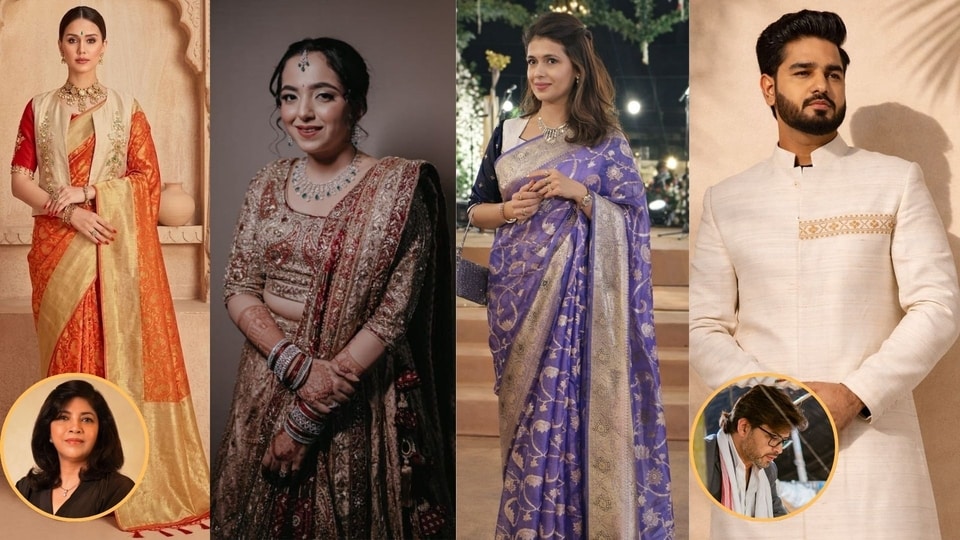
On Akshay Tritiya, when buying precious metal is considered auspicious, we look at the trend of buying and gifting traditional dresses that become heritage pieces and are passed on to generations.
Designers, makers, and connoisseurs feel that the trend may have slowed down a bit but will never fade away and will always remain exclusive.
More than festive wear

Far from being occasion-bound, gold and silver zari textiles are being reimagined as enduring assets. “For the last few years, we have been getting sales on this auspicious day. This year we already have three pre-orders and I believe some 4-5 walk-ins will happen. Our pure gold and silver saris are typically bought for weddings and pujas, but they also make for meaningful investments,” says Nishant Malhotra of Weavers Story, noting rising pre-orders ahead of the festive day. Prices range from ₹1–3 lakh for saris, while dupattas start at ₹55,000.
Craft meets emotional legacy

For designers, the appeal lies in their layered meaning. “Akshaya Tritiya reminds us to invest in pieces that are not only beautiful but meaningful — designs that carry emotion and remain timeless. Intricate gold and silver embroidery, zardozi, and hand embellishments echo the richness of heirloom jewellery, blurring the line between garment and ornament,” says Lucknow-based designer Romaa Agarwal.
She also offers polki and gold-thread patches (priced ₹2 lakh and above) that can be applied to existing garments, adding versatility to heirloom dressing. She sourced gold and silver wires from Surat.
Reimagined for today

Younger buyers are increasingly reworking inherited pieces into contemporary silhouettes. Designer Shruti Sancheti recalls transforming a bride’s nani’s gold sari into a modern dress. “I am the fourth generation who is wearing sari. The fabric may mellow, but the gold thread’s brilliance remains unchanged,” she says, underlining their lasting appeal.
Shruti has recently restyled a bride who possessed her maternal grandmother’s (nani) dress. “I recently restyled a bride’s nani’s pure gold dress, which is a very beautiful way to restore heritage dress in a contemporary way. Gifting such costly possessions on special functions and auspicious occasions like Akshay Tritiya is a great way to preserve our traditions in a fashionable way.”
Shruti has designed a collection for Prime Minister Narendra Modi’s Kashi to Kyoto initiative using gold embellishments
A rare, considered investment

Given the cost and craftsmanship, pure zari textiles are often made to order. “Akshaya Tritiya does bring in some orders, though demand remains niche,” says Irfan Babu of Prince Co-operative Society in Varanasi. We all make sone-ki-zari dresses only on order as it’s a costly affair now and there are few buyers.
If a good zari thread work sari costs ₹40,000, the prices for gold-work saris typically begin at ₹1.75 lakh, reflecting both material and artisanal value. “No one buys to resell it, but if you can extract real gold by burning it, that will be one-tenth of original prices,” he adds.
Chennai-based Tanjore painting artist Jyoti Tewari poses in Kanjivaram dresses that she has procured from Kanchipuram (two hours from Chennai).
“It’s the biggest hub where you get pure gold-silver saris and other dresses. Now, the trend is to pass such prized possessions to kids. Recently I saw a neighbour wearing a restyled sari of her granny. Akshaya Tritiya is considered very auspicious here, and I too would like to gift such a costly dress to my daughter. It has a lot of emotional value and with time becomes family heritage,” she says.
Deity on Akshay Tritiya

Fashion designer Manish Tripathi, who designs vastra for Shri Ram Temple, Ayodhya, tells, “For Akshay Tritiya, we had made Ram Lalla’s outfit in Assam’s Eri and Munga silk ivory dress, and authentic gold and silver wire motifs with all thread work was done in Varanasi. This year, Ram Lalla will be wearing vastra made from Madhya Pradesh’s Chandeli Silk and Baluchari textile with heavy hand embroidery on it.”
The designer has made gold work traditional menswear for the Ministry of Tribal Affairs initiative RISA. “We have designed achkan which has gold work on pocket and is priced at ₹1.25 lakh onwards,” he adds.
Where to buy
- Prince Co-operative Society Ltd, Nati Imli Bunker Colony, Chaukaghat, Varanasi
- Weaver Story, Chattarpur, Delhi
- Shruti Sancheti, Apollo House, Samachar Marg, Kala Ghoda, Mumbai
- Manish Tripathi’s Aantar Desi, 51, Jungi House, Shapurjat, New Delhi
- Romaa Agarwal, A1/1, Aliganj, Lucknow
- NC Santhanam Silk Saree, Kanchipuram
- Varahi Lakshmi Silks, Chinna, Kanchipuram
--------------------------