
 E-Paper



Not getting to share stage with Amitabh Bachchan annoyed the complainant, says Rajpal Yadav’s lawyer Bhaskar Upadhyay
Rajpal Yadav's lawyer Bhaskar Upadhyay revisits how the actor's cheque-bounce case unfolded and how an incident involving Amitabh Bachchan irked the complainant

 Prefer HTon Google


Actor Rajpal Yadav recently was granted interim bail by the Delhi High Court from Tihar jail in the case filed against him by businessman Madhav Gopal Aggarwal. Talking to us post the development, the actor’s lawyer Bhaskar Upadhyay tells us how the origin of the case was a result of an incident involving actor Amitabh Bachchan.
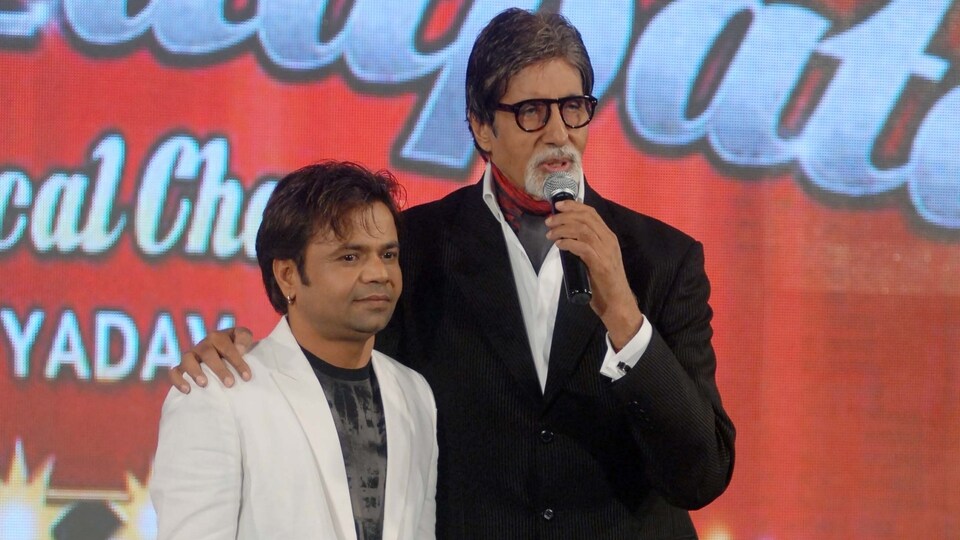
Bhaskar shares that while Madhav had loaned ₹5 crores to Rajpal Yadav for his film Ata Pata Laapata, the two parties had signed an agreement followed by three supplemental agreements till August 2012. As per the latest document, Rajpal had issued five cheques to the businessman that had to be cashed starting from December 2012. However, the music launch of the film that happened in September 2012 started the current lawsuit.
“In September, Amitabh Bachchan stepped in for the film’s music launch and the complainant wanted to share the stage with him. Rajpal’s team said no to that as Mr Bachchan wasn’t taking any favours for his presence, and the complainant got annoyed by that. He moved to the Delhi HC in September 2012 on the basis of that agreement, asking for a stay on the film until his dues were cleared. The case was dragged till December 2012 when he deposited the first cheque of ₹60,60,350 which was honoured,” Bhaskar shares.
The lawyer informs that eventually Madhav deposited an undertaking asking to take off the stay from the film and both parties entered into a consent agreement in 2013, according to which all previous agreements were to be null and void. “A fresh consent decree was passed in 2016 and as per law it is unchallengeable by either parties. The amount of ₹10.40 crores was due as per that. The complainant signed an undertaking that previous agreements will not be revived if the said amount is returned to them. The HC also said that the recovery of this money should only be done by way of execution,” he shares.
The execution petition was filed in 2016 and ₹1.90 crores were paid to the complainant. As for the remaining amount, another guarantor had come on board, Mr Anant Dattaram, the documents of which are available with HT City. However, the complainant refused taking the surety. “He offered his property valued at ₹15 crores as surety for him, asking for one month's time to return the amount. Surprisingly, the complainant refused to take this and asked for Rajpal ji’s imprisonment for the satisfaction of the decree. The execution stated this in writing and added that since no other mode of execution is suggested, the execution was closed,” Bhaskar shares.
However, an anomaly happened during the case. “While the execution case was going on, the complainant revived the cheques from the third supplementary agreement which was to be nulled after the consent agreement. In March 2018, based on that old agreement, the trial court convicted Rajpal ji and issued a fine of ₹11.5 crores. And then in November 2018, the execution court sentenced Rajpal ji to three month imprisonment for the same cause of action. But both can’t go parallel.”
Rajpal’s team challenged that order in 2019 in revision court, but there was a new counsel on board who caused a blunder. “The new judge said they didn’t find any merit and the counsel for Rajpal ji admitted that then they are ready to pay the amount if given a chance for mediation. And the court wrote this in their observation,” Bhaskar informs, adding that due to that, the case is still going on, and as per the latest development they have asked the court to listen to their side as well and take the case on merit.


