With the festival season setting in, how could food be far behind? Raksha Bandhan is all about rakhis, gifting, sweets, and dressing up, but another special aspect is the festive platter.
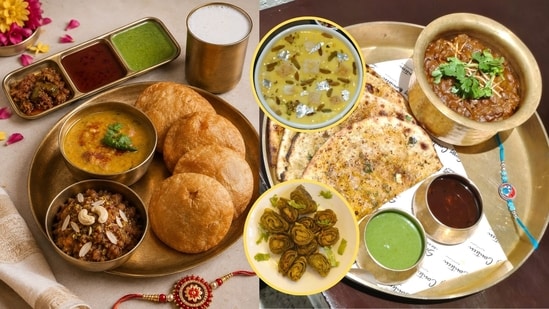
Sawan delicacies are associated with the festival, as it marks the end of the holy month of Shrawan. Though there are no specific delicacies earmarked for the occasion—unlike for Holi or Diwali—every family has its own traditions and signature dishes to add to the menu.
We speak to professional and home chefs about their special recommendations for the day and how to add a magical touch to dishes prepared at home
Sultani Custard Kheer (no rice)
By Avinash Kumar, Executive Chef, Hotel Ramada Lucknow.
{{/usCountry}}By Avinash Kumar, Executive Chef, Hotel Ramada Lucknow.
{{/usCountry}}Full Cream Milk – 1 litre
White Bread – 6 slices (edges removed)
Sugar – ½ cup (or to taste)
Custard Powder (Vanilla) – 2½ tbsp
Fresh Cream – 100 ml
Khoya / Mawa – 50 g (optional)
Sultanas (Raisins) – ¼ cup
Almonds (sliced) – 2 tbsp
Pistachios (sliced) – 2 tbsp
Ghee – 1 tbsp
Cardamom Powder – ½ tsp
Saffron – a pinch
Vanilla Essence – ½ tsp
Silver Vark – for garnish
METHOD
1. Cut bread into small cubes.
2. Heat ghee in a pan and lightly toast the bread cubes until golden. Keep aside.
3. Boil the milk in a heavy-bottomed pan and simmer for 5–7 minutes.
4. Mix custard powder with a little cold milk to make a smooth slurry.
5. Add the slurry to the hot milk while stirring continuously.
6. Add sugar, khoya, saffron and cardamom powder. Cook on low heat for 3–4 minutes.
7. Add toasted bread cubes and sultanas. Cook gently for another 3–4 minutes.
8. Add fresh cream and vanilla essence.
9. Garnish with almonds, pistachios, sultanas and silver vark.
10. Serve warm or chilled.
Chef's tip:
Use slightly stale bread for the best texture and flavor.
Do not overcook after adding bread, it will become soft and creamy.
Patod
By homecook Chetna Srivastava, she runs Kayastha experiential home kitchen
Method:
For Patod, we prefer the smaller, tender arvi leaves. They are washed and dried, then spread with a thick paste of soaked and ground urad dal, seasoned with spices. The leaves are folded, steamed and then cut into little pinwheels. We like to sauté these slowly, till they are crisp around the edges but still soft inside.
Like so many old recipes, every home seems to have its own way of making Patod. Some fry the pieces like pakoras, while some put the fried Patod into a thick, spicy gravy.
And that is what I love about this dish. It can sit just as happily with a cup of tea on a rainy afternoon as it can find a place in the main course with roti and rice. One simple arvi leaf, and so many ways of enjoying it.
Amritsari Chole
By Chef Himani Sharma of Sassy Canteen
Some recipes are more than food; they carry memories of family lunches, bustling kitchens and the comforting aroma of spices. This Amritsari-style chole is one of those recipes—slow-cooked, deeply spiced and made to be shared.
Ingredients:
For the chole:
500 g kabuli chana, soaked overnight; 20–25 g dried amla; 2 bay leaves; 2 black cardamoms; 3 green cardamoms; 1 cinnamon stick; 5 cloves; 8–10 peppercorns; salt and water.
Masala:
25 g coriander seeds; 10 g cumin; 8 g fennel; 5 g black pepper; 3 g ajwain; 5 g kasuri methi; 12 g anardana; 4–5 dried red chillies; 3 cloves; 2 g cinnamon; seeds of 1 black cardamom.
Gravy:
50 ml mustard oil; 25 g ghee; 250 g onions; 25 g ginger; 20 g green chilli; 35 g ginger-garlic paste; 250 g tomato puree; ½ tsp turmeric; 2 tsp Kashmiri chilli powder; salt.
To finish:
1–1½ tsp amchur; ½ tsp anardana powder; ½ tsp garam masala; ginger julienne; green chilli; coriander; 15 g ghee.
Method:
1. Pressure-cook the soaked chana with dried amla, whole spices and salt until tender. Reserve the cooking liquor.
2. Dry-roast the masala spices and grind coarsely. Heat mustard oil and ghee; sauté onions until deep golden. Add ginger, green chilli, ginger-garlic paste and tomato puree. Add the roasted masala, turmeric and chilli powder, and cook until the oil separates.
3. Add the chana and 400–500 ml reserved liquor. Simmer for 25–30 minutes, lightly mashing a few chickpeas to thicken the gravy. Finish with amchur, anardana, garam masala, ginger, green chilli, coriander and ghee. Rest for 15 minutes before serving.
4. Serve hot with bhature or Amritsari kulcha, pickled onions and green chilli.
The secret, like every cherished family recipe, is simple: good ingredients, patience and a little love.
Matar & Pyaz Ki Kachori with Spicy Aloo Sabzi and Aate Gud Ka Halwa
By Somnath Singh Rakesh, Executive chef, Hotel Taj Palace, Lucknow
Matar & Pyaz Ki Kachori:
Ingredients
For the dough
* 2 cups maida
* 4 tbsp ghee or oil
* ½ tsp salt
* Water, as needed
For the filling
* 1½ cups green peas, fresh or frozen
* 1 large onion, finely chopped
* 1–2 green chillies, finely chopped
* 1 tsp grated ginger
* 1 tsp fennel seeds (saunf)
* ½ tsp cumin seeds
* ½ tsp hing
* ½ tsp turmeric
* ½ tsp red chilli powder
* 1 tsp coriander powder
* ½ tsp garam masala
* ½ tsp amchur
* 1 tbsp roasted besan
* 2 tbsp chopped coriander
* Salt to taste
* 1 tbsp oil
* Oil for deep frying
Method:
1. Make the dough
* Mix maida, salt and ghee/oil.
* Rub together until the mixture resembles breadcrumbs and holds when pressed.
* Add water gradually and make a soft but firm dough.
* Cover and rest for 20–30 minutes.
2. Prepare the filling
* Crush the green peas coarsely—don’t make them completely smooth.
* Heat 1 tbsp oil. Add cumin, fennel and hing.
* Add onion and sauté until lightly golden.
* Add ginger and green chilli.
* Add crushed peas, turmeric, coriander powder, chilli powder and salt.
* Cook until the mixture becomes completely dry.
* Add garam masala, amchur, roasted besan and coriander.
* Cook another 1–2 minutes and cool completely.
3. Fill the kachoris
* Divide dough into small balls.
* Flatten each ball and place 1–1½ tbsp filling in the centre.
* Bring the edges together and seal.
* Gently flatten into a thick disc. Don’t roll too thin, or the filling may come out.
4. Fry
* Heat oil on medium-low heat.
* Add kachoris and fry slowly, turning occasionally, until crisp and golden.
* Don’t use very hot oil—the outside will brown too quickly and the kachori won’t become properly flaky.
Serve with Imli chutney + mint-coriander chutney + spicy aloo sabzi.
Spicy Aloo Sabzi
Ingredients
* 5–6 medium potatoes, boiled and roughly broken into pieces
* 2 tbsp mustard oil or regular oil
* ½ tsp cumin seeds
* ½ tsp fennel seeds
* 1 pinch hing
* 1–2 green chillies, slit
* 1 tsp grated ginger
* ½ tsp turmeric
* 1½ tsp coriander powder
* 1 tsp red chilli powder
* ½ tsp cumin powder
* ½ tsp garam masala
* 1 tsp amchur powder
* Salt to taste
* 2½–3 cups water
* Fresh coriander
Method:
1. Heat oil in a kadai. Add cumin, fennel and hing.
2. Add green chillies and ginger; sauté for 30 seconds.
3. Lower the heat and add turmeric, coriander powder, chilli powder and cumin powder. Splash in a little water so the spices don’t burn.
4. Add the roughly broken potatoes and mix well.
5. Add 2½–3 cups water, salt and amchur.
6. Mash a few potato pieces directly in the gravy. This naturally thickens the sabzi.
7. Simmer uncovered for 10–12 minutes, stirring occasionally.
8. Add garam masala and coriander. Taste and adjust salt, chilli and sourness.
Aate Gud Ka Halwa
A simple, traditional halwa that’s especially nice for a festive meal like Raksha Bandhan.
* 1 cup atta (whole-wheat flour)
* ½ cup ghee
* ¾ cup gud (jaggery), grated or chopped
* 2½ cups water
* ½ tsp elaichi powder
* 2 tbsp chopped almonds/cashews (optional)
* 1 tbsp raisins (optional)
👩🍳 Method
1. Make gud syrup: Heat 2½ cups water in a saucepan. Add the jaggery and stir until dissolved. Strain if your gud has impurities. Keep warm.
2. Roast the atta: Heat ghee in a heavy-bottomed kadai. Add the atta and roast on low-medium heat, stirring continuously.
3. Keep roasting for about 10–15 minutes, until the atta becomes deep golden, smells nutty and the ghee starts separating. This is the most important step for flavour.
4. Add the water: Lower the heat and slowly add the warm jaggery water while stirring continuously. Be careful—it can splutter.
5. Keep stirring until the halwa thickens and becomes glossy. The ghee should begin to separate from the sides.
6. Add elaichi, nuts and raisins and serve hot.