Art has an intertwined business with inspiration, as it acts as a catalyst for creativity, emotional expression, and the exploration of new ideas. For as long as human history has been recorded, it has inspired painters, sculptors, writers, and dreamers across the globe.
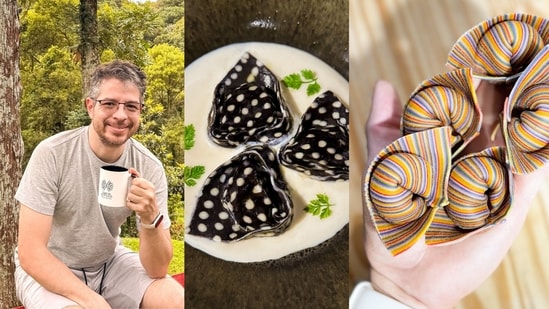
Now, entering the world of food, it has knocked on the doors of chefs as well. Among them is David Rivillo, a pasta designer based in Porto Alegre, Brazil, who has been in the business since 2016, making pasta that looks like edible art. His designs include stripes, polka dots, waves, zig-zag, rainbows, marble and even brick patterns.
Recently, Rivillo’s artistry caught the attention of luxury fashion house Dolce & Gabbana, leading to a collaboration as part of a special dinner curated by Chef’s Table Brazil. The experience quickly earned him praise among food connoisseurs. “I contributed one course, creating tortelli inspired by the guinea fowl—a bird with striking black feathers and white spots. I translated that pattern into the pasta dough, turning it into an edible reflection of the event’s style and concept,” he shares.
One thing that stands out for him is that he works exclusively with natural dyes in his creations. “For colouring, I rely on vegetables and spices in puree or powder form. For the dough, I use semolina, Italian 00 flour, and either eggs or water, depending on the recipe. I pay close attention to the science behind each colour, to keep the dough’s texture stable, avoid altering the flavour, and make sure the final colour is vivid and expressive,” he adds.
{{/usCountry}}One thing that stands out for him is that he works exclusively with natural dyes in his creations. “For colouring, I rely on vegetables and spices in puree or powder form. For the dough, I use semolina, Italian 00 flour, and either eggs or water, depending on the recipe. I pay close attention to the science behind each colour, to keep the dough’s texture stable, avoid altering the flavour, and make sure the final colour is vivid and expressive,” he adds.
{{/usCountry}}When it comes to the process of creation, he starts with an idea or image that inspires him, then chooses the colours and ingredients he wishes to use. After that, he builds the design in the dough using techniques he has developed over time. “The final pasta looks artistic, but also cooks well and holds its shape. It’s a mix of creativity, skill, and function,” he says.
Ask him about his inspiration, and he tells us that, “it is everywhere;” from science, nature, art, architecture, to textiles and fashion. “I’m always observing the world around me, looking at patterns, colours, and shapes, and thinking about how they could be turned into pasta. When something catches my eye, I immediately imagine how I could recreate it with dough,” he exclaims.
Now, this is also a great example of how food and fashion can come together as they both are about creativity and beauty, and David agrees: “They’re personal, emotional, and reflect who we are. They also follow seasons and trends. That’s why they connect so well and often inspire each other.”
How you can make food dyes naturally at home
You can easily make natural food dyes at home using everyday ingredients. For vibrant shades, try spirulina for blue or green, black cocoa for deep black, paprika for a warm orange, turmeric for sunny yellow, beetroot or cochineal for rich red, and regular cocoa for earthy brown. These add both colour and a hint of flavour to your dishes without any artificial additives.