Understanding the past helps us in the present. Addressing issues that confront us in the present helps us create a future for the generations ahead. Our nation’s history has seen our people invaded,subjugated and our territories occupied. Foreign predators looted and then ruled over us till the East India Company stuck a foothold after the battles of Plassey and Buxar. The East India Company, the richest multi-national ever, thereafter held sway over inter-alia the vast territories they occupied, which the crown in England took over and we were colonised in 1858.
Gradually, people in India started resisting the diktats of the colonial power. An event in 1885 gave birth to the Congress. Between then and 1947, there was a rise in nationalist fervour, which expressed itself in multifarious forms. Soon Mahatma Gandhi epitomised our struggle for independence.
In order to keep our people together, he paid with his life. His struggle was based on the triumph of truth over evil, the true meaning of ‘ahimsa’ (non violence), brotherhood, commitment to justice and a message that nature and man must work together for a sustainable future.
This sustained our struggle for freedom and helped us achieve it on August 15, 1947. The Constituent Assembly gave birth to our Republic, the fundamentals of which are reflected in our Constitution, that we the people gave to ourselves on January 26, 1950.
India gained true freedom in 1950. In 2019, that freedom is in jeopardy. Today, of the 1.3 billion people, 800 million have little to look forward to. Everyday life is a daily tryst. Children do not have access to quality education. Our school system is ill-equipped to meet the challenges of the fourth Industrial Revolution. We need to empower our children with new skills to be gainfully employed. Any conversation for a better future should persuade us to rethink and restructure our education system to meet the aspirations of generations to come.
{{/usCountry}}India gained true freedom in 1950. In 2019, that freedom is in jeopardy. Today, of the 1.3 billion people, 800 million have little to look forward to. Everyday life is a daily tryst. Children do not have access to quality education. Our school system is ill-equipped to meet the challenges of the fourth Industrial Revolution. We need to empower our children with new skills to be gainfully employed. Any conversation for a better future should persuade us to rethink and restructure our education system to meet the aspirations of generations to come.
{{/usCountry}}The other conversation we need to have for a prosperous tomorrow must ensure that the next child born is not malnourished. Health care for all is at the heart of a society which seeks to strive for a future full of hope. The movement of people to urban centres and the stress of infrastructure requirements, especially clean drinking water and clean air, are concerns that need to be addressed today.
The political class, especially those in the government, should be less concerned about the mechanics of coming to and retaining power. They should be more concerned with empowerment of ordinary citizens. The restructuring of Article 370, commitment to preparing a pan-India National Register of Citizens, putting in place a Uniform Civil Code, raising sectarian and divisive issues, capturing institutions and decimating established systems of governance, using vehicles of information as propaganda outfits, persecuting opponents and enriching themselves through opaque funding mechanisms are today’s conversations. These conversations have the potential to generate emotive reactions accompanied by hysteria. They might serve the cause of politics and politicians, but not the cause of those who elected them.
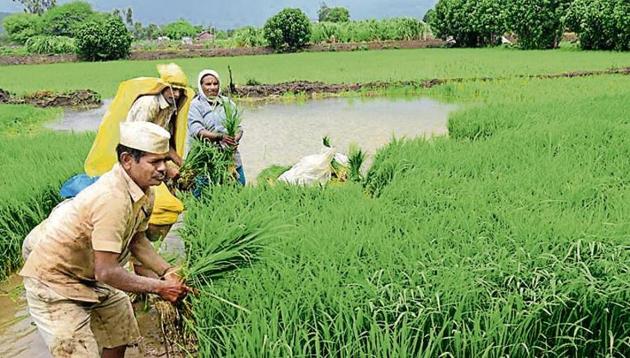
Our agriculture labour is living on the margins of life. Small holdings, lack of capital, increasing demands of an aspirant family, and the burden of indebtedness result in farmers’ suicides. Those lucky enough to survive find themselves short-changed either when prices of agricultural produce tumble with a bumper crop or when there is a drought situation. The conversations today relate only to loan waivers, giving them false hope and selling a dream for a prosperous tomorrow. The conversations for the future must relate to bringing about structural changes in the modes of production in agriculture. Our primary national concern should be to ensure prosperity to the one whose hard labour helps fill our stomachs.
Fifty percent of our workforce consists of women. Their participation in the labour force has gone down while women at the upper echelons have excelled. At the bottom of the pyramid, women are not emancipated resulting in their limited contribution to national wealth. Our future conversations in this regard must be focused on a societal transformation that brings women to the forefront of national life.
On August 15, 1947, we became free only in the sense that we were politically emancipated. Freedom means much more. The fundamentals of true freedom are: an absence of prejudice and hate, an ability to understand and to love, and the desire to work for the good of others. Our present conversations seem to generate hate and embrace prejudice. Our future conversations should focus on the vast multitudes for whom tomorrow should usher hope and prosperity. What we witness today are the conversations of the few, who are prosperous.