E-Paper



118% rise in caste-based bias in varsities since 2019: UGC data
Caste-based discrimination complaints in Indian universities rose 118.4% in five years, with a 90% resolution rate, despite concerns over complaint handling.

 Prefer HTon Google


NEW DELHI: Complaints of caste-based discrimination in universities and colleges have risen by 118.4% over the past five years, from 173 in 2019–20 to 378 in 2023–24, and the resolution rate is at around 90%, according to data submitted by the University Grants Commission (UGC) to a parliamentary panel and the Supreme Court in 2025.
Between 2019–20 and 2023–24, UGC received 1,160 complaints of caste discrimination reported by Equal Opportunity Cells (EOCs) and Scheduled Caste/Scheduled Tribe (SC/ST) Cells of 704 universities and 1,553 colleges. Of these, 1,052 complaints were marked as resolved, a disposal rate of 90.68%. However, the number of pending cases rose during this period, reaching 108 in 2023–24, up from 18 in 2019–20.
Also Read: 10 years on, how Rohit Vemula's death forced policy shifts
Data shared by the UGC with the Parliamentary Standing Committee on Education, Women, Children, Youth and Sports in March 2025 showed in 2019–20, 173 cases were reported, increasing to 182 in 2020–21 and 186 in 2021–22. The number reached 241 in 2022–23 and 378 in 2023–24. The panel recommended the establishment of on-campus counselling centres with trained mental health professionals, 24/7 helplines, and online counselling services to address the psychological impact of discrimination on students.
“There is an increase in the number of cases due to enhanced awareness among students about the functioning of SC, ST and Equal Opportunity Cells. The cases are being resolved as these cells are responsive and working proactively,” a senior UGC official said, requesting anonymity.
Prof N. Sukumar of Delhi University said the 90% resolution rate was misleading. “Most SC/ST Cells function under administrative control. They appear autonomous but lack decision-making powers. Members are administration-nominated, which limits impartiality, especially in serious cases,” he said.
Similar concerns were raised by DK Lobiyal, a faculty member at Jawaharlal Nehru University (JNU) and a former member of its SC/ST Cell. “Earlier, these cells had some degree of autonomy, but over time that autonomy has eroded. Today, most members and advisers are appointed by the administration,” he said, adding that rising complaints could reflect both increased reporting and continued discrimination.
UGC officials said universities are empowered under their respective acts to handle and dispose of caste-discrimination complaints. “There is also an ombudsman in colleges who serves as the final appellate authority for grievances, including those from members of SC/ST communities, after internal remedies are exhausted,” the official quoted above said.
Former UGC chairperson Sukhadeo Thorat said Equal Opportunity Cells (EOCs) were created under UGC’s ‘Promotion of Equity in Higher Education Institutions Regulations, 2012’ while SC/ST Cells predate these regulations and were originally established to deal primarily with service and employment-related matters of faculty and staff. “Problems arise when institutions blur this distinction and route all complaints through internal mechanisms,” Thorat said, adding that such conflation weakens accountability and allows universities to avoid scrutiny by statutory commissions and courts.
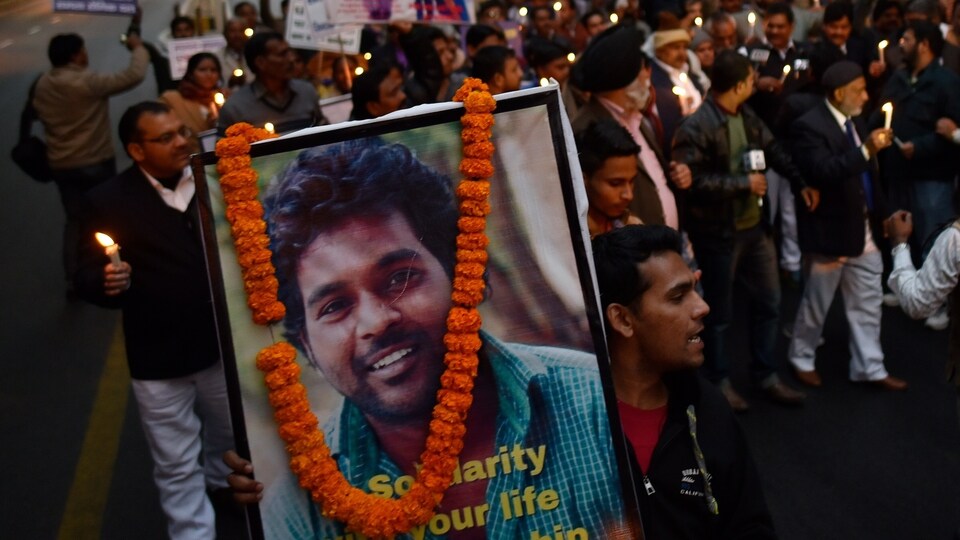
The issue of caste-discrimination in campuses hit the headlines in 2016 when the suicide of PhD scholar Rohith Vemula at the University of Hyderabad sparked nationwide protests. The matter has also reached the Supreme Court. On January 3, 2025, the court directed UGC to collate data on caste discrimination complaints under its 2012 regulations. In an affidavit filed on February 27, the UGC said it had received responses from 3,522 higher education institutions, including central, state, private, deemed and affiliated colleges. According to the affidavit, 3,067 Equal Opportunity Cells and 3,273 SC/ST Cells have been set up, which together received 1,503 complaints, of which 1,426 were resolved.
UGC on January 13 issued a notification directing all institutions to establish equity committees and equal opportunity centres to handle discrimination complaints and promote inclusion. Institutions must also run a round-the-clock equity helpline and maintain an online mechanism.
Students from marginalised communities said weak redressal mechanisms have severe consequences.
A PhD scholar at the University of Hyderabad, who did not wish to be named, said prolonged discrimination by her supervisor stalled her research for over a year. “I was repeatedly denied access to essential research facilities. Internal committees sided with the supervisor, and I was discouraged from filing a formal complaint with the SC/ST Cell,” she said.