Twenty blackbucks were released into Gujarat’s Banni Grasslands on Sunday as part of an initiative to restore native herbivore populations and strengthen the ecosystem of one of India’s largest grassland landscapes.
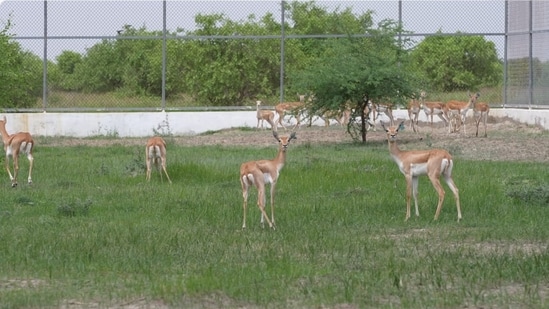
The Gujarat Forest Department, with technical support from the Greens Zoological Rescue and Rehabilitation Centre (GZRRC), Vantara, released the animals on India’s 80th Independence Day.
Also Read | Vantara a lawful global hub of conservation excellence: UN wildlife trade body
Twenty blackbucks released
The group comprised five males and 15 females and was transferred from Vantara in Jamnagar after obtaining approvals from the Chief Wildlife Warden, Gujarat, and the Central Zoo Authority.
The animals underwent veterinary examinations, health screening, quarantine and disease surveillance before being transported and released in accordance with prescribed wildlife translocation protocols.
Increase number of blackbucks, restore grassland's native herbivore community
Officials said the initiative is aimed not merely at increasing the number of blackbucks in Banni but at restoring the grassland’s native herbivore community. Blackbuck, chinkara, nilgai and wild boar have historically been part of Banni’s herbivore assemblage.
{{/usCountry}}Officials said the initiative is aimed not merely at increasing the number of blackbucks in Banni but at restoring the grassland’s native herbivore community. Blackbuck, chinkara, nilgai and wild boar have historically been part of Banni’s herbivore assemblage.
{{/usCountry}}“Restoring native wildlife is fundamental to restoring healthy landscapes,” Gujarat Chief Wildlife Warden Dr Jaipal Singh, IFS, said. He described the release as an important step in efforts to recover Banni’s ecological character and biodiversity, adding that such restoration requires scientific management, sustained efforts and collaboration.
Banni is a vast grassland landscape that supports pastoral communities as well as a range of native wildlife. Conservationists have emphasised the importance of maintaining healthy herbivore populations in sustaining natural predator-prey relationships and strengthening the resilience of grassland ecosystems.
The release is also part of a wider Gujarat programme for the conservation and translocation of native herbivores. The Central government, through the Ministry of Environment, Forest and Climate Change, has approved the translocation of 500 blackbucks and 100 chinkaras in Gujarat.
Some components of the broader programme are intended to augment prey populations in connection with the planned cheetah reintroduction programme. However, the Banni release has an additional objective of restoring populations of species native to the grassland.
Vantara's assistance sought
The Banni Grassland Forest Division has sought Vantara’s technical assistance for the wider translocation programme. This includes specialised vehicles for transporting herbivores, portable boma systems, veterinary expertise and support for the safe handling and transportation of animals.
Vantara has previously supported the Gujarat Forest Department in the rewilding of nearly 80 spotted deer in Barda Wildlife Sanctuary, following approval from the Chief Wildlife Warden.
Ajit Kulkarni, Special Director, Compliance and Due Diligence, Vantara, said successful species restoration involves more than releasing animals and requires an understanding of habitat conditions, animal health, population planning and the participation of local communities.
The Banni initiative brings together the Gujarat Forest Department’s conservation efforts and Vantara’s technical expertise in veterinary care, wildlife management, translocation and post-release monitoring.
The release of the 20 blackbucks marks another step towards restoring native wildlife populations in Banni, with officials stressing that long-term habitat management and sustained monitoring will be crucial to ensuring the success of the programme.