BHUBANESWAR:
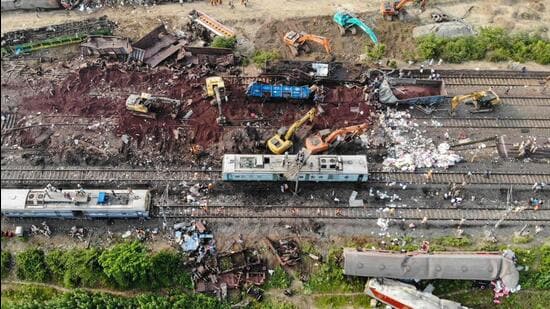
At least 29 victims of the train tragedy at Bahanaga Bazar station of Odisha’s Balasore district, which killed 294 passengers in June, are yet to be identified, officials have said
The final batch of DNA reports will be received this week from which only two or three samples are expected to match, superintendent of the All India Institute of Medical Sciences (AIIMS), Bhubaneswar, Dillip Parida said.
“AIIMS had received a total of 162 bodies in two phases, of which 133 bodies have been handed over to their relatives and family members after DNA sample matching,” Parida said.
“The 29 unidentified bodies are being preserved in containers at AIIMS. The central government and Odisha government will decide what to do with the bodies that will remain unclaimed,” Parida added.
At least 294 people died and over 800 were injured after the Chennai-bound Coromandel Express, Howrah-bound SMVP-Howrah Superfast Express and a goods train were involved in an accident, the worst in recent years, in Balasore district, about 200 km from capital Bhubaneswar, on the evening of June 2.
In the aftermath of the accident, most victims were identified with their Aadhaar cards, driving licenses or PAN cards.
{{/usCountry}}In the aftermath of the accident, most victims were identified with their Aadhaar cards, driving licenses or PAN cards.
{{/usCountry}}But in case of victims who had no identity proofs on them or when there’s more than one claimant for a body, the hospital sent DNA samples to identify the deceased.
The hospital ordered container-sized freezers from Paradip port to keep the bodies in sub-zero temperature to prevent further decomposition.
The person’s identification can be ascertained if the samples match by more than 50 %. AIIMS officials said the success of DNA sampling depended on how soon the samples were taken after death and whether they were taken from the deceased’s molar teeth.
“DNA sequencing of bodies in an advanced state of decomposing is a problem. Since the bodies were received more than 30 hours after the tragedy with much of the bodies decomposed, it was a very difficult task for the forensic labs to conduct DNA sequencing and profiling. The quality of samples was not that good and that affected the process,” an official who asked not to be named said.
In some cases, doctors had to store canine or incisor teeth due to unavailability of molar teeth; bones were also collected and sent for DNA sampling.
“By the time AIIMS received the bodies, 30 hours had already passed. Our main objective was to prevent further decay of the bodies,” said AIIMS executive director Ashutosh Biswas.
Bodies can only be preserved for a long time if embalming is done within 12 hours of death but the unidentified bodies could not be embalmed because of the delay in transporting the remains to AIIMS.