E-Paper



3,240 kg toxic waste burnt in 3 days, flue gases emitted within prescribed limit
Amid tight security of 650 police personnel and special armed force (SAF) jawans, a trial run for the incineration of 10 metric tonnes of toxic waste began on Thursday

 Prefer HTon Google


Bhopal: Around 3,240 kg of toxic waste from the Bhopal Gas tragedy site was burned during the first three days of the trial run, with the flue gas emissions from the chimney remaining within the prescribed standard limits at Pithampur in Madhya Pradesh’s Dhar district, said officials on Saturday.
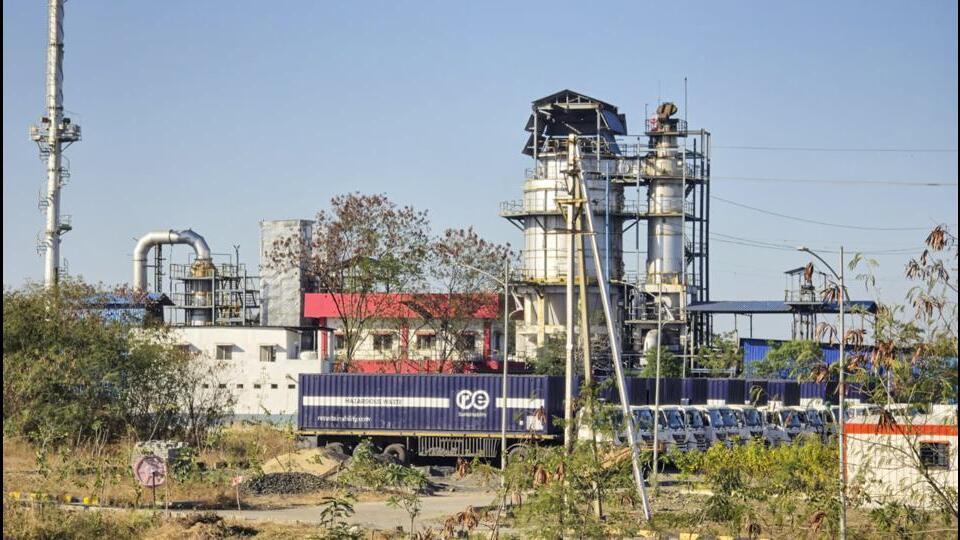
“A total of 3,240 kg of lime has been mixed with the waste for burning. Approximately 3.6 tonnes of lime, 1.8 tonnes of activated carbon, and 24 kilograms of sulphur were used to clean the flue gases. Around 400 to 500 liters of diesel are being consumed per hour for waste combustion, with about 21,000 liters consumed so far,” said an official.
The waste is being disposed of as per the standard operation procedure (SOP) laid by Central Pollution Control Board (CPCB) and Madhya Pradesh’s State Pollution Control Board (SPCB), district collector Priyank Mishra said.
The trial run for the incineration of 10 metric tonnes of toxic waste began on Thursday, following the Supreme Court’s rejection of a petition seeking to stall the trial runs for the incineration of toxic waste from the UCIL in Pithampur, over concerns over potential health risks to local residents and the possibility of soil and water contamination.
Also Read: Trial Run of 10 MT toxic waste incineration begins at Pithampur, 72-hour process
Amid tight security of 650 police personnel and special armed force (SAF) jawans, the operation at Union Carbide India Limited moved into its main phase on Friday, with the waste being placed in the rotary kiln for combustion.
On the third day of incineration, toxic waste from Union Carbide India Limited (UCIL) continued to fed at the rate of 135 kg/hour.
An online Continuous Emission Monitoring System (CEMS) was set up to monitor the emissions from the chimney during waste combustion .
“The parameters of flue gases emitted from the chimney have been found to be within the prescribed standard limits. The emission of particulate matter is 8.6 mg/normal cubic metre, while the prescribed maximum standard limit is 50 mg/normal cubic metre. Similarly, the emission of sulphur dioxide is 62 mg/normal cubic metre, with the maximum standard limit set at 200 mg/normal cubic metre. The emission of nitrogen oxides is 52.5 mg/normal cubic metre, and its prescribed maximum standard limit is 400 mg/normal cubic metre,” Madhya Pradesh Pollution Control Board regional officer Shrinivas Dwivedi said.
Dwivedi added, “Emission of carbon monoxide is 10 mg/normal cubic metre, its maximum standard limit is 100 mg/normal cubic metre. Similarly, emission of carbon dioxide is 4.47 percent, its prescribed maximum standard limit is 7 percent. Emission of hydrogen chloride is 0.7 mg/normal cubic metre, its maximum standard limit is 50 mg/normal cubic metre. Emission of hydrogen fluoride is 3.8 mg/normal cubic metre, its prescribed maximum standard limit is 4 mg/normal cubic metre and emission of total organic carbon is 8.7 mg/normal cubic metre, its prescribed maximum standard limit is 20 mg/normal cubic metre.”
The second trial run will begin on March 4. The results of the flue gas emissions after completing three trial runs of 30 MT of toxic waste will determine the incineration speed for disposing of the remaining 320 MT of toxic waste. It will also help officials assess the environmental impact of the toxic waste disposal in Pithampur, said an official.
The toxic waste has been lying abandoned in the defunct UCIL factory for the past 40 years, following the leakage of Methyl Isocyanate (MIC) on the night of December 2-3, 1984, which killed 5,295 people, according to official figures. Activists, however, later estimated that at least 15,000 lives were lost, with many more suffering from long-term health issues due to exposure to the toxic gas.