E-Paper



Trial Run of 10 MT toxic waste incineration begins at Pithampur, 72-hour process
Amid tight security of 650 police personnel and special armed force (SAF) jawans, the operation moved into its main phase on Friday, with the waste being placed in the rotary kiln for combustion

 Prefer HTon Google


Bhopal: Over 100 workers, equipped with safety gear, began a trial run for the incineration of 10 metric tonnes of toxic waste from the Bhopal Gas tragedy site at Pithampur in Madhya Pradesh’s Dhar district on Thursday. Amid tight security of 650 police personnel and special armed force (SAF) jawans, the operation at Union Carbide India Limited moved into its main phase on Friday, with the waste being placed in the rotary kiln for combustion.
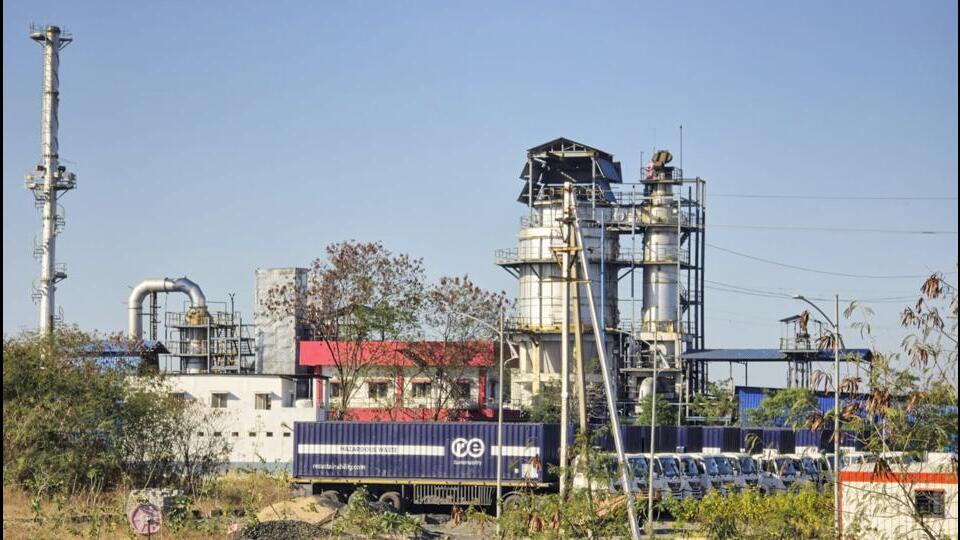
This comes hours after the Supreme Court rejected a petition seeking to stall the trial runs for the incineration of toxic waste from the Union Carbide India Limited (UCIL) in Pithampur, and dismissed concerns over potential health risks to local residents and the possibility of soil and water contamination.
The process to turn the waste into ashes and solid waste at the Treatment, Storage, and Disposal Facility (TSDF) in Pithampur will take 72 hours, said an official.
Also Read: Trial disposal of Union Carbide waste begins as SC rejects plea
It is being done under the direction of experts from National Environmental Engineering Research Institute (NEERI), National Geophysical Research Institute (NGRI), Central and State Pollution Control Board (CPCB).
“On Thursday, we unloaded five containers containing the waste in five forms - soil, naphthol, reactor residues, semi-processed pesticide waste and other chemicals. The waste was mixed in equal proportion to make it one mixture of waste. The blank run of combustion was also started on Thursday with the help of diesel to achieve about 850 degree celsius temperature as after putting the waste in combustion, temperature decreases by 50 degree celsius,” MP pollution control board regional officer Shriniwas Dwivedi explained.
Dwivedi said that the main process of incineration started on Friday with putting waste in the primary chamber i.e., rotary klin for combustion. “After the waste will be converted into ashes, it will come down while the gases will move to secondary gas chamber where temperature of 1100-1200 degree celsius will be used to destroy volatile organic compounds with 99.99% efficiency. Finally, waste feeding systems will introduce bulk solids into the incinerator and use compressed air for fine atomisation. During the process of cleaning gases and separation of solid waste, it will pass through dry scrubber that will release some solid waste then move to the multicyclone spray dryer, dry scrubber wet filter, wet scrubber and chimney. The device will neutralise acidic gases such as Sulfur dioxide, Sulfur trioxide, and Hydrogen chloride,” he added.
Also Read: SC rejects petition to halt trial run for Bhopal gas tragedy site waste disposal
The first trial run is being done at a speed of burning of 135 kg waste per hour while two additional runs set for March 4 and 10 will be run at speed of 180 kg per hour and 270 kg waste per hour respectively.
“About 20,000 litres liquid waste that will be released after the whole process will be evaporated using klin. Solid particles and ashes, non-incinerable hazardous waste, will be disposed of at a secured landfill facility which has multilayered liners constructed with geosynthetics to prevent leachate seepage and to safeguard groundwater,” Dwivedi said.
The 337 MT toxic waste along with 13 MT waste of PPE kits, gloves and other materials used for packing it was transported from Bhopal to Pithampur on the intervening night of January 1 and 2 this year on the MP high court’s order. But locals started protesting and two people tried to set themselves afire. The state government officials didnt unloaded the containers from the truck.
Dhar district collector Priyank Mishra said, “During trial run, large number of police personnel and special armed force jawans have been deployed but the disposal is being done peacefully. I thank the residents of Indore, Dhar and Pithampur for supporting in this process. We are following the standard operation procedure (SOP) laid by CPCB and SPCB. The scientists are noting down everything to analyse its impact. Similarly, live recording is being taken place as per the order of the court to maintain transparency.”
The toxic waste has been lying abandoned in the defunct UCIL factory for the past 40 years, following the leakage of Methyl Isocyanate (MIC) on the night of December 2-3, 1984, which killed 5,295 people, according to official figures. Activists, however, later estimated that at least 15,000 lives were lost, with many more suffering from long-term health issues due to exposure to the toxic gas.