
 E-Paper



4 magnitude earthquakes strike Andaman and Nicobar and Manipur
National capital Delhi has recorded more than 16 earthquakes in two months. Most of these, however, were very mild and only recorded by seismographs.

 Prefer HTon Google


Two earthquakes were reported in the country on Sunday, the National Centre for Seismology (NCS) reported.
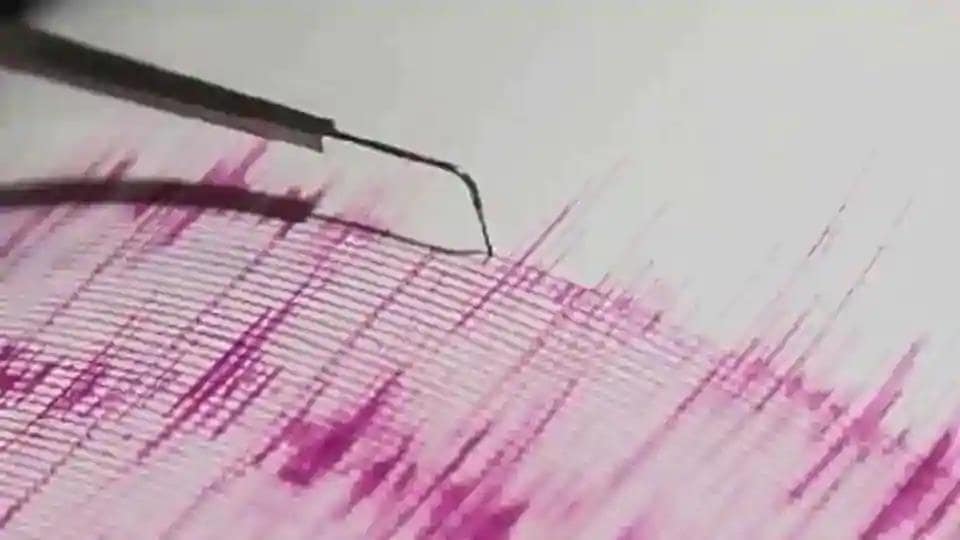
The first earthquake struck near Diglipur, in Andaman and Nicobar islands at 8:56 am at a depth of 45 kilometre, the NCS said. It was a 4.1 magnitude quake, it further reported.
The second earthquake - with magnitude 4 - was reported near Ukhrul in Manipur at 11:24 am at a depth of 60 kilometre.
Two quakes were reported from Rohtak in Haryana and Hanle in Jammu and Kashmir on Saturday. These are the series of quakes the country has been experiencing in the last few months.
National capital Delhi has recorded more than 16 earthquakes in two months. Most of these, however, were very mild and only recorded by seismographs.
The string of earthquakes or tremors have sparked concerns that a bigger quake could strike the national capital region. Seismologists say the increased frequency does not necessarily imply that a major one is coming but stress that monitoring them is key to being prepared. Unlike many other natural disasters, earthquakes cannot be predicted with any degree of certainty.
The NCS said that most of the small earthquakes recorded around Delhi since April this year were along lineaments.
A lineament is a linear feature corresponding to a fault - such as a valley or a mountain range. There are several faults in and around Delhi: Mathura fault, Moradabad fault, Delhi-Haridwar ridge, Delhi-Sargodha fault, Mahendergarh and Dehradun fault.
Delhi falls under the fourth-highest zone in India, making it vulnerable to earthquakes. But there haven’t been too many earthquakes which have its epicentre in the national capital. Delhi mostly experiences tremors when a quake hits regions as far as central Asia or the Himalayan ranges, known to be a high-seismic zone.


